Expert Rehab for Low Back Pain, Sciatica, Herniated and Bulging Discs, Spinal Stenosis, and One-Sided Back Pain
Navigation: Jump to a Low Back Topic Near You
- Why Core Exercises Don’t Fix Low Back Pain
- The 4 Hip Exercises That Fully Fix Low Back Pain
- Rehab App for Low Back Pain
- Fix Low Back Pain & Anterior Pelvic Tilt (APT)
- Sciatica, Herniated & Bulging Disc Pain
- One-Sided Low Back Pain & SI Joint Pain
- Frequently Asked Questions About Low Back Pain
- Schedule Your Low Back Rehab Consultation

Living with low back pain can disrupt every part of your day. According to the Cleveland Clinic, low back pain is among the most common musculoskeletal issues affecting adults, whether you are standing at work in downtown Greenville, driving across the Upstate, lifting at the gym, or simply trying to sleep comfortably at night. At Corexcell Rehab Center in Greenville, SC, we have helped thousands of clients overcome chronic low back issues by restoring strength, alignment, and stability through our targeted non-surgical low back treatment Greenville program and performance testing. We also specialize in exercise-based low back rehabilitation in Greenville that restores alignment, strength, and stability by correcting the root cause of chronic back pain.
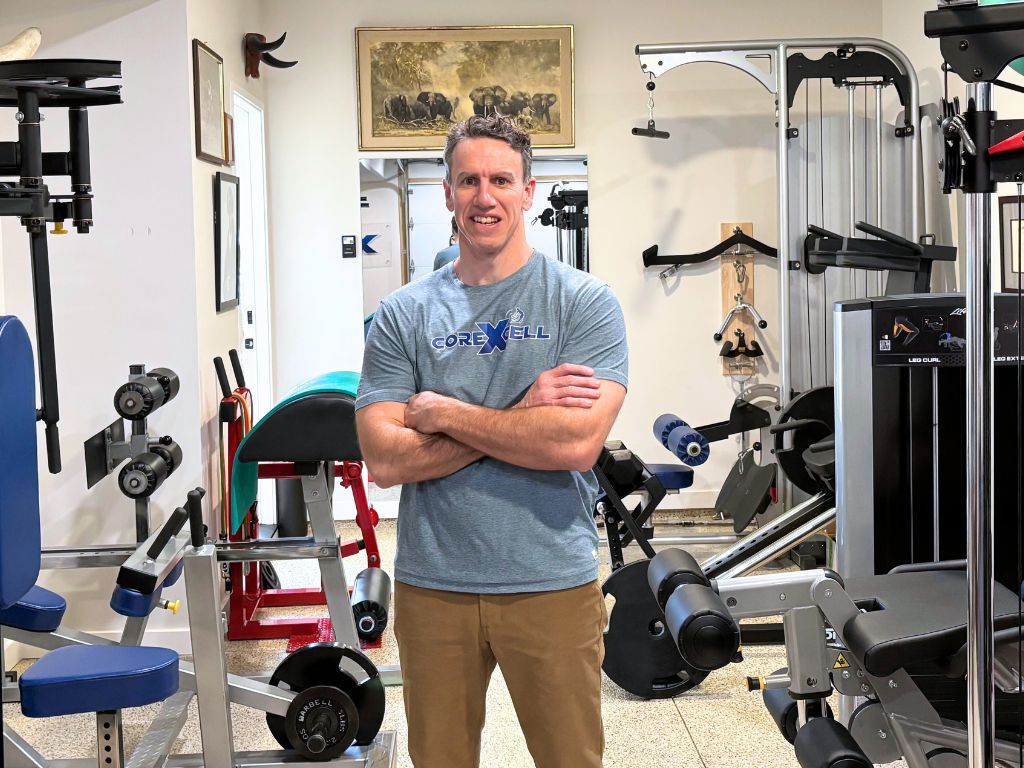
Founded by Zach Fuller, creator of the Corexcell Rehab Method and one of the most-followed back and hip rehabilitation specialists online, our program targets the true source of low back pain, which often stems from weak stabilizers in the hips, deep core, and pelvis. When these muscles are not functioning correctly, the spine absorbs more force than it is designed to handle.
From low back strains and sciatica to herniated discs, spinal stenosis, and one-sided back pain, our focus is on identifying the weak link that is driving your pain and rebuilding the correct stabilizer muscles so the spine can finally move and support you the way it should.
Whether your discomfort comes from sitting, lifting, bending, standing, or athletic movement, our system helps clients throughout Greenville and the surrounding Upstate area restore natural motion, eliminate compensations, and rebuild strength without surgery, injections, or pain medications. This hip- and pelvis-first approach is the foundation of how we treat chronic low back pain for Greenville SC patients who have not improved with traditional physical therapy.
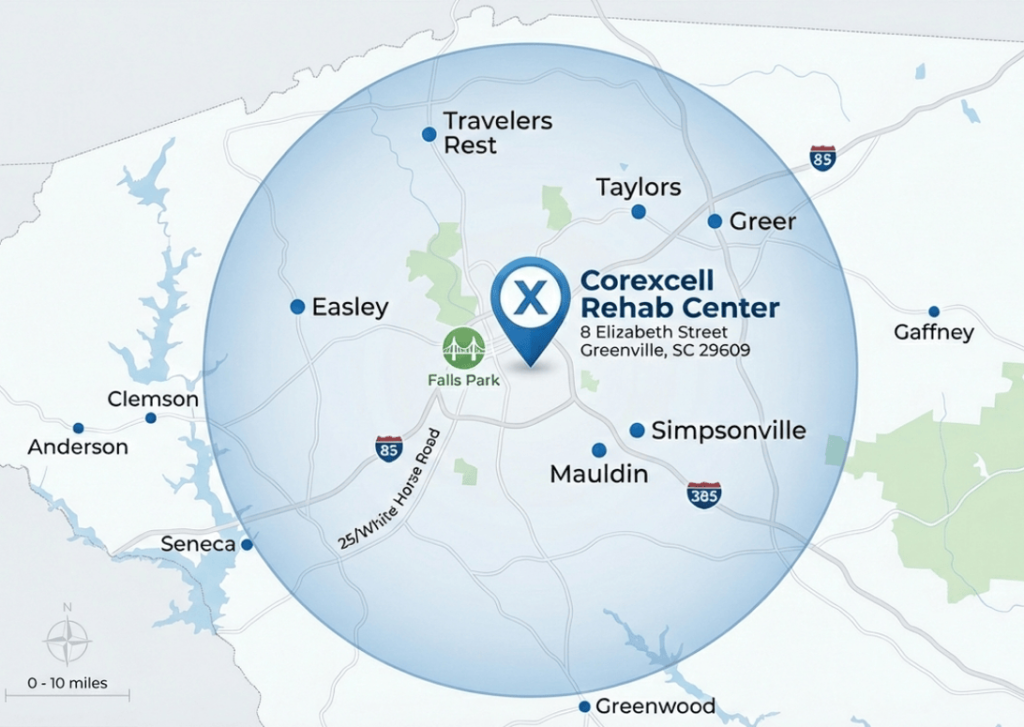
Our Greenville-based rehab team has guided clients from Taylors, Simpsonville, Mauldin, Travelers Rest, and Five Forks, along with individuals worldwide through virtual sessions and the Corexcell Rehab App. This combination of local expertise and remote accessibility allows anyone, anywhere, to experience the same proven low back rehabilitation system trusted by athletes, active adults, and people who have tried everything else without success.
Our low back programs serve patients across Greenville, Taylors, Mauldin, Simpsonville, Greer, and the greater Upstate SC region, both in person and through our virtual rehab system. We also work extensively with clients from broader Upstate regions, including Clemson, Anderson, Seneca, Gaffney, and Greenwood, who visit our Greenville facility or follow our remote corrective program from home.
We also serve clients from Columbia, SC (about 1.5–2 hours via I-26/I-20, roughly 100–103 miles) and surrounding Midlands communities like Lexington, Irmo, Cayce, West Columbia, Elgin, and Chapin, who travel to our Greenville facility for hands-on sessions or thrive with our remote programs from home. Similarly, we support Hendersonville, NC residents (just under an hour north in the mountains, about 40 miles via US-25), bringing our hip-focused low back rehab to mountain-area active lifestyles with minimal travel needed.
Whether you’re seeking low back injury treatment in Columbia SC, low back pain rehab in Lexington SC, low back rehabilitation in Irmo SC, or low back rehab in Hendersonville NC, our live virtual sessions with Zach Fuller and the COREX12 Rehab App deliver the same proven Corexcell lowback method, restoring function and helping clients live pain-free through targeted hip and pelvic stabilization.
What Our Clients Say on Google
Ready to start your recovery today?
- Book a Private Session →
- Purchase the COREX12 Rehab App →
- See Real Client Testimonials →
Contact Corexcell Rehab Center in Greenville today at 908-318-4048 or visit www.corexcell.com
Our Location:
Corexcell Rehab Center
8 Elizabeth Street, Greenville, SC 29609
Core Exercises Don’t Fix Low Back Pain: The Hips & Glutes Are the Real Foundation
Core strengthening plays a role in supporting the spine, but it is only a small part of what’s required to permanently fix low back pain. Exercises such as McGill’s Big 3, planks, and bird dogs can certainly help reduce symptoms, yet most physical therapists rely on these movements as their primary solution. The problem is clear: many athletes and active individuals already have strong abdominals and spinal erectors, yet still develop disc herniations, chronic tightness, or one-sided low back pain. A strong core alone does not prevent injury.
This is especially true for Greenville SC low back pain patients who already have good core strength but continue to struggle with disc irritation, sciatica, or recurring one-sided back pain.
At Corexcell Rehab Center, we’ve consistently found that core-focused programs provide only temporary relief. Clients feel better while doing the exercises, but as soon as they return to lifting, bending, running, or rotational movements, the pain returns. This happens because the exercises never addressed the true source of the problem.
Many clients come to us from across Greenville and the Upstate after months of traditional physical therapy focused on core strengthening failed to correct the hip and pelvic instability driving their low back pain.
The Real Source of Low Back Pain: Hip & Pelvic Instability
The true foundation of low back stability comes from the glute medius, glute minimus, and the adductor chain. These are the muscles that control how the pelvis moves and how the femur aligns beneath it. When these stabilizers are weak or not firing correctly, the pelvis shifts or tilts, the femur rotates inward, and the lower back is forced to absorb torque, compression, and rotational stress it was never designed to handle. Low back pain has far less to do with spinal weakness and far more to do with a weak glute foundation beneath the spine, which destabilizes the pelvis and overloads the lumbar segments. This is why people develop disc irritation, sciatica / piriformis syndrome, sacroiliac joint pain, and the classic pattern of one-sided low back pain that never fully goes away.
This hip-first approach is the foundation of how we treat chronic low back pain for Greenville SC patients who have not improved with traditional physical therapy.
Stop Training the Erectors for Low Back Pain
One of the biggest mistakes traditional physical therapists make is introducing deadlifts, back extensions, or hyperextension-based strengthening before the glute and groin weaknesses are corrected. When the glute & adductor stabilizers are still dysfunctional, those exercises reinforce compensations and drive more stress into the lumbar spine. Only after true hip stability is restored should a client reintroduce advanced core work or heavier lifting. At that point, movement becomes smooth and pain-free because the real cause of the problem has finally been fixed.
Fully Fix Low Back Pain in Greenville: The Corexcell Key 4 Hip Exercises
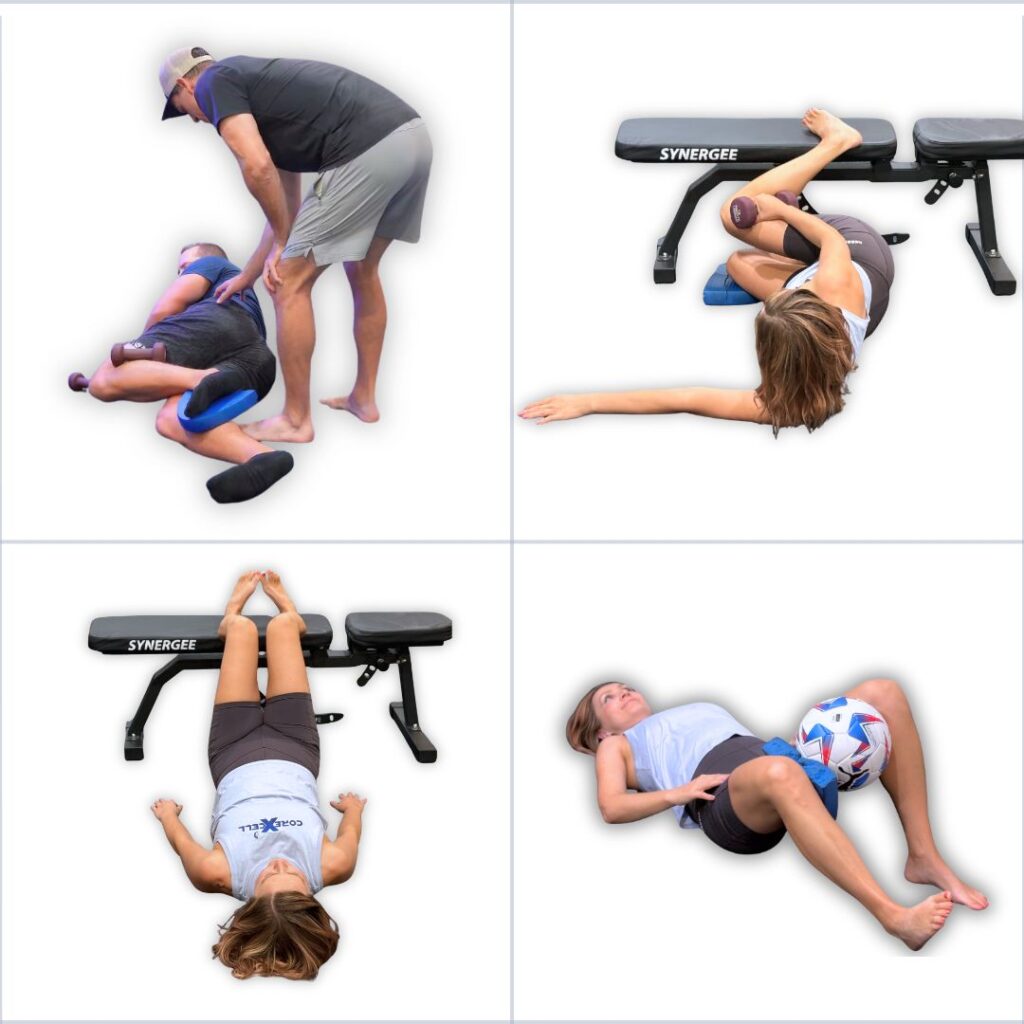
Physical Therapist Glute Exercises Don’t Fix the Problem
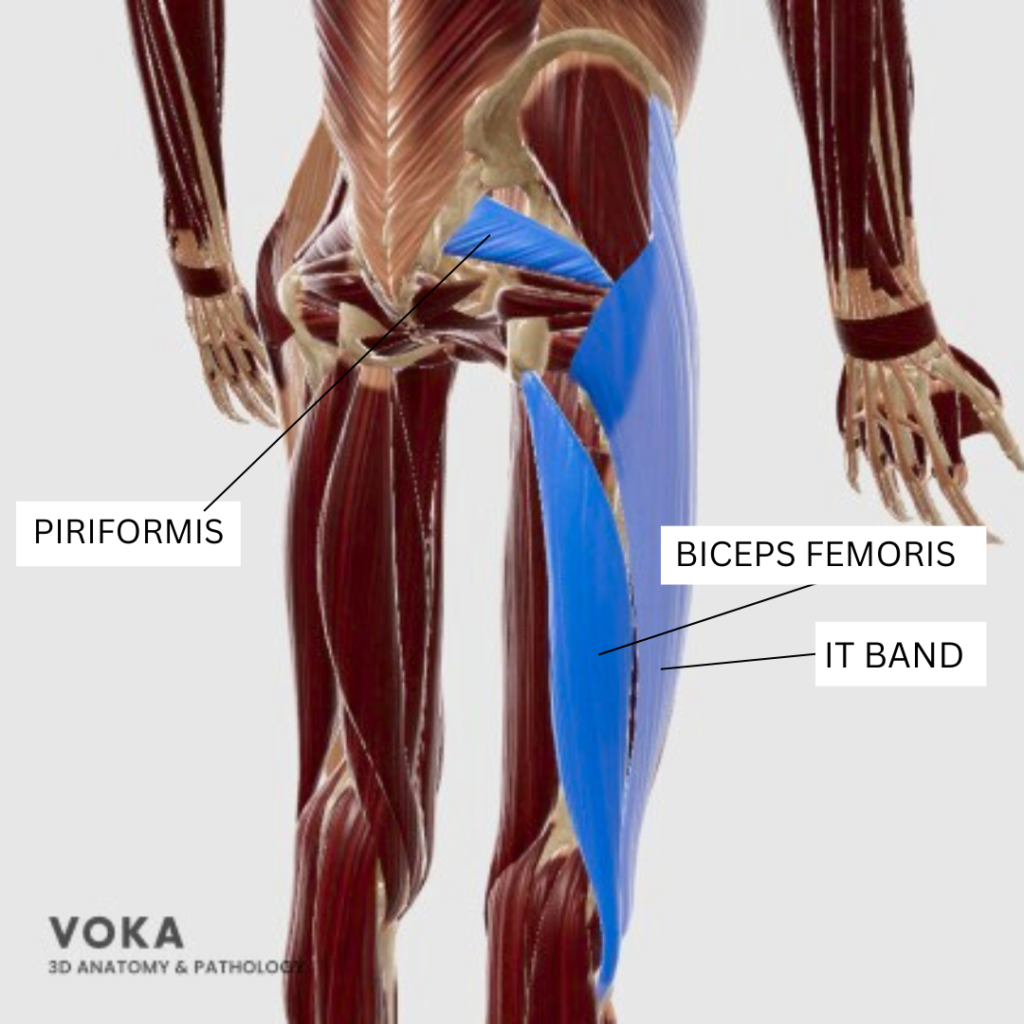
Many physical therapists and trainers understand that low back pain often comes from weak glutes, but they prescribe the wrong glute exercises, which end up reinforcing compensations instead of fixing the true weakness. Movements such as band walks, clamshells, glute bridges, and adductor/abductor machines primarily activate the glute max and the upper portion of the glute medius, while overworking the TFL and the lateral rotators like the piriformis, sartorius, and biceps femoris. When these dominant muscles take over, hip stability gets worse, the pelvis becomes more unstable, and the lower back absorbs even more strain.
This is especially problematic for clients with sciatica symptoms, because traditional PT glute work typically emphasizes external rotation, which further tightens and irritates the piriformis. Since the piriformis is usually already overactive and compressing the sciatic nerve, these exercises often lead to increased nerve irritation and flare-ups, rather than relief.
This is why so many people complete physical therapy glute programs and still struggle with low back pain, sciatica, or recurring tightness. The stabilizers that matter most were never actually trained
Corexcell Glute Exercises Fix the Root Cause
At Corexcell Rehab Center, we developed a 4-exercise hip and glute system designed to fix low back pain at its source, without surgery, pain pills, or injections. Instead of reinforcing lateral-rotator dominance, our system isolates the medial hip rotators, the exact muscles responsible for stabilizing the pelvis and controlling femur alignment.
By isolating the correct stabilizers and preventing compensations, the pelvis finally levels, the femur aligns underneath it, and the lumbar spine no longer absorbs excessive torque or compression with every step or lift. This hip-first, exercise-based approach is the foundation of how we treat chronic low back pain for Greenville SC patients who have not improved with traditional physical therapy.
The principle behind our system is simple: you must feel only the target stabilizer, nothing else. If you feel the TFL, piriformis, outer quad, hip flexors, or hamstring taking over, the weak link is not being strengthened, and the pattern that caused the back pain will continue.
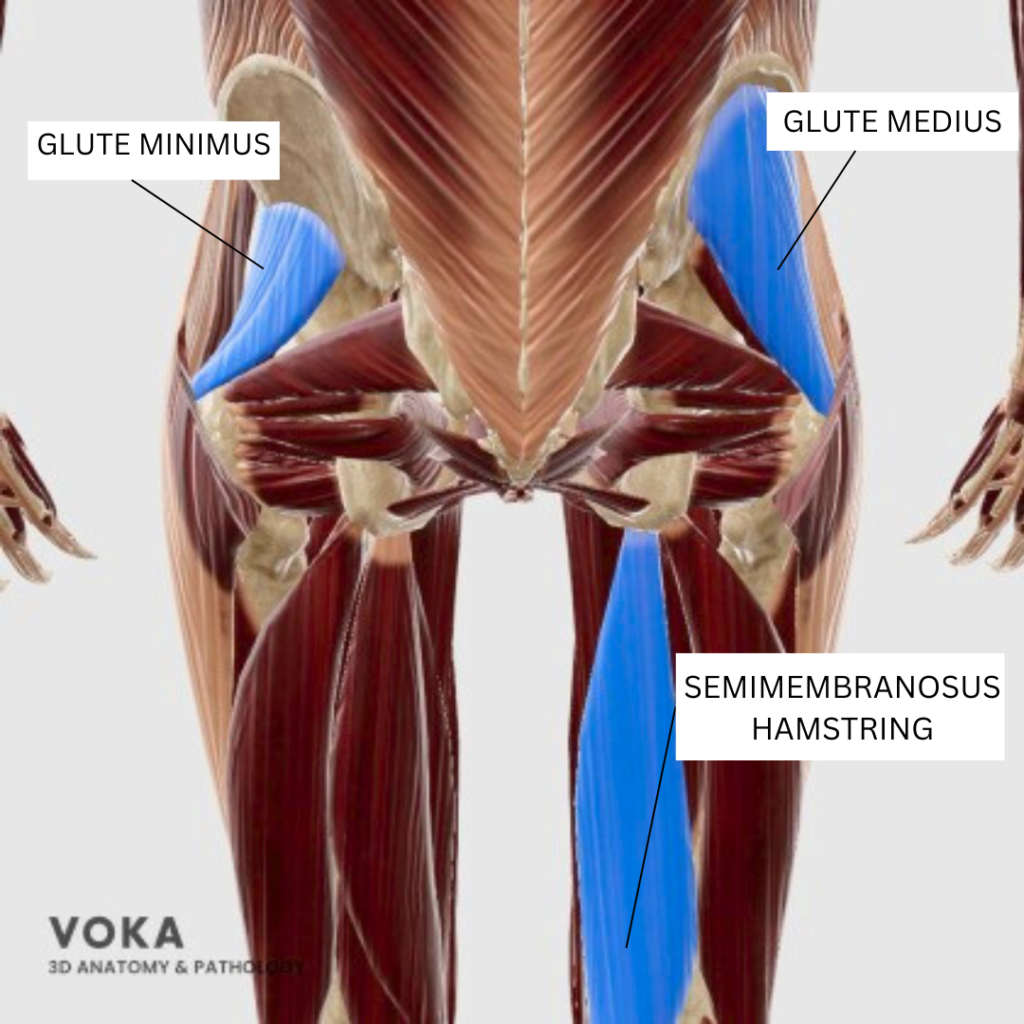
To ensure precision, the Corexcell Rehab App includes activation testing that confirms the correct stabilizers are firing, specifically the anterior glute medius, glute minimus, adductor chain, and semimembranosus, before progressing into more advanced loading or angles.
When these stabilizers begin firing consistently, the hips finally provide the foundation the spine has been missing. Low back pain decreases naturally, disc irritation settles, nerve tension calms down, and movement becomes stable and pain-free. Once the hip complex becomes strong and properly aligned, the pelvis stays neutral, the femur tracks correctly, and the deep core can do its job without compensating for dysfunction below it.
Our low back rehab programs serve patients across Greenville, Taylors, Mauldin, Simpsonville, Greer, and the greater Upstate SC region, both in person and through our virtual rehab system.
The 4 Exercise Target Muscles
- Glute Fly: Anterior portion of the glute medius
- Knee Drop: Glute minimus
- Internal Ball Squeeze: Adductor brevis, adductor longus, gracilis
- Medial Hamstring Bridge: Semimembranosus hamstring
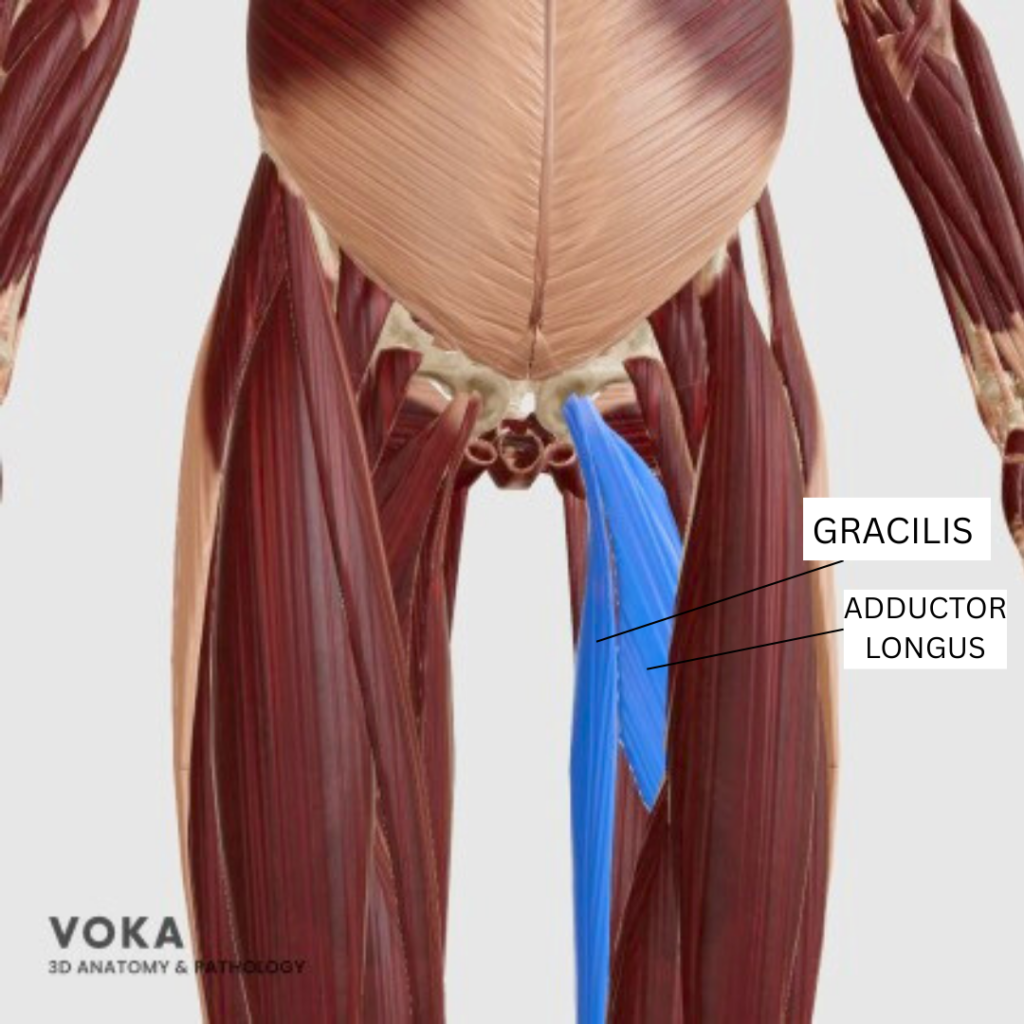
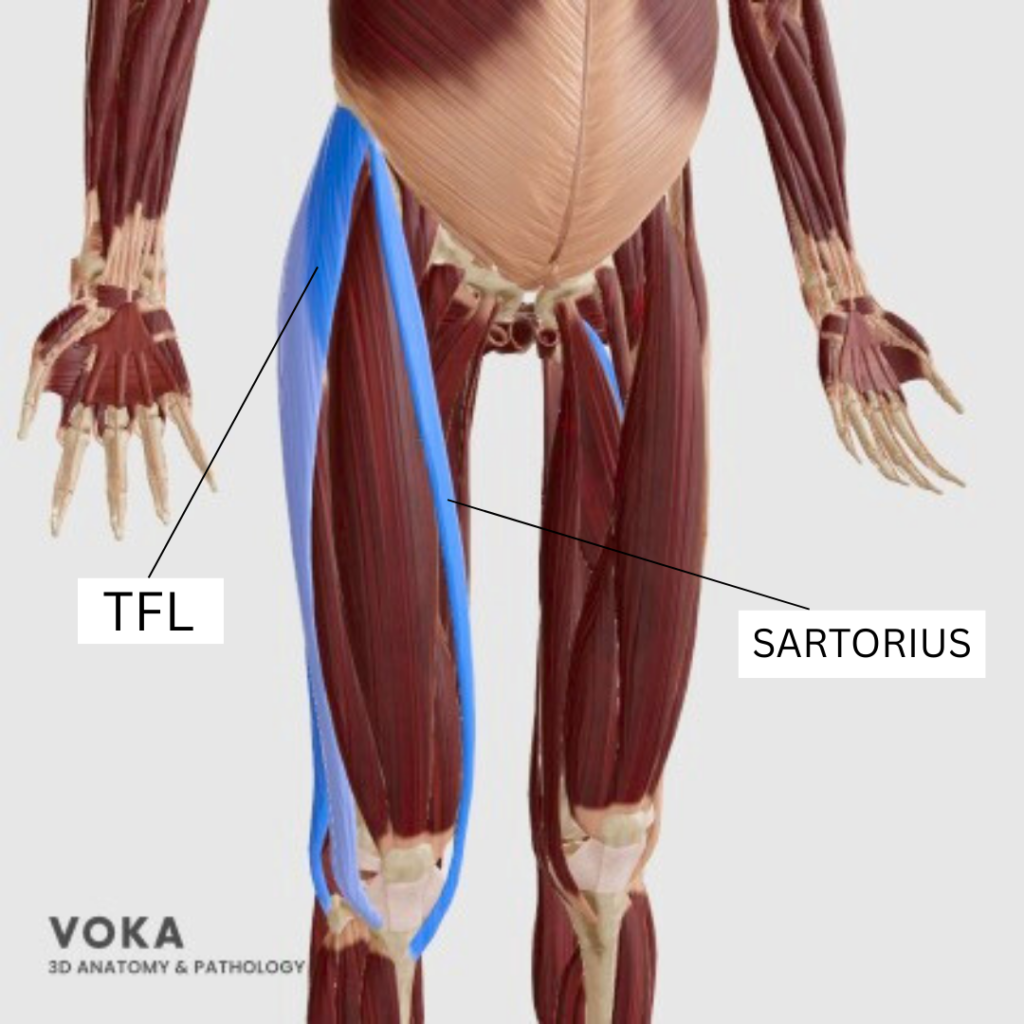
Compensations You Must Avoid Feeling
If you feel any of the following muscles working, the weak link is not being activated:
- Piriformis
- TFL
- Sartorius
- Biceps femoris
Ready to start your recovery today?
- Book a Private Session →
- Purchase the COREX12 Rehab App →
- See Real Client Testimonials →
Anterior pelvic tilt places excessive compressive load on the lower back and is one of the most common contributors to chronic lumbar pain, disc irritation, spinal stenosis, and sacroiliac joint issues. When the pelvis tips forward, the lumbar spine is forced into hyperextension, increasing pressure on the discs and facets and making the low back work far harder than it should.
Using the Corexcell 4 hip exercises to strengthen the medial hip rotators combined with core movements like leg lifts or planks performed in a posterior pelvic tilt helps restore a neutral spine angle and takes a tremendous amount of pressure off the lower back. These exercises teach the pelvis to move out of excessive extension and begin correcting the imbalance behind anterior pelvic tilt. However, this approach will only resolve about 70-80% of the problem. Strengthening the hips and doing general core work improves alignment, but on their own, they cannot fully correct anterior pelvic tilt.
This corrective approach is a core part of how we treat anterior pelvic tilt and chronic low back pain for Greenville SC patients who have not improved with traditional physical therapy.
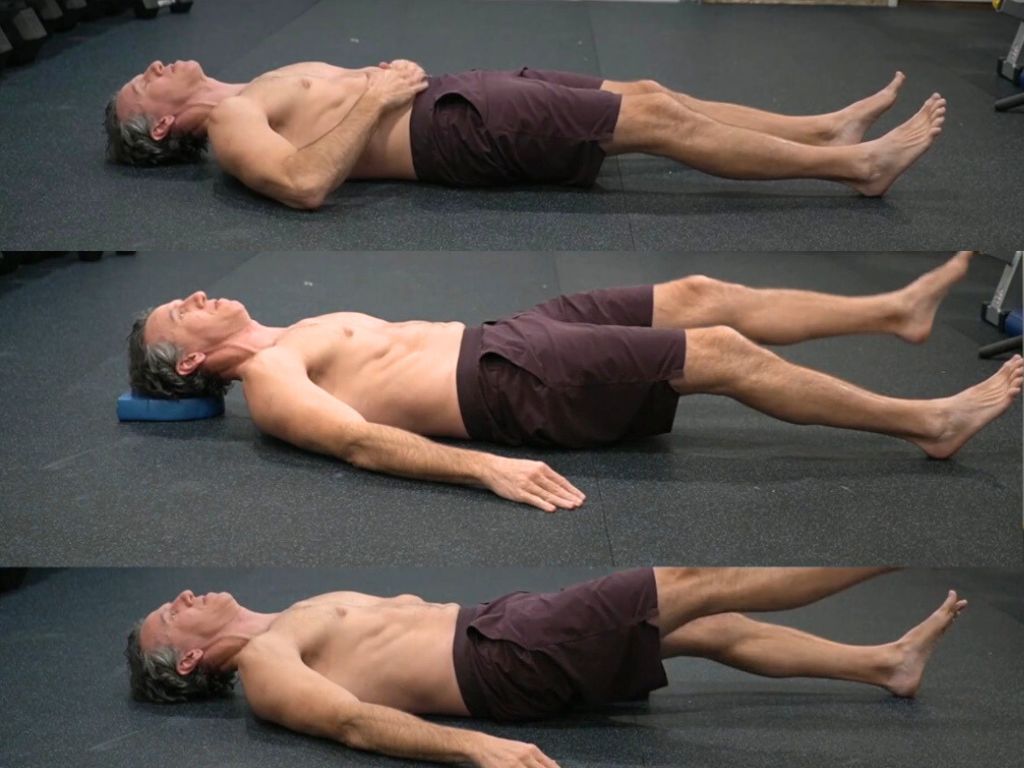
At Corexcell, we correct anterior pelvic tilt through a foundational activation drill we introduce on day one: The Core Fixer. The Core Fixer is performed in a supine position with the head on the floor, focusing on flattening the lower back into the floor while performing single leg lifts. This mirrors natural standing posture while eliminating the compensations that occur when the head or trunk flex forward, as they often do during planks or leg lifts.
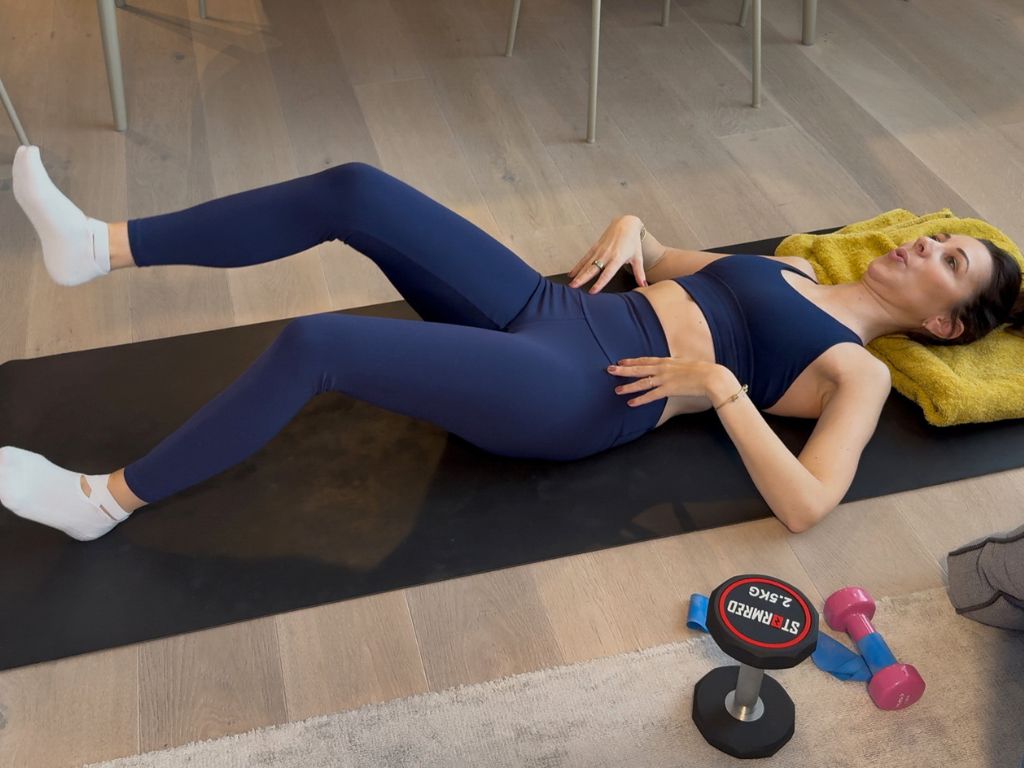
The exercise teaches proper posterior tuck and pelvic alignment by connecting the transverse abdominis, the diaphragm, and the iliacus, the deep hip flexor responsible for pulling the pelvis into a true posterior position. Practiced daily, this retrains the body to maintain a neutral pelvis and reduces the excessive lumbar extension driving chronic low back stress.
Problems with Traditional Abdominal Training
Traditional ab exercises performed in head & trunk flexion like crunches, sit-ups, leg lifts, and many plank variations shift activation into the psoas and rectus abdominis. While these movements help strengthen the core and offer some protection for the low back, the heavy psoas involvement reinforces anterior pelvic tilt rather than correcting it. Even planks position the head and ribcage slightly forward, preventing full engagement of the transverse abdominis and iliacus the way the supine Core Fixer does.
This is why clients with anterior pelvic tilt must first master the Core Fixer before adding traditional core-strengthening exercises for long-term support. By teaching clients how to position the pelvis correctly, breathe properly, and activate the right deep core muscles, anterior pelvic tilt begins to correct naturally, reducing lumbar compression and allowing the hips and spine to move the way they were designed to.
This anterior pelvic tilt correction strategy is a core part of how we treat chronic low back pain for Greenville SC patients who have not improved with traditional physical therapy or core-only programs.
Hip Rotation & Pelvic Alignment: Fix One-Sided Low Back Pain in Greenville
Once the major hip and glute weaknesses have been corrected through the Corexcell 4-exercise system, the next step is addressing pelvic rotation and hip hike. These imbalances create torque through the lumbar spine and SI joint and are one of the most common reasons people experience one-sided low back pain. However, trying to manipulate the pelvis before strengthening the glute and adductor stabilizers is a major mistake. If the stabilizers aren’t strong enough to hold the pelvis in position, rotational or lateral corrections will only increase lumbar and SI joint stress, even if the posture looks more “aligned.”
Many Greenville SC patients with one-sided low back pain or SI joint symptoms come to us after traditional physical therapy never corrected the underlying pelvic rotation driving their pain.
Hip Rotation – Dominant-Side Low Back Pain
Most people naturally rotate toward their non-dominant side during daily activities. For example, a right-handed person typically rotates left when reaching onto a shelf, swinging a golf club, hitting a tennis forehand, or reaching across the body. Over time, this creates a predictable imbalance: the pelvis rotates toward one side, the dominant glute becomes rotationally weak, and the groin and hip-flexor chain become overactive. This imbalance places excessive torque on the dominant-side low back and SI joint.
To correct this, the Corexcell system restores balance by training rotation toward the opposite side of your habitual pattern. One of our key drills is an isometric standing punch or standing swing performed by rotating the pelvis into the opposite direction and holding end-range. This repositioning activates the underused medial hip chain and gradually reduces rotational stress on the dominant-side lumbar spine.
Hip Hike – Non-Dominant-Side Low Back & SI Joint Pain
Right-handed athletes (and most active individuals) also develop a second predictable compensation: the right side becomes compressed through the hip flexor, groin, and abdominal chain. Because they are constantly rotating left, the left glute max and upper glute medius become overly dominant, while the left iliacus, groin, and lower abdominal chain become weak and underactive. When these muscles are weak, the left side of the lumbar spine and SI joint absorb more load, leading to left-sided low back pain or pain just above the iliac crest.
Additionally, this imbalance eventually creates a lateral pelvic shift and a slight S-curve in the spine. The left hip begins to sit higher, forming a classic hip hike. The left hip flexor, quadriceps, hamstrings, TFL, and lateral hip tissues feel chronically tight. This pattern is also responsible for many cases of piriformis syndrome, knee pain, and a pinching sensation in the left hip flexor (sartorius, pectineus, and rectus femoris).
To fix a true hip hike, we use our Core Fixer, which activates the iliacus and transverse abdominis in a posterior pelvic tilt without feeding the overactive psoas or rectus abdominis. This restores symmetry, corrects anterior pelvic tilt, levels the pelvis, and removes the torque that has been driving chronic one-sided hip pain.
Why We Don’t Start with Stretching for Low Back Pain in Greenville
Most physical therapists recommend the McKenzie Extension “yoga cobra stretch” for clients with herniated discs or general low back pain. While cobra can provide temporary relief in some cases, it often makes symptoms worse for people with anterior pelvic tilt because it forces the spine into even more extension. More importantly, no stretch, including cobra, can fix the underlying issue, which is the lack of strength and activation in the medial hip rotators responsible for stabilizing the pelvis.

At Corexcell, we do believe stretching plays an important role in long-term low back health. Most clients arrive with extremely tight hamstrings, quads, and psoas, and stretching these muscles consistently a few times per week can offer real long-term benefit. However, we do not begin stretching until the hip and glute weaknesses have been corrected through the 4 foundational Corexcell hip exercises.
Many Greenville SC low back pain patients come to us after months of stretching and traditional physical therapy have failed to correct the hip and pelvic instability driving their symptoms.
Stretching before fixing the weak links only reinforces compensations. The body is still in a misaligned state, so the tight muscles will simply rebound back to being tight, because the underlying instability is still present. Once hip stability is restored, stretching becomes far more effective, the muscles relax more naturally, and the improvements stick.
Stretching alone will never correct low back pain.
Fix the hip weakness first and only then will mobility work deliver real, lasting results.
Corex12 Full Body Rehab App for Greenville & Beyond
Our Rehab App is called COREX12: a 3-phase system built around 12 total foundational exercises to fix the core, hips, shoulders, and legs. You can choose to follow the full-body program or focus only on the shoulder or only on the lower body. There are also additional modules for the neck, wrists, and ankles.
This program supports an exercise-based low back rehabilitation approach in Greenville SC that corrects pelvic alignment, hip stability, and deep core control rather than relying on traditional physical therapy protocols.
3-Phase Approach to Low Back Rehab in Greenville
Phase 1 – The Foundations
Phase 1 focuses on mastering the four foundational Corexcell hip exercises through precise video instruction and activation testing. During this phase, clients learn how to feel the correct target muscle in each movement without letting compensations take over. The goal is to build a strong mind-muscle connection and perfect technique with light weight before progressing. We also include two core exercises to fix anterior pelvic tilt and a wall-squat variation as a fifth exercise when pain-free, allowing clients to begin developing compound strength while still correcting the underlying weaknesses.
This phase is the foundation of our Greenville low back recovery program and is required before progressing into heavier loading or sport-specific work.
Phase 2 – Advancements
Once a client passes all four activation tests, they advance into Phase 2. The original foundational exercises are replaced with more demanding variations that target the same stabilizers from new angles and at higher intensities, fully correcting the weakness patterns responsible for the injury. Because pressure is now removed from compensating muscles, this is also when we introduce hip-rotation and pelvic-alignment drills from the previous section, along with a structured stretching routine. Clients also begin a simple, high-rep strength program at this stage, including movements such as single-leg RDLs, dumbbell deadlifts, and bodyweight lunges and squats.
Phase 3 – Corrective Lifting
In Phase 3, we combine the advanced corrective work from Phase 2 with a foundational lifting program. This phase adapts to each client’s training background and restores full hip strength, control, and durability so they can return to higher-level lifting, running, and sport without compensation.
Ready to start your recovery today?
- Book a Private Session →
- Purchase the COREX12 Rehab App →
- See Real Client Testimonials →
Low Back Pain & APT: Greenville Non-Surgical Treatment
Understanding Low Back Pain & APT in Greenville
Low back pain and anterior pelvic tilt (APT) almost always show up together. APT forces the pelvis to tilt forward, driving the lumbar spine into excessive extension. This increases compression on the discs, irritates the facet joints, strains the SI joint, and forces the low back muscles to work overtime just to stabilize the body. Clients commonly experience tightness, spasms, sharp bending pain, soreness after sitting or standing, and deep aching near the beltline, all signs of APT-driven low back pain.
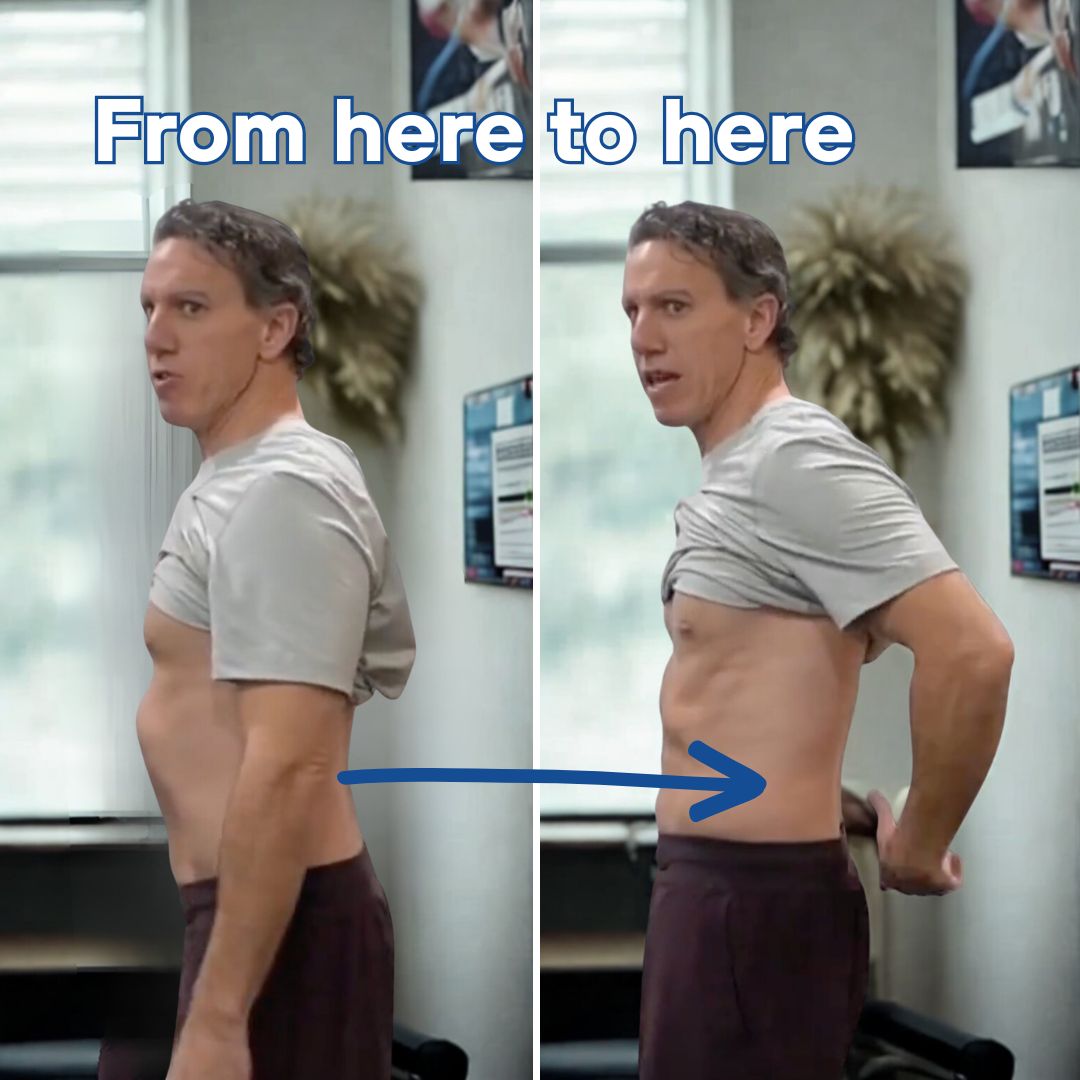
This pattern is especially common in Greenville SC low back pain patients who sit for long hours, train hard in the gym, or spend time walking or running on the Swamp Rabbit Trail.
The Real Cause: Hip Weakness Creating Excessive Lumbar Extension
APT develops when the glute medius, glute minimus, and adductor chain are too weak to stabilize the pelvis, while the iliopsoas and outer hip muscles become dominant. This imbalance pulls the pelvis forward, increases lumbar extension, and transfers load directly into the lower back. Over time, this leads to recurring low back strain, disc irritation, and one-sided tightness due to pelvic rotation.
Why Traditional PT Doesn’t Fix APT-Related Back Pain in Greenville
Most physical therapy programs rely on core-focused exercises like planks, leg lifts, crunches, bird dogs, and McGill’s Big 3. While these movements can strengthen the core and temporarily reduce low-back discomfort, they do not fully correct pelvic alignment. Even when performed with a posterior pelvic tilt, traditional core exercises still create too much psoas shortening, while strengthening the rectus abdominis more than the deep stabilizers. Any shortening or overactivation of the psoas makes anterior pelvic tilt and the symptoms that come with it worse, not better. The key is using core work that targets the transverse abdominis and iliacus, not exercises that reinforce psoas dominance.
This is why many Greenville SC low back pain patients come to Corexcell after traditional physical therapy focused on core strengthening fails to correct the hip and pelvic instability driving their pain.
How Corexcell Fixes Low Back Pain & APT in Greenville
The Corexcell 4-exercise system activates the stabilizers that truly control pelvic alignment; the anterior glute medius, glute minimus, adductor chain, and semimembranosus, while preventing compensations from the TFL, piriformis, outer quad, and hip flexors. When these muscles begin firing correctly, the pelvis naturally shifts out of excessive anterior tilt, the femur aligns properly under the hip, and the lumbar spine no longer must overextend or absorb torque during movement.
To ensure these stabilizers are firing correctly, we use guided activation testing available inside the Corexcell Rehab App, allowing clients to verify proper muscle engagement before progressing into higher-level movement. This hip-first approach is the foundation of our exercise-based low back rehabilitation in Greenville and is required before progressing into heavier loading or advanced core work.
To further reinforce this new pelvic alignment, we introduce our foundational deep-core exercise: The Core Fixer. Performed in a supine position, it eliminates head and trunk compensations and teaches the client how to maintain a proper posterior tuck and pelvic alignment while connecting the transverse abdominis, diaphragm, and iliacus. This ensures the pelvis stays corrected during breathing and everyday movement.
Together, these two components, hip stabilization and deep-core integration, correct APT at its root. Allowing low-back pain to resolve naturally and movement to become smooth, stable, and pain-free.
Most clients see meaningful improvements around the 2-month mark, with full correction typically occurring within 3 – 5 months, depending on consistency and severity. Many of our Greenville SC low back pain and APT patients come to us after traditional PT fails to correct the stabilizer weakness causing the injury.
Sciatica, Herniated Discs & Bulging Discs: Non-Surgical Low Back Treatment in Greenville
Understanding Sciatica & Disc Pain
Sciatica is one of the most misunderstood low back conditions. The Mayo Clinic defines sciatica as pain radiating along the sciatic nerve, which runs from the lower back through the hips and down each leg. Although it feels like a nerve problem, symptoms such as sharp pain, tingling, numbness, burning, or discomfort traveling down the leg are most often driven by mechanical instability rather than isolated nerve damage.
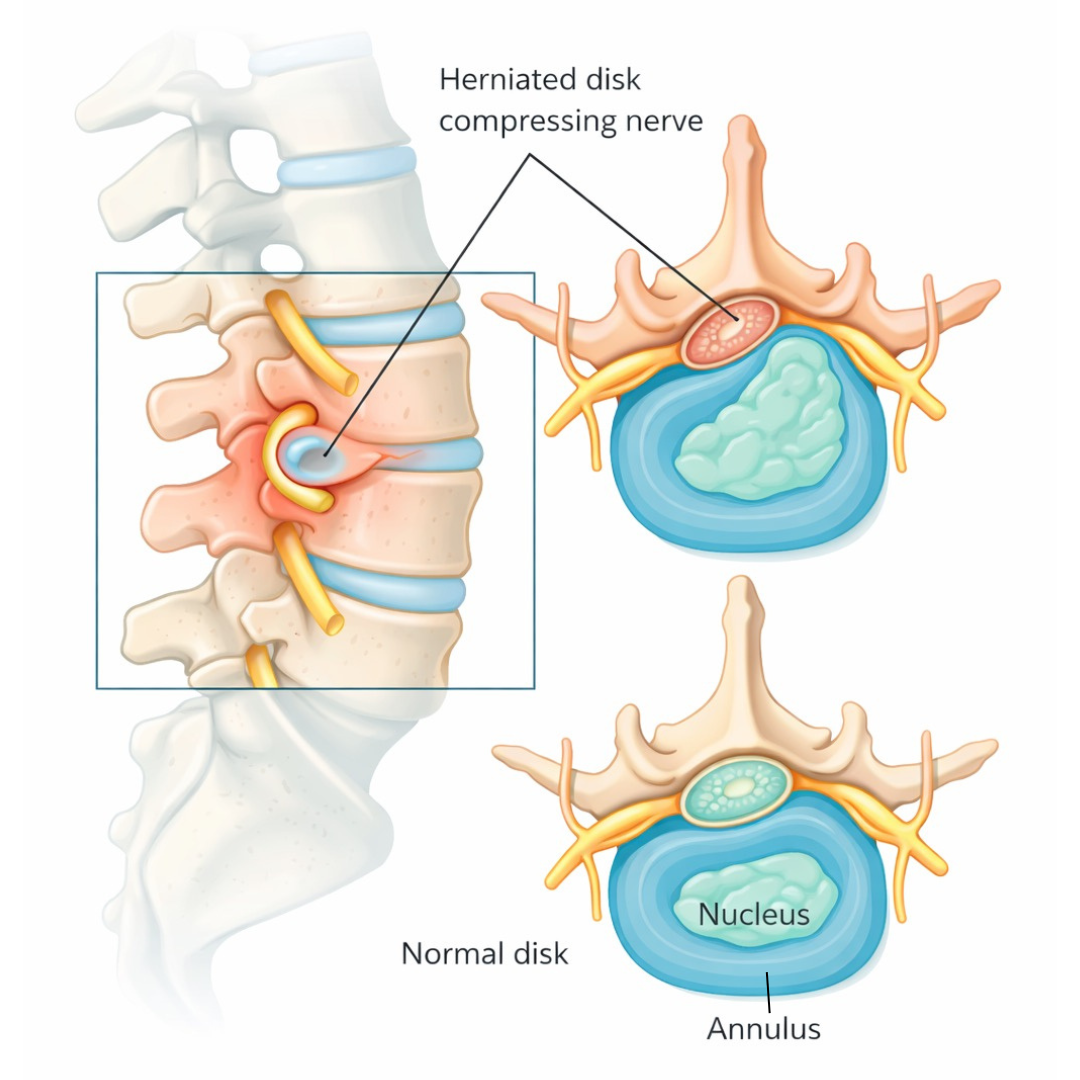
Herniated and bulging discs frequently produce many of the same symptoms. In many clients, disc irritation and sciatica overlap. While these conditions may feel different, the underlying cause is usually the same.
When the hips and pelvis are unstable, the lumbar spine and sciatic nerve are forced to absorb forces they were never designed to handle. This is why sciatica symptoms often worsen with sitting, bending forward, standing for long periods, or walking uphill, movements that place added stress on a pelvis stuck in anterior pelvic tilt or rotational misalignment.
Sciatica develops when the sciatic nerve becomes irritated or tensioned because the pelvis cannot maintain neutral alignment. Herniated and bulging discs occur when excessive lumbar compression pushes disc material outward and irritates surrounding nerve tissue. Although one condition may feel more “nerve-like” and the other more “disc-like,” both occur because the pelvis is unstable and the hips are not controlling movement correctly.
Many Greenville SC low back pain and sciatica patients come to us after imaging shows disc changes, yet symptoms persist despite rest, injections, or traditional physical therapy.
The Real Cause: Pelvic Instability & Hip Weakness
Both sciatica and disc irritation begin when the stabilizers of the pelvis are weak. When the glute medius (anterior fibers), glute minimus, and adductor chain fail to control the pelvis, it tilts forward or rotates to one side. As this happens, the psoas shortens and pulls the spine into extension, the piriformis tightens to stabilize, and the lumbar spine absorbs excessive shear and compression.
The result is increased nerve tension, increased disc pressure, and a predictable pattern of pain running through the lower back, glute, or leg. Sciatica, piriformis syndrome, disc irritation, SI joint pain, and one-sided low-back pain are not separate injuries; they are different symptoms of the same mechanical instability.
Why Traditional Physical Therapy Often Fails for Sciatica in Greenville
Most PT programs treat symptoms rather than the mechanics beneath them. Hamstring stretching, piriformis stretching, nerve flossing, back extensions, and McKenzie press-ups may temporarily reduce discomfort, but none correct the weak hip stabilizers or faulty pelvic alignment causing the nerve or disc irritation. Even “glute strengthening” exercises like clamshells, bridges, and band walks mostly activate the TFL, piriformis, and upper glute medius, which are already dominant and part of the problem. Because the root cause remains unaddressed, symptoms almost always return once clients sit longer, bend, lift, or increase activity.
This is why many Greenville SC sciatica and disc patients report that traditional physical therapy helped briefly but failed to provide lasting relief once daily activity or exercise resumed.
How Corexcell Fixes Sciatica & Disc Pain in Greenville
The Corexcell 4-exercise hip system activates the muscles responsible for true pelvic control – the anterior glute medius, glute minimus, adductor chain, and semimembranosus, while preventing compensations from the TFL, piriformis, hip flexors, and outer quad. These stabilizers must activate with precision. If the wrong muscles fire, the weak link is not being trained, and the nerve or disc will remain irritated.
Through activation testing inside the Corexcell Rehab App, clients learn to feel the exact correct muscle in the exact correct spot, ensuring each stabilizer fires without compensation before progressing. Because many sciatica cases involve piriformis overactivity, the Corexcell system prevents the TFL, piriformis, and lateral rotators from compensating, allowing the piriformis to relax and stop gripping the nerve
This hip-first approach is the foundation of how we treat sciatica and disc-related low back pain for Greenville SC patients who have not improved with traditional physical therapy.
To reinforce this alignment, we use The Core Fixer, teaching clients how to maintain a proper posterior pelvic tuck, deep-core engagement, and neutral pelvic alignment during breathing, bending, lifting, sitting, and walking. This prevents the pelvis from tipping or rotating and keeps disc pressure low throughout daily life.
Most clients notice meaningful improvement by the two-month mark, with full recovery typically occurring in three to five months for sciatica and six to nine months for disc-related cases.
Our low back and sciatica programs serve Greenville SC patients both in person and through our virtual rehab system, following the same step-by-step corrective process used in our clinic.
One-Sided Low Back Pain & SI Joint Pain in Greenville: Fixing Pelvic Rotation & Hip Hike
Understanding One-Sided Low Back & SI Joint Pain
One-sided low back pain and SI joint pain almost always come from pelvic asymmetry, not from a damaged joint or spine. Clients often describe pain isolated to one side of the low back, a sharp pinch near the SI joint, tightness above the hip crest, or discomfort when walking, twisting, or bending. These symptoms appear when one side of the pelvis absorbs more load than the other, causing the lower back and SI joint to become overstressed.

Even though the pain feels like it’s coming from the SI joint or spine, the real issue is almost always hip weakness, pelvic rotation, or hip hike forcing one side of the lumbar spine to compensate with every step.
The Real Cause: Pelvic Rotation, Hip Hike & Unilateral Hip Weakness
Most one-sided low back and SI joint pain begins when the pelvis becomes stuck in a rotated or tilted position. This often comes from years of side-dominant habits. Right-handed individuals naturally rotate left when reaching, lifting, or swinging. Over time, this creates a predictable imbalance: the right glute medius becomes underdeveloped in its anterior and rotational fibers, while the left side becomes weak in the iliacus, groin, and lower abdominal chain that stabilize the pelvis.
When these stabilizers are weak, the pelvis shifts into rotation or develops a slight hip hike. This forces the left SI joint and left lower back to absorb more pressure with every step, bend, or twist – creating the classic pattern of one-sided pain.
The issue is not the SI joint itself. It is the imbalanced pelvis pulling the joint into a stressed, overloaded position.
Why Traditional Physical Therapy Doesn’t Fix One-Sided Pain in Greenville
Traditional physical therapy often focuses on stretching the tight side, mobilizing the SI joint, or strengthening the “weak” side. While these methods may offer temporary relief, they do not correct the underlying asymmetry. Exercises like clamshells, bridges, band walks, or generic core work activate the glute max, TFL, piriformis, and outer hip muscles far more than the deep stabilizers that restore pelvic balance.
Stretching the tight side simply loosens tissue temporarily, but the pelvis shifts right back into the same misaligned position because the stabilizers responsible for holding alignment are still weak.
Many Greenville SC one-sided low back and SI joint pain patients come to us after traditional physical therapy never corrected the pelvic rotation and hip hike driving their symptoms.
How Corexcell Fixes One-Sided Low Back & SI Pain in Greenville
The Corexcell 4-exercise hip system, guided through our Corexcell Rehab App, activates the stabilizers that correct pelvic rotation and hip hike – the anterior glute medius, glute minimus, adductor chain, and semimembranosus. As these muscles activate evenly on both sides, the pelvis stops twisting and the overloaded side of the spine finally decompresses.
For clients with dominant-side low back pain (commonly right-sided), we also retrain rotation toward the opposite direction using our standing punch or standing swing isometrics. This teaches the pelvis how to rotate back into neutral and forces the underactive hip muscles to engage correctly.
For clients with hip hike, targeted activation of the iliacus and lower abdominal chain in a posterior pelvic tilt restores balance so the pelvis can sit level instead of slanting upward on one side.
As hip and pelvic stability improve, the SI joint stops jamming, the lower back stops compensating, and the one-sided pain fades naturally. Walking becomes smoother, standing feels more even, and bending no longer triggers sharp pain on one side. This corrective approach is used for Greenville SC low back and SI joint patients training in person at our clinic or following the same rehab system remotely through our virtual program.
Most clients notice meaningful improvement around the two-month mark, with full correction typically occurring within three to five months, depending on the depth of the asymmetry.
Frequently Asked Questions about Low Back Pain & Corexcell Rehab
Ready to start your recovery today?
- Book a Private Session →
- Purchase the COREX12 Rehab App →
- See Real Client Testimonials →
Schedule Your Consultation Today
Don’t let low back pain limit your life in beautiful Greenville. Whether you’re dealing with a recent injury from the Swamp Rabbit Trail or chronic pain that’s been building for months, our expert team is here to help. Discover why athletes, professionals, and seniors trust Corexcell as the top-rated low back rehab Greenville SC provider.
We offer comprehensive evaluation and treatment for all low back conditions, with convenient appointment times to fit your busy schedule. If you’re looking for physical therapy alternatives for low back pain in Greenville, Corexcell offers a proven, science-backed method with faster relief and longer-lasting results.
Contact Corexcell today:
- Online Scheduling: www.corexcell.com
- Main Center: 8 Elizabeth Street, Greenville SC 29609
- Phone: 908-318-4048
Office Hours:
- Monday & Wednesday: 8:00-11:00 AM – 5:00-8:00 PM
- Tuesday & Thursday 8:00 AM-1:00 PM, 4:00-5:00 PM
- Friday 9:00 AM – 1:00 PM
Insurance Not Accepted: We do not accept insurance plans. However, most clients use their health savings plan to pay for the therapy.
Conclusion: Your Path to Low Back Recovery in Greenville, SC
If you have been dealing with low back pain, sciatica, disc irritation, spinal stenosis, or one-sided SI joint pain, you have likely tried stretching, core exercises, chiropractic adjustments, or traditional PT without lasting results. That is because none of these approaches address the true source of the problem: weak hip and pelvic stabilizers that determine how your spine loads with every movement throughout the day.

Corexcell Rehab Center is top-rated for low back rehab in Greenville, SC. We do not chase symptoms. We correct the root biomechanics that cause the spine to become overloaded in the first place. Through our proven 4-exercise hip system, deep-core retraining, and personalized guidance, we help clients throughout Greenville and the surrounding Upstate areas rebuild stability from the ground up so the low back can finally move, bend, lift, and rotate without pain.
This approach also serves clients from Columbia, SC (and nearby Midlands communities like Lexington, Irmo, Cayce, West Columbia, Elgin, and Chapin) as well as Hendersonville, NC. It delivers the same proven lowback method through virtual or in person sessions and our COREX12 Rehab App for pain-free living without long drives.
Whether you are located in Greenville, SC and the surrounding Upstate region, or following our programs from anywhere in the world through virtual coaching and the Corexcell Rehab App, you can access the same step-by-step process that has helped thousands eliminate chronic low back pain naturally, safely, and permanently.
What Our Clients Say on Google
Contact Corexcell Rehab Center in Greenville today at 908-318-4048 or visit www.corexcell.com
Ready to start your recovery today?
- Book a Private Session →
- Purchase the COREX12 Rehab App →
See Real Client Testimonials >>