Expert Virtual Rehab for Knee Pain, Patellar Tendonitis, Meniscus Tears, ACL & MCL Injuries, and Knee Osteoarthritis
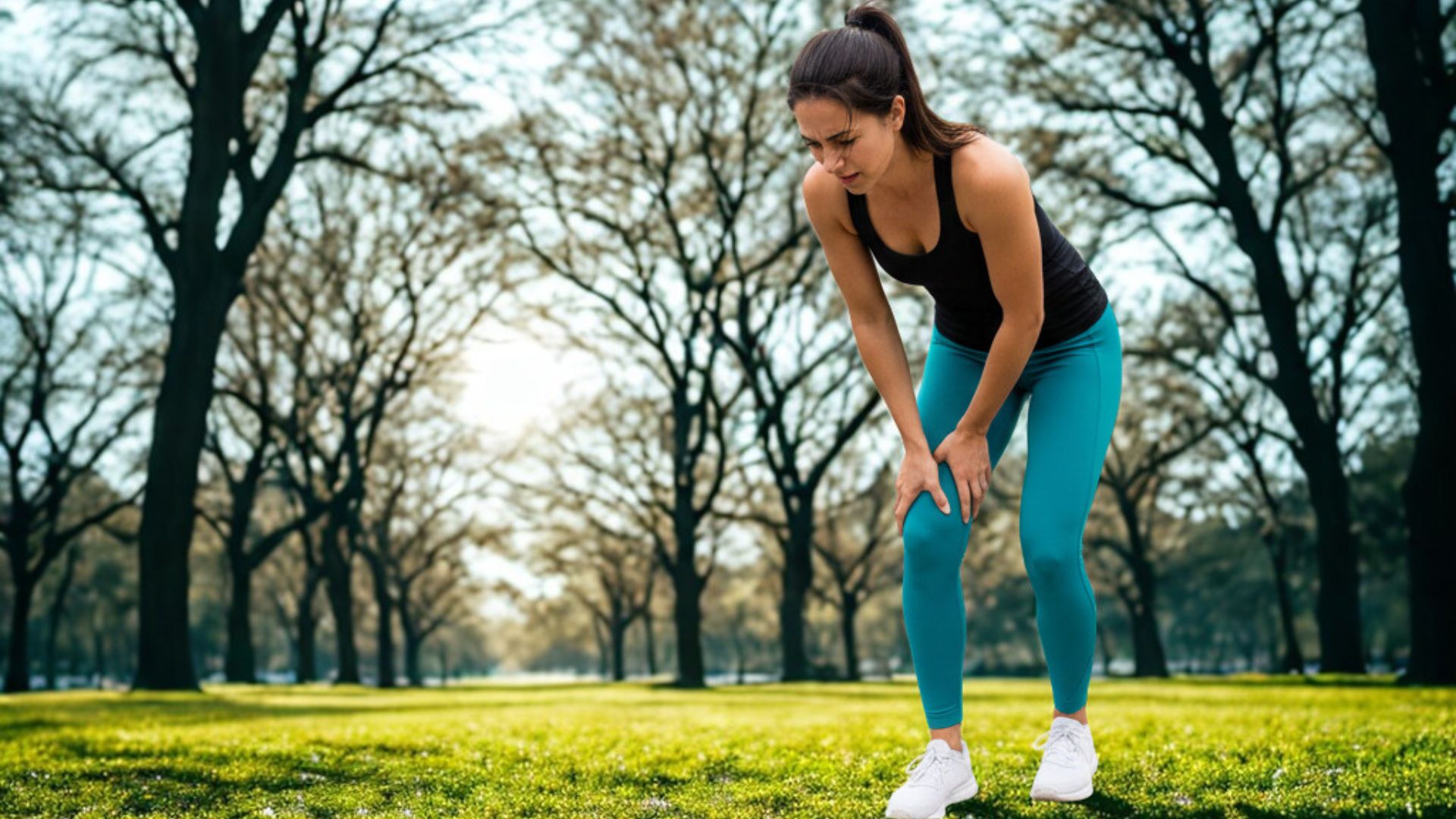
The Corexcell virtual knee rehab method is a proven online injury rehab program designed to help athletes and active adults across the United States fix knee pain from anywhere, without surgery, injections, or pain medication.
Navigation: Jump to a Topic
How it Works
The Corexcell Rehab Method for knee pain is designed to help clients worldwide understand the true biomechanical causes behind knee dysfunction and why most knee injuries do not originate at the site of pain itself. Instead, knee pain almost always develops when the deep stabilizers that control the pelvis and femur are too weak to properly stabilize the hip girdle.
Most physical therapists focus on quad and VMO stabilization first, strengthening the vastus medialis obliquus and overall quadriceps. They believe this creates a stable base for the knee. Many also prescribe traditional glute exercises like bridges, clamshells, or band walks, assuming these movements properly anchor the femur.
The problem: Most clients with patellar tendonitis, meniscus issues, ACL/MCL strain, or chronic osteoarthritis cannot correctly activate the true deep hip stabilizers during these exercises. Instead, the movements reinforce the same compensation patterns that caused the injury, driven primarily by the TFL, piriformis, hamstring-biceps femoris, Sartorius, and iliopsoas.
We believe this traditional philosophy is fundamentally flawed, which explains why so many people never fully recover through standard physical therapy.
At Corexcell, we take the opposite approach: rather than starting with the quads or clam shell variations, we focus on true knee stability by isolating the muscles that directly stabilize the pelvis and control femoral alignment. These muscles are:
- anterior glute medius
- glute minimus
- adductor chain
- medial hamstring
When these true deep stabilizers are weak or fail to activate properly, the pelvis tilts or rotates, the femur drifts inward or rotates excessively, and the knee is forced to absorb excessive torque, compression, and shear. This dysfunctional pattern is the root driver behind nearly every common knee condition, including patellar tendonitis, meniscus tears, ACL/MCL irritation, runner’s knee, and knee osteoarthritis.
The Corexcell online system restores proper pelvic and knee mechanics through four targeted exercises that strengthen these stabilizers while completely eliminating compensations. The rule is simple: you must feel only the target muscle working. If compensations take over and the target muscle is not felt, that muscle will not strengthen and progress will stop.
Ready to start your recovery today?
- Book a Private Virtual Session →
- Download the COREX12 Rehab App →
- See Real Client Testimonials →
Prefer In Person Sessions? Clients from across the country have the option to fly into Greenville, SC (GSP airport) for hands-on sessions – though most achieve full recovery completely virtually through our remote coaching and rehab app.
What Our Clients Say on Google
Hips & Glutes Fix Knee Pain: Not the Quads
Most physical therapy programs and trainers focus heavily on strengthening the quads and VMO to fix knee pain. At Corexcell, we’ve found this approach to be incomplete, and in many cases, counterproductive. Quad-focused rehab often provides temporary relief, but as soon as clients return to lifting or sports, the pain comes back because the true source of the problem was never addressed.
Knee pain rarely comes from a “weak knee.” It comes from weak hips and glutes that force the knee to absorb loads it isn’t designed to handle.
The real foundation of knee stability comes from the glute medius, glute minimus, and the adductor chain, which support the pelvis and femur. When these muscles are weak or uncoordinated, the pelvis shifts and the femur begins moving irregularly (rotating, drifting, or collapsing), which increases torque and compression on the knee joint with every step, squat, jump, or change of direction. This imbalance is at the root of nearly all chronic knee conditions, including general knee pain, patellar tendonitis, meniscus irritation, ligament strain, and even worsening knee osteoarthritis.
This is why, in most cases, the specific knee diagnosis matters less than the underlying mechanics. Fix the hip and glute weakness through our precise online injury rehab program, and the knee finally stops taking the brunt of the stress.
Once the hip complex is strong and properly aligned through our virtual knee rehab program, the knee gains the stability it has been missing. Only then is it safe and effective to incorporate VMO work, knee-over-toe training, and quad-dominant strengthening, because now the knee is supported by the hips rather than being forced to handle load by itself.
This hip-first approach is why clients nationwide who have struggled with knee pain for years (including those who haven’t improved with traditional PT) finally experience lasting relief with the Corexcell online system.
4 Exercises to Train the Hips & Glutes: Fix Chronic Knee Pain
The Corexcell virtual knee rehab method uses a unique 4-exercise system that fixes nearly every type of knee injury without surgery, pain pills, or injections, all from the comfort of your home. This proven online system isolates and strengthens the true weak link in your hips while eliminating the compensations that most traditional exercises unintentionally reinforce.
Most trainers and PTs try to strengthen the glutes and adductors with band walks, clamshells, glute bridges, or adductor/abductor machines. The issue is that these movements primarily hit the glute max and upper glute medius, while over-activating the TFL and lateral rotators (piriformis, sartorius, biceps femoris). This drives more compensation and actually reduces knee stability.
The Corexcell system solves this by isolating the medial hip rotators and preventing the TFL and lateral rotators from taking over. When the correct muscles activate, the pelvis stabilizes, the femur stays aligned, and knee irritation begins to resolve naturally.
The goal is simple: you must feel only the target muscles working, nothing else.
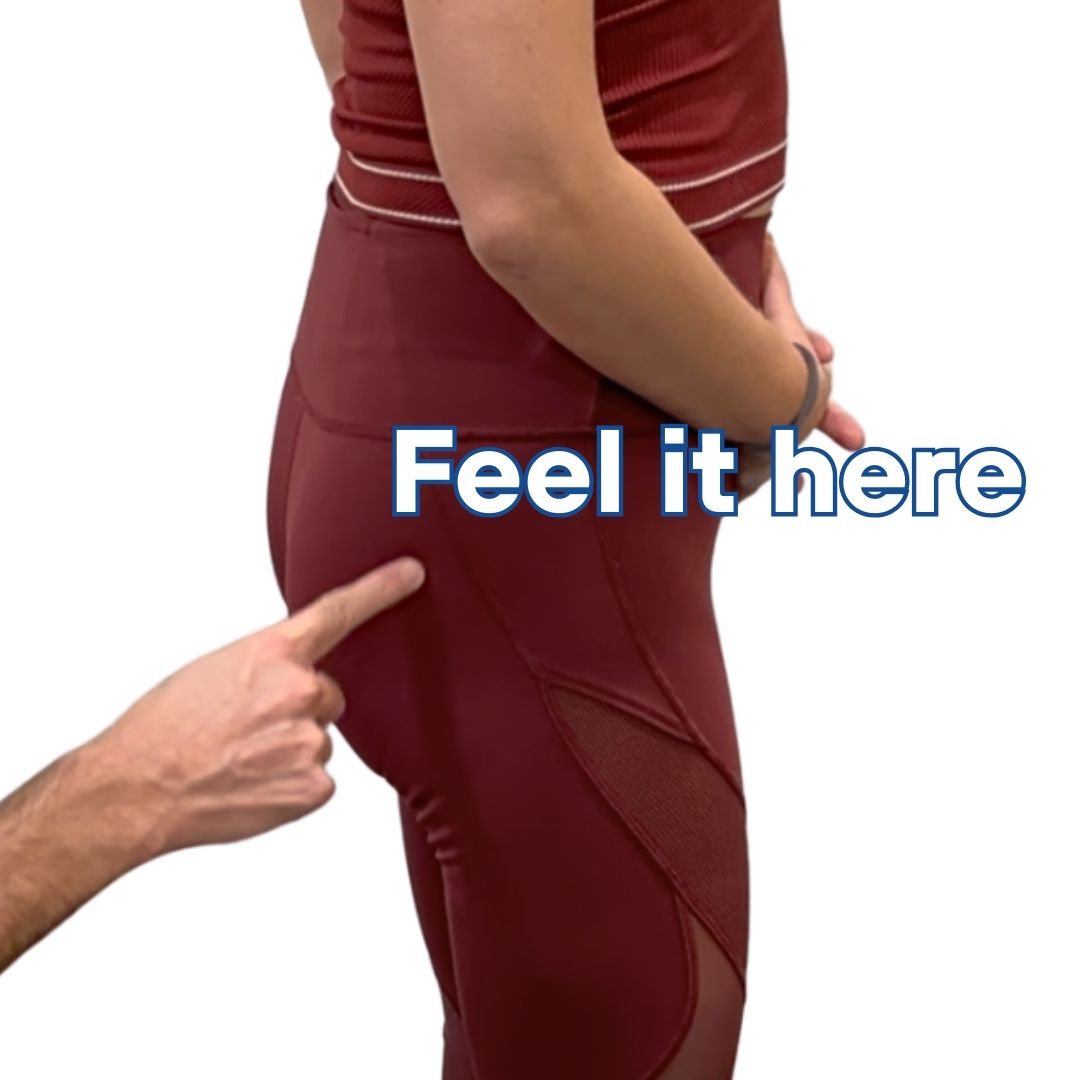
If you feel compensations instead of the correct muscle, the weak link will never strengthen.
Our online system ensures perfect isolation through built-in activation tests in the COREX12 Rehab App and virtual coaching guidance. You’ll confirm you’re activating the right muscle in the correct range before adding weight or progressing.
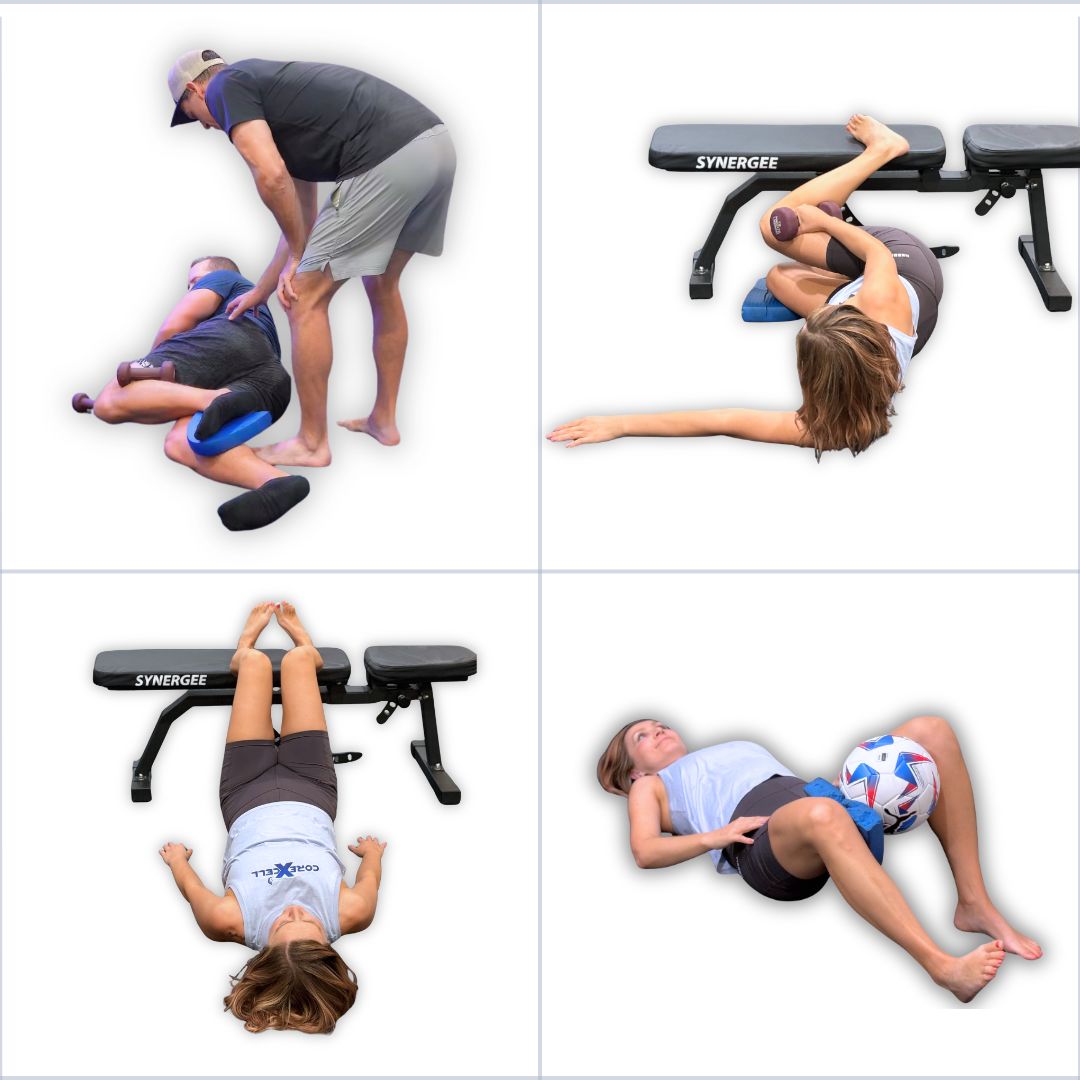
The 4 Foundational Exercises Target
- (Exercise 1) Anterior portion of the glute medius
- (Exercise 2) Glute minimus
- (Exercise 3) Adductor brevis, adductor longus, gracilis
- (Exercise 4) Semimembranosus (medial hamstring)

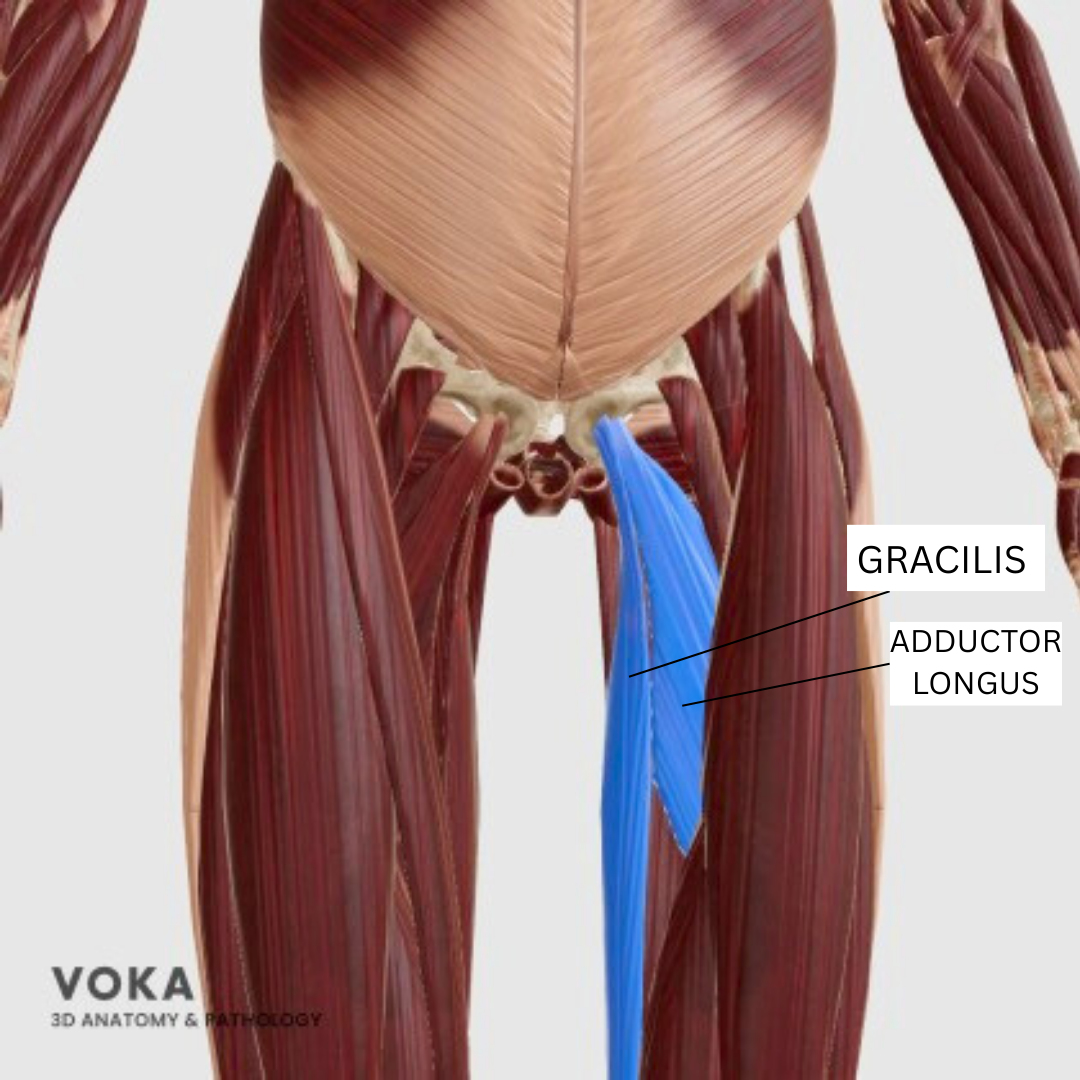
Compensations You Must Avoid Feeling
If you feel any of the following muscles working, the weak link is not being activated:
- Piriformis
- TFL
- Sartorius
- Biceps femoris
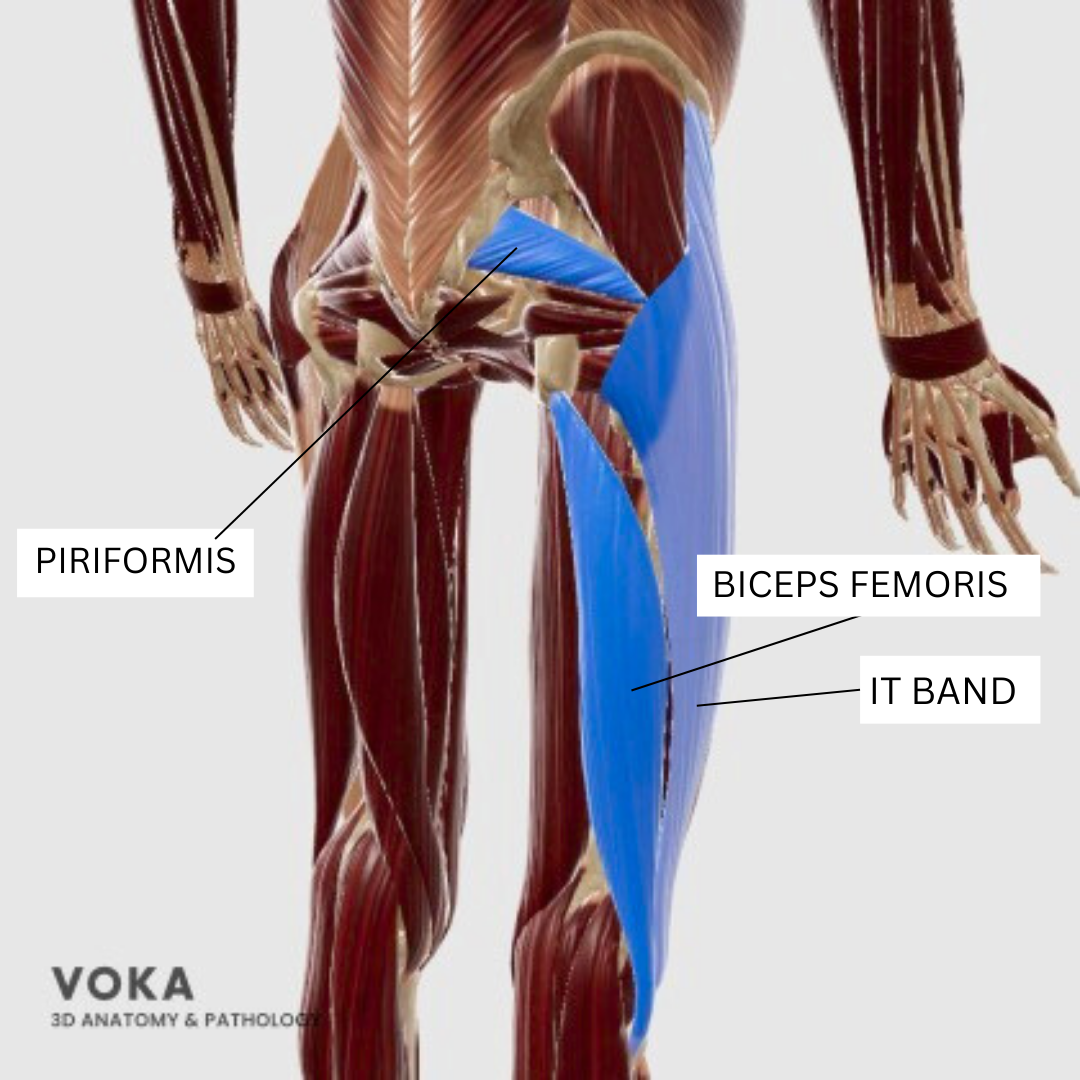

Ready to start your recovery today?
- Book a Private Virtual Session →
- Download the COREX12 Rehab App →
- See Real Client Testimonials →
Surgical Problems with Tears & Knee Replacements
In many meniscus tear cases, surgery can be avoided when the stabilizers are retrained correctly with the Corexcell system. However, certain severe tears, such as bucket-handle meniscus tears or complete ACL/MCL ruptures, usually do require surgery. Bucket-handle tears tend to catch, lock, and cause sharp recurring pain, making non-surgical rehab unpredictable. For ACL or major MCL tears, running or playing sports becomes extremely difficult because the knee lacks structural stability, no matter how strong the glutes, hips, or VMO become.
But the bigger issue is this: even after surgery, if the hip stabilizers remain weak, the femur will continue to drift out of alignment. The knee will continue absorbing excessive stress, pressure will return to the joint, and the cycle of irritation and pain returns. Surgery does not fix the root mechanical problem. Stabilizer activation does.
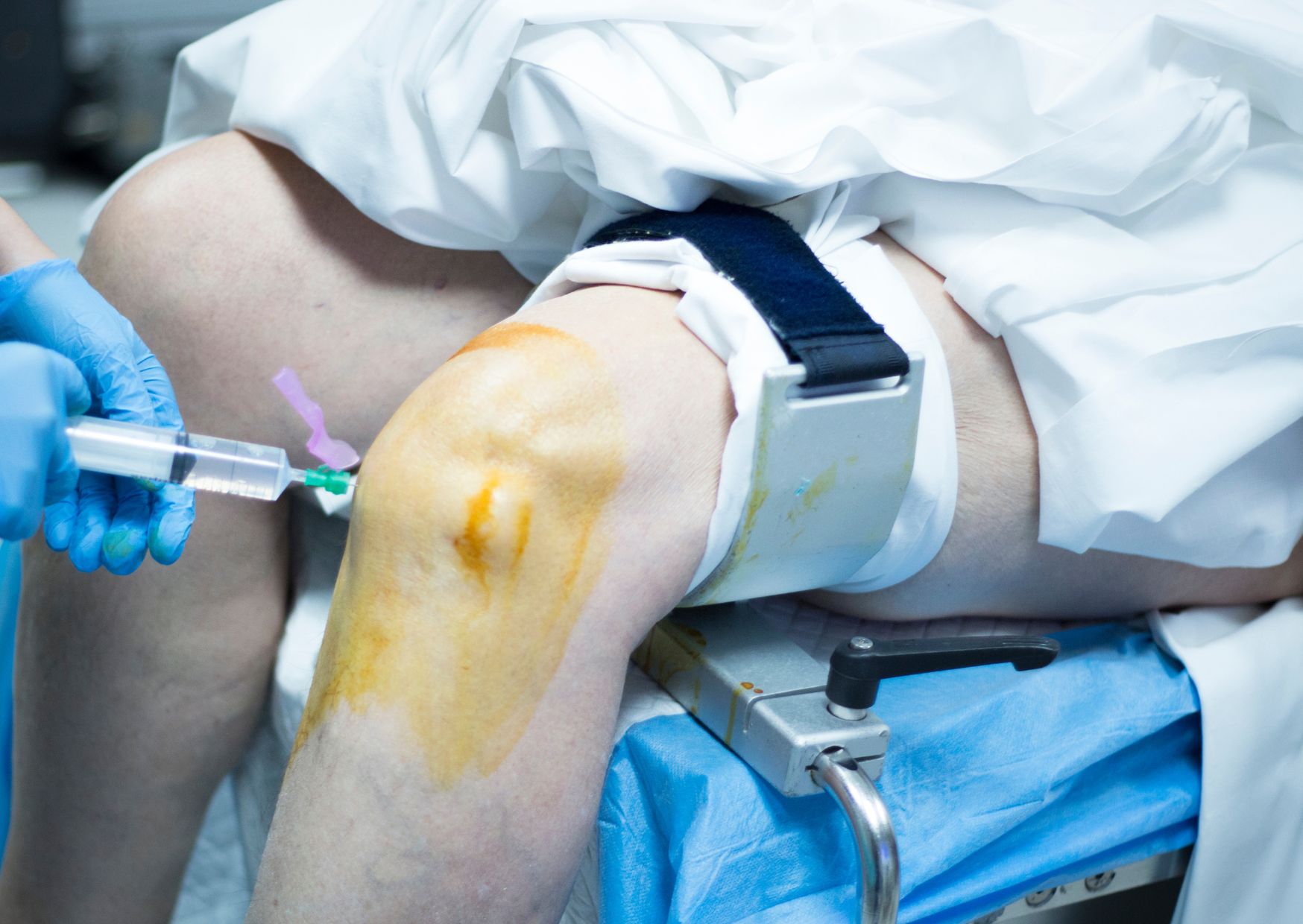
Avoiding Knee Replacement
Not every knee with osteoarthritis needs a replacement, but some cases become too advanced for exercise to help. In late-stage OA (typically Stage 3–4), the cartilage is severely worn down, joint space is greatly reduced, and the bones begin rubbing together. At this point, swelling, grinding, and sharp pain often persist even with proper strengthening, making a knee replacement the only realistic long-term solution.

However, in the early and mid stages (Stage 1–2), and even in many “bone-on-bone” cases where a small amount of joint space still remains, the Corexcell virtual program can significantly reduce pressure on the knee by improving hip and pelvic stability. When the glute medius, glute minimus, and adductor chain begin controlling the femur correctly, the joint loads more evenly, inflammation decreases, and the need for surgery can often be delayed or avoided entirely through our online injury rehab program.
Fixing Gait and Valgus Knees
Once the hip and glute weaknesses are corrected through the 4 foundational exercises, we can safely begin loading the quads through different lunge and squat variations. This stage is where clients learn how to track the knee properly in relation to the foot, and it’s also where we address valgus knee collapse (knees caving inward).
Trying to fix valgus collapse before correcting hip and glute weakness is a common mistake in traditional rehab and sports training. If the stabilizers aren’t strong, the knees will continue to cave inward no matter how much cueing or form correction is given, and forcing the knee outward too early can actually make the issue worse.
When the glutes and adductors are finally strong enough (using our 4 key foundational exercises in the virtual program), the knee naturally begins to push outward and move into proper alignment during loaded movements. At this point, corrective lunge and squat patterns become highly effective because the body now has the foundational stability to hold the knee in the correct position.
By first rebuilding hip strength with precise activation, then teaching proper loading mechanics through our online system, we ensure the knee tracks correctly, absorbs force safely, and develops the stability needed for higher-level lifting, running, and athletic movements.
Fix Hip Rotation & Pelvic Alignment: Left vs. Right Knee Pain
Once clients master the major hip and glute weaknesses through the Corexcell 4-exercise system in our virtual knee rehab program, the next step is addressing pelvic rotation and hip hike. These imbalances can create torque through the knee and significantly influence left-versus-right knee pain patterns. However, trying to manipulate the pelvis before fixing the glute and adductor weaknesses from the 4 foundational exercises is a major mistake. If the stabilizers aren’t strong, rotational and lateral corrections will only increase knee and hip pressure, even if the position looks more mechanically “advantageous.”
Hip Rotation: Dominant-Leg Knee Pain
Most people rotate toward their non-dominant side during everyday movement. For example, if you’re right-handed, you typically rotate into your left side to grab something off a shelf, swing a golf club, rotate in tennis, or reach across the body. Over years, this creates a predictable pattern: the pelvis rotates more toward one side, the dominant leg absorbs more frontal-plane load, the dominant-side glute becomes rotationally weak while the groin and hip flexor chain become overactive, and the dominant knee takes excessive torque.
In our online system, we restore balance by training rotation toward the opposite side of your habitual pattern. One of our key drills is an isometric standing punch or standing swing where the client rotates the pelvis into the opposite direction and holds the position at end range. Guided through the COREX12 Rehab App and virtual coaching, this repositions the pelvis, engages the underactive glute and medial hip chain, and gradually reduces torque on the dominant knee.
Hip Hike: Non-Dominant Leg Knee Pain
Right-handed athletes (and most active individuals) also develop a second predictable compensation: the right side becomes compressed through the hip flexor, groin, and abdominal chain. Because they are constantly rotating left, the left glute max and upper glute medius become overly dominant, while the left iliacus, groin, and lower abdominal chain become weak and underactive. When these muscles are weak, the left knee is forced to absorb more load during walking, squatting, or athletic movement, often leading to chronic non-dominant leg knee pain.
Additionally, this imbalance eventually creates a lateral pelvic shift and a slight S-curve in the spine. The left hip begins to sit higher, forming a classic hip hike. The left hip flexor, quadriceps, hamstrings, TFL, and lateral hip tissues feel chronically tight. This pattern is also responsible for many cases of piriformis syndrome, SI joint pain, and a pinching sensation in the left hip flexor (sartorius, pectineus, and rectus femoris).
To fix a true hip hike in our virtual program, we use our Core Fixer, which activates the iliacus and transverse abdominis in a posterior pelvic tilt without feeding the overactive psoas or rectus abdominis. This restores symmetry, corrects anterior pelvic tilt, levels the pelvis, and removes the torque that has been driving chronic one-sided knee pain.
Why We Don’t Start With Knee Stretching or Mobility Work
Most people dealing with knee pain (whether it’s patellar tendonitis, meniscus irritation, ACL/MCL strain, or chronic stiffness) are told the same thing: “You need to stretch and foam roll your quads, hamstrings, IT band, or calves.”
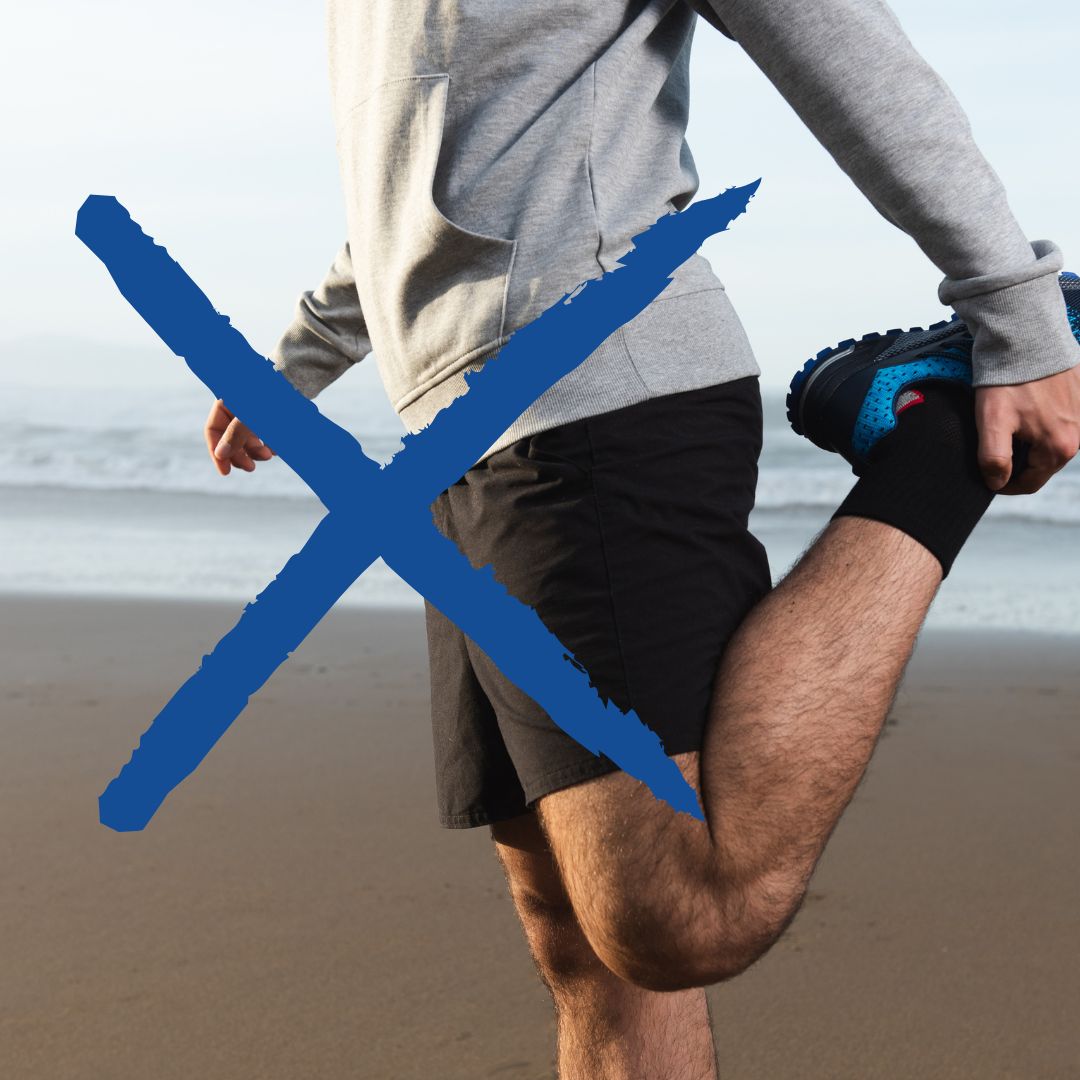
In the Corexcell virtual program, we found stretching or mobility drills often make knee pain worse when done too early.
When the hips and pelvis are unstable, the knee is already being pulled out of alignment by compensations from the TFL, groin, hip flexors, or quads. Stretching into this imbalance simply increases joint pressure and irritates connective tissue further.
Even advanced stretching methods fail for the same reason: you’re moving a joint that isn’t properly anchored.
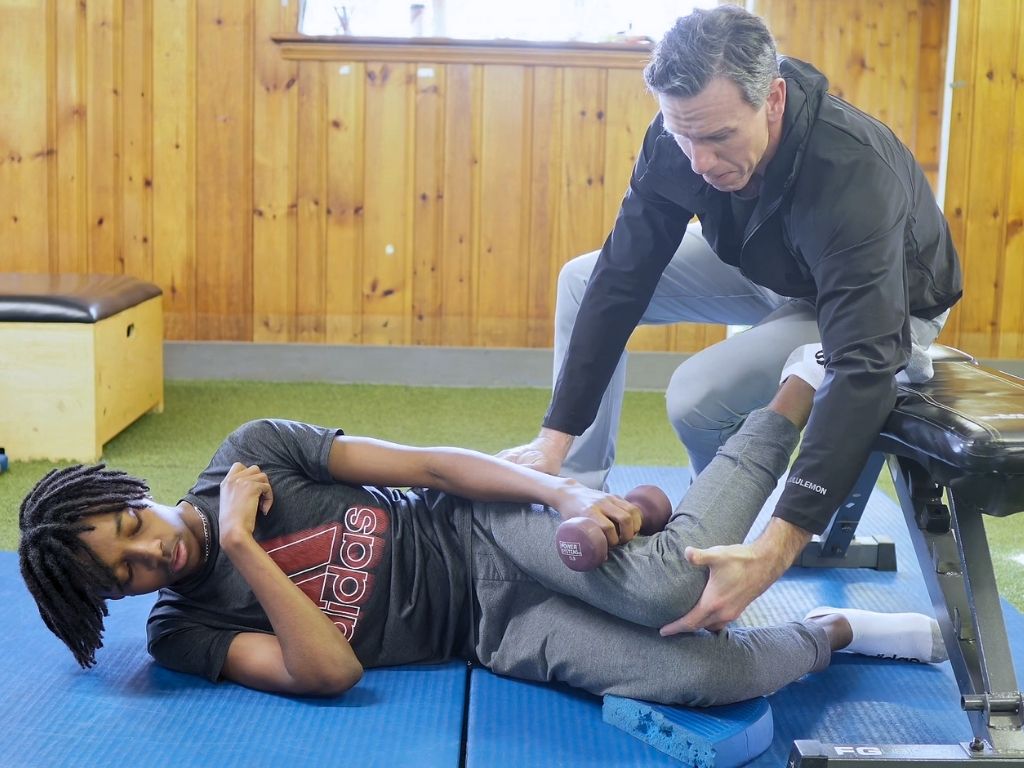
Once the hip complex is strong enough to stabilize the femur and support the knee through our online injury rehab program, mobility improves naturally because the body is no longer compensating for weakness.
True mobility comes from strength and control, not forcing movement through instability.
Corex12 Full Body Rehab App
Our Rehab App is called COREX12: the cornerstone of our virtual knee rehab program. It’s a 3-phase system built around 12 foundational exercises designed to fix the core, hips, shoulders, and legs: all accessible from anywhere in the US.
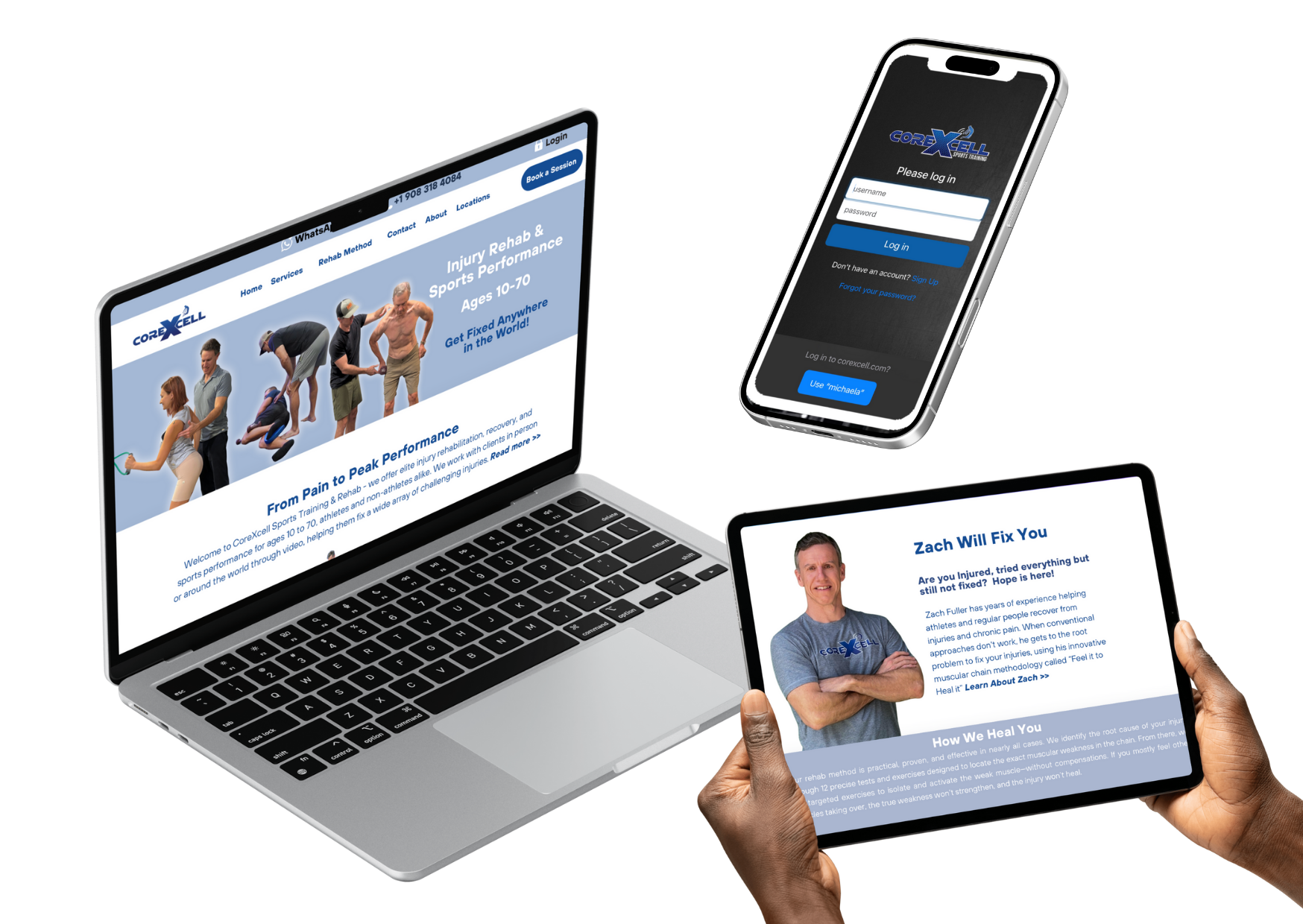
You can follow the full-body program or focus only on the lower-body track (perfect for knee pain, patellar tendonitis, meniscus issues, or osteoarthritis) or the shoulder track as needed. There are also additional modules for the neck, wrists, and ankles.
3-Phase Approach to Knee Rehab
Phase 1: The Foundations
Phase 1 focuses on mastering the four foundational Corexcell hip exercises through precise video instruction and built-in activation testing directly in the app. During this phase, clients learn how to feel the correct target muscle in each movement without letting compensations take over. The goal is to build a strong mind-muscle connection and perfect technique with light weight before progressing. We also include two key core exercises to fix anterior pelvic tilt and a wall-squat variation as a fifth exercise when pain-free, allowing clients to begin developing compound strength while still correcting the underlying weaknesses.
Phase 2: Advancements
Once you pass all four activation tests in the app, you advance into Phase 2. The original foundational exercises are replaced with more demanding variations that target the same stabilizers from new angles and at higher intensities, fully correcting the weakness patterns responsible for the injury. Because pressure is now removed from compensating muscles, this is also when we introduce hip-rotation and pelvic-alignment drills from the previous section, along with a structured stretching routine. Clients also begin a simple, high-rep strength program at this stage, including movements such as single-leg RDLs, dumbbell deadlifts, and bodyweight lunges and squats.
Phase 3: Corrective Lifting
In Phase 3, we combine the advanced corrective work from Phase 2 with a foundational lifting program. This phase adapts to each client’s training background and restores full hip strength, control, and durability so you can return to higher-level lifting, running, and sport without falling back into old compensation patterns.
Ready to start your recovery today?
- Book a Private Virtual Session →
- Download the COREX12 Rehab App →
- See Real Client Testimonials →