Proven Virtual Program for Low Back Pain, Sciatica, Herniated and Bulging Discs, Spinal Stenosis, and One-Sided Back Pain
The Corexcell virtual low back rehab method is a proven online injury rehab program designed to help athletes and active adults across the United States fix low back pain from anywhere, without surgery, injections, or pain medication.

Navigation: Jump to a Topic
- Our Rehab App for Low Back Pain
- Why Core Exercises Don’t Fix Low Back Pain
- The 4 Hip Exercises That Fully Fix Low Back Pain
- Key Core Exercise to Fix Anterior Pelvic Tilt (APT)
- Fix Unilateral Low Back Pain & SI Joint Issues
- How Stretching Can Make Low Back Pain Worse
- Frequently Asked Questions About Low Back Pain
How It Works
The Corexcell Rehab Method for low back pain is designed to help clients worldwide understand the true biomechanical causes behind lumbar and pelvic dysfunction and why most low back injuries do not originate at the site of pain itself. Instead, low back pain almost always develops when the deep stabilizers that control the pelvis and femur are too weak to properly stabilize the hip girdle.
Most physical therapists focus on core stabilization first, strengthening the abdominals, obliques, and spinal erectors. They believe this creates a stable base for the lumbar spine. Many also prescribe traditional glute exercises like bridges, clamshells, or band walks, and they assume these movements properly anchor the pelvis.
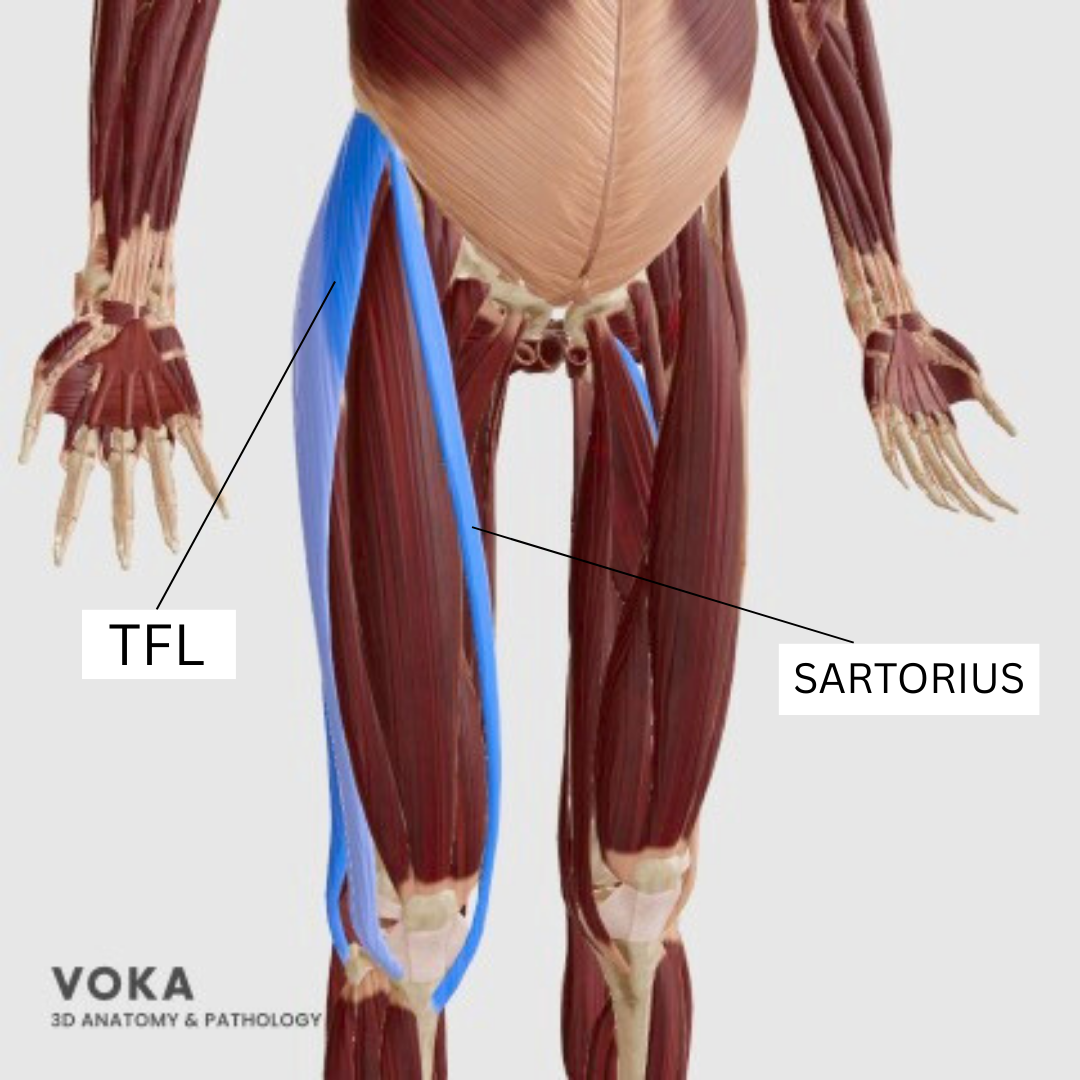
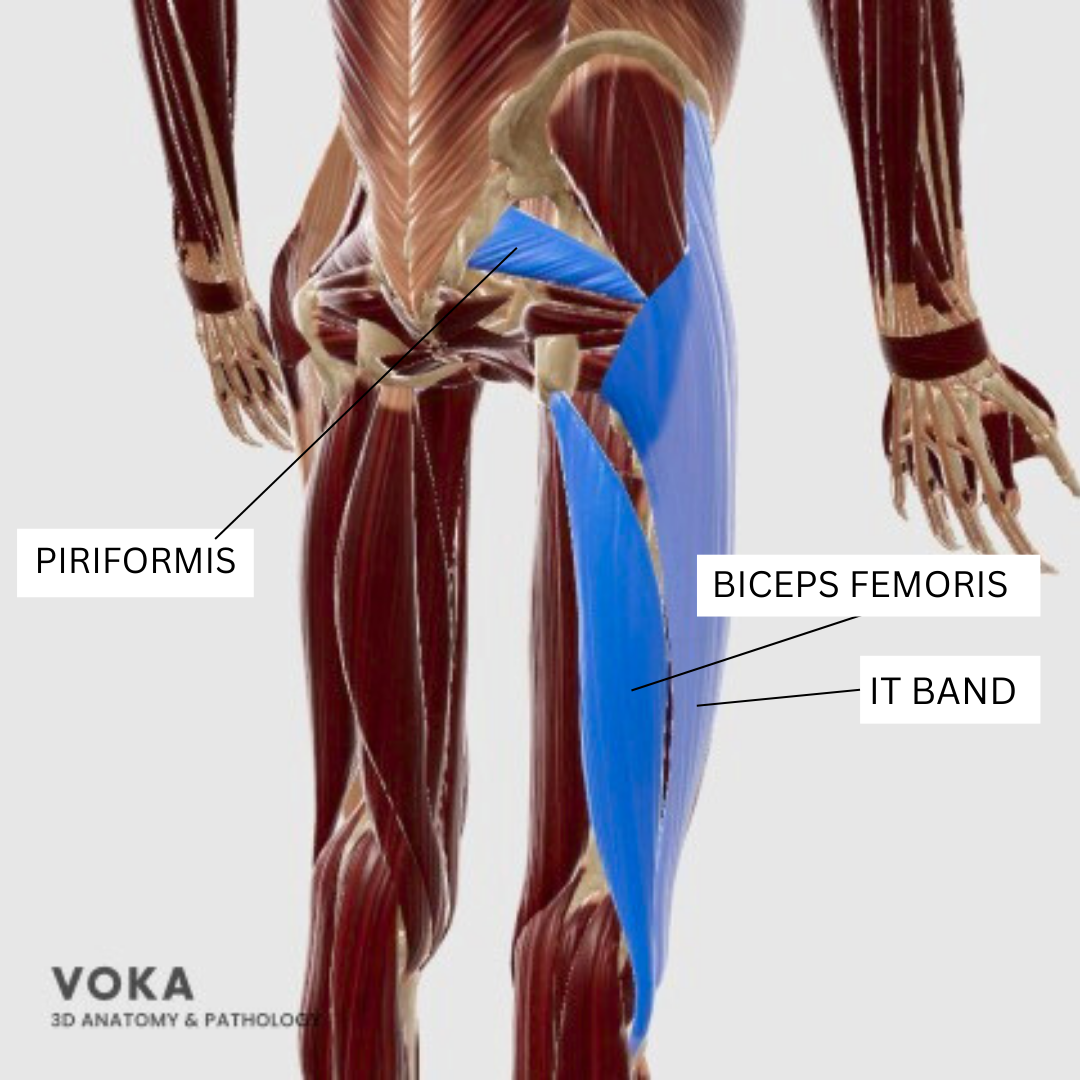
The problem: Most clients with disc herniations, sciatica, chronic low back tightness, or one-sided pain cannot correctly activate the true deep hip stabilizers during these exercises. Instead, the movements reinforce the same compensation patterns that caused the injury, driven primarily by the TFL, piriformis, hamstring-biceps femoris, sartorius, and iliopsoas.
We believe this traditional philosophy is fundamentally flawed, which explains why so many people never fully recover through standard physical therapy.
At Corexcell, we take the opposite approach: rather than starting with the core or clam shell variations, we focus on true lumbar stability by isolating the muscles that directly stabilize the pelvis and control femoral alignment. These muscles are:
- anterior glute medius
- glute minimus
- adductor chain
- medial hamstring
When these true deep stabilizers are weak or fail to activate properly, the pelvis tilts forward or rotates, the femur drifts inward, and the lumbar spine is forced to absorb excessive torque, compression, and shear. This dysfunctional pattern is the root driver behind nearly every common low back condition, including disc herniations and bulges, sciatica, spinal stenosis, SI joint dysfunction, facet irritation, and chronic one-sided low back pain.
The Corexcell online system restores proper pelvic and lumbar mechanics through four targeted exercises that strengthen these stabilizers while completely eliminating compensations. The rule is simple: you must feel only the target muscle working. If compensations take over and the target muscle is not felt, that muscle will not strengthen and progress will stop.
Ready to start your recovery today?
- Book a Private Virtual Session →
- Download the COREX12 Rehab App →
- See Real Client Testimonials →
Prefer In Person Sessions? Clients from across the country have the option to fly into Greenville, SC (GSP airport) for hands-on sessions – though most achieve full recovery completely virtually through our remote coaching and rehab app.
What Our Clients Say on Google
Problems with Traditional Core-Focused Rehab
Core strengthening plays a role in supporting the spine, but it is only a small part of what’s required to permanently fix low back pain. Exercises such as McGill’s Big 3, planks, and bird dogs can certainly help reduce symptoms, yet most physical therapists rely on these movements as their primary solution. The problem is clear: many athletes and active individuals already have strong abdominals and spinal erectors, yet still develop disc herniations, chronic tightness, or one-sided low back pain. A strong core alone does not prevent injury.
At Corexcell, we’ve consistently found that core-focused programs provide only temporary relief. Clients feel better while doing the exercises, but as soon as they return to lifting, bending, running, or rotational movements, the pain returns. This happens because the exercises never addressed the true source of the problem.
The Real Source of Low Back Pain: Hip & Pelvic Instability
The true foundation of low back stability comes from the glute medius, glute minimus, and the adductor chain, the muscles that control how the pelvis moves and how the femur aligns beneath it. When these stabilizers are weak or not firing correctly, the pelvis shifts or tilts, the femur rotates inward, and the lower back is forced to absorb torque, compression, and rotational stress it was never designed to handle. This is why people develop disc irritation, sciatica-like symptoms, sacroiliac joint pain, facet compression, and the classic pattern of one-sided low back pain that never fully goes away. Low back pain has far less to do with spinal weakness and far more to do with a weak glute foundation beneath the spine, which destabilizes the pelvis and overloads the lumbar segments.
Once the hip complex becomes strong and properly aligned, the pelvis levels out, the femur tracks correctly, and the spine is finally supported instead of overworked. Disc pressure reduces naturally, nerve irritation calms down, and the deep core can do its job without compensating for dysfunction below it. One of the biggest mistakes traditional PTs make is introducing deadlifts, back extensions, or hyperextension-based strengthening before the glute and groin weaknesses are corrected. When these stabilizers are still dysfunctional, those exercises reinforce compensations and drive more stress into the lumbar spine.
Only after true hip stability is restored, through our precise online injury rehab program, should a client reintroduce advanced core work or heavier lifting. At that point, movement becomes smooth and pain-free because the real cause of the problem has finally been fixed.
The Corexcell 4-Exercise Hip System: Precision Isolation for Lasting Recovery
The Corexcell virtual low back rehab method uses a unique 4-exercise system that fixes nearly every type of low back injury without surgery, pain pills, or injections, all from the comfort of your home.
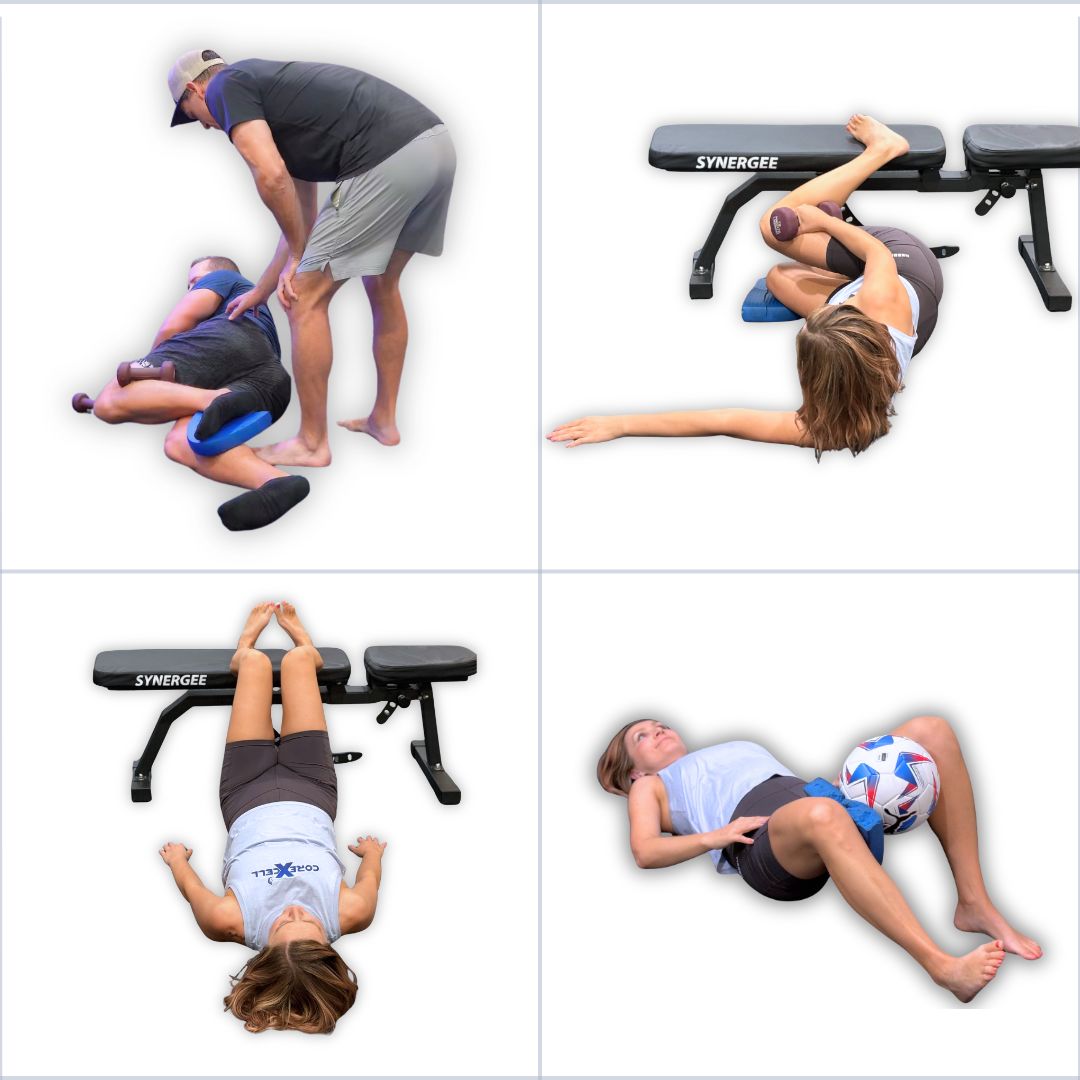
At Corexcell, we’ve developed this proven online system to target the true root cause of low back pain by isolating the exact stabilizers responsible for controlling the pelvis and femur, rather than reinforcing the same compensations that most traditional PT and common gym exercises unintentionally worsen.
Most PTs and trainers attempt to “strengthen the glutes” using band walks, clamshells, glute bridges, or adductor/abductor machines. The problem is that these exercises primarily activate the glute max and the upper portion of the glute medius while overworking the TFL and the lateral rotators, muscles like the piriformis, sartorius, and biceps femoris. When these compensations take over, hip stability actually gets worse, not better, and the lower back is forced to absorb even more strain.
This is especially problematic for clients with sciatica symptoms. Traditional PT glute work often emphasizes external rotation, which further tightens and irritates the piriformis, a muscle that is usually already overactive and compressing the nerve. Instead of relieving back and leg pain, these exercises often make symptoms flare.
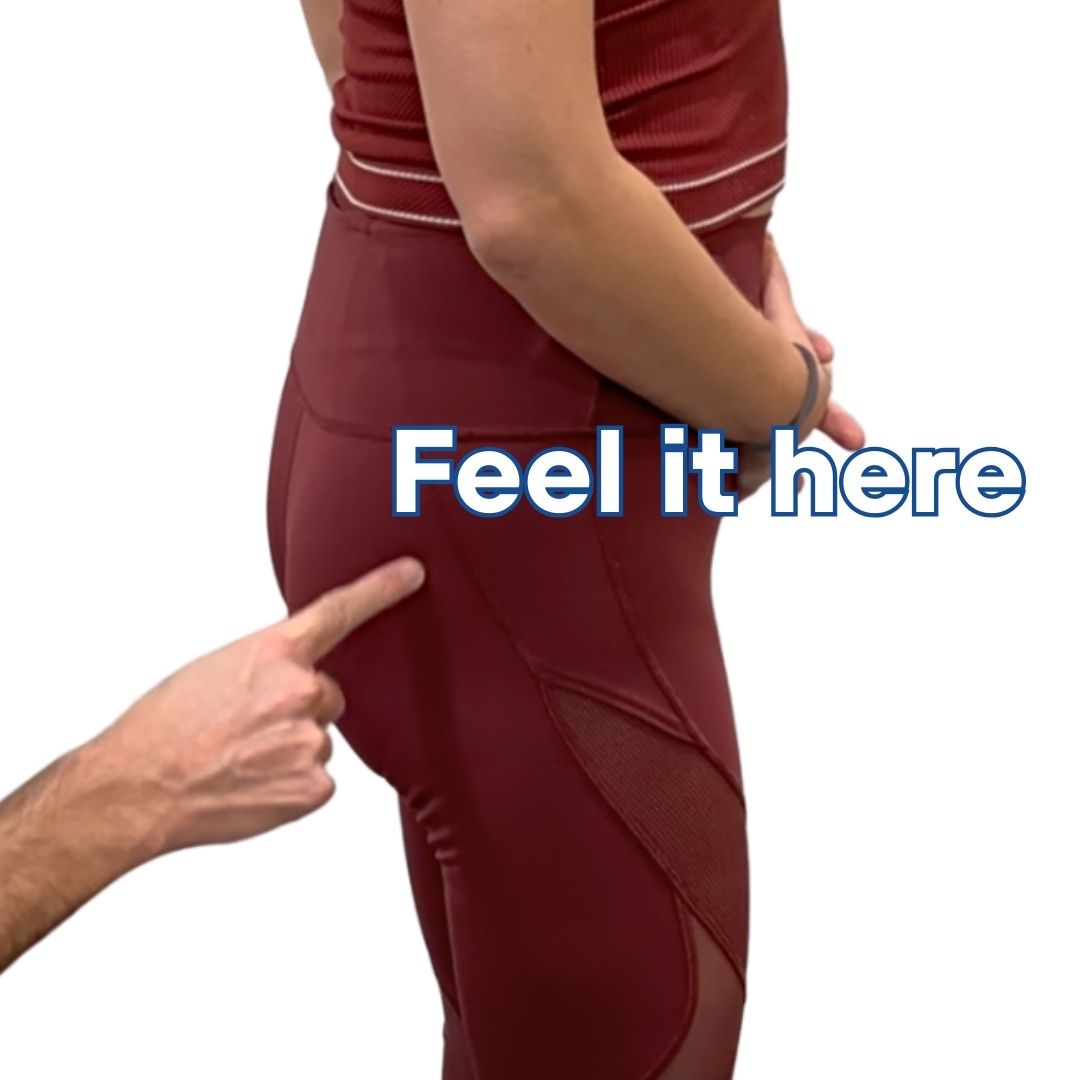
Our online rehab system solves this with precise isolation of the medial hip rotators, preventing the TFL and lateral rotators from dominating. When the correct muscles finally activate, the pelvis stabilizes, the femur aligns underneath it, and the lumbar spine no longer absorbs excessive torque and compression with every step or lift.
The principle is simple: you must feel only the target muscles working, nothing else. If you feel the TFL, piriformis, outer quad, hip flexors, or hamstring taking over, the weak link is not being strengthened.
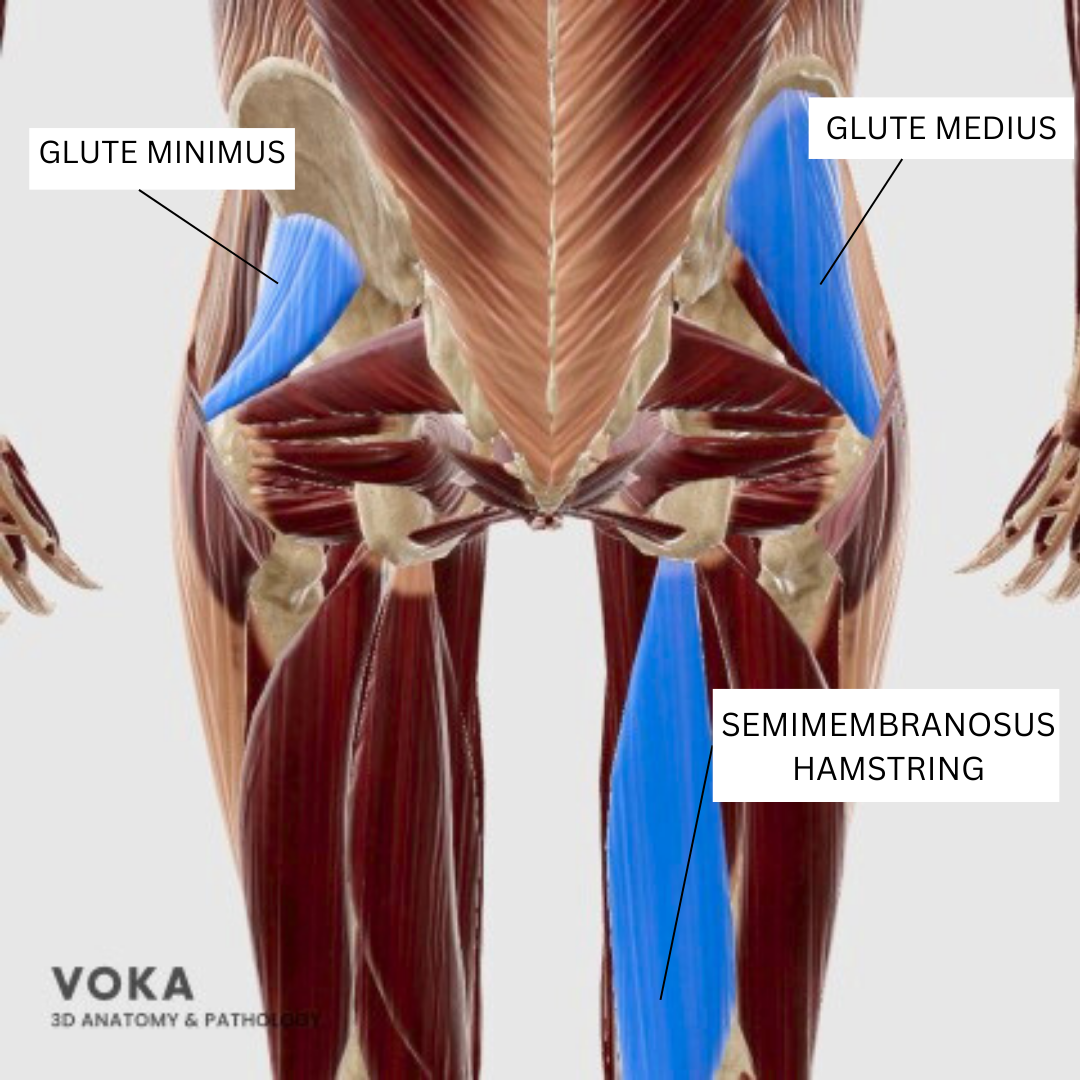
To ensure this precision nationwide, our virtual program uses built-in activation testing directly in the COREX12 Rehab App and remote coaching guidance. These tests confirm that the true stabilizers (anterior glute medius, glute minimus, adductor chain, and semimembranosus) are firing correctly in the right ranges before progressing. Once these muscles become strong and coordinated through our at-home rehab program with coaching, the hips provide the foundation the spine has been missing. Low back pain decreases naturally, disc irritation settles, and movement becomes stable and pain-free.
The 4 Exercise Target Muscles
- Glute Fly: Anterior portion of the glute medius
- Knee Drop: Glute minimus
- Internal Ball Squeeze: Adductor brevis, adductor longus, gracilis
- Medial Hamstring Bridge: Semimembranosus hamstring

Compensations You Must Avoid Feeling
If you feel any of the following muscles working, the weak link is not being activated:
- Piriformis
- TFL
- Sartorius
- Biceps femoris
Ready to start your recovery today?
- Book a Private Virtual Session →
- Purchase the COREX12 Rehab App →
- See Real Client Testimonials →
Surgical Problems with Herniated & Bulging Discs / Sciatica
In many cases of herniated discs, bulging discs, or sciatica, surgery can be avoided when the pelvic and hip stabilizers are retrained correctly with the Corexcell system. However, certain severe conditions—such as progressive neurological deficits (e.g., significant leg weakness), cauda equina syndrome (loss of bowel/bladder control), large extruded fragments causing constant nerve compression, or symptoms that fail to improve after 6–12 weeks of proper conservative care—usually require surgical intervention like microdiscectomy or decompression.
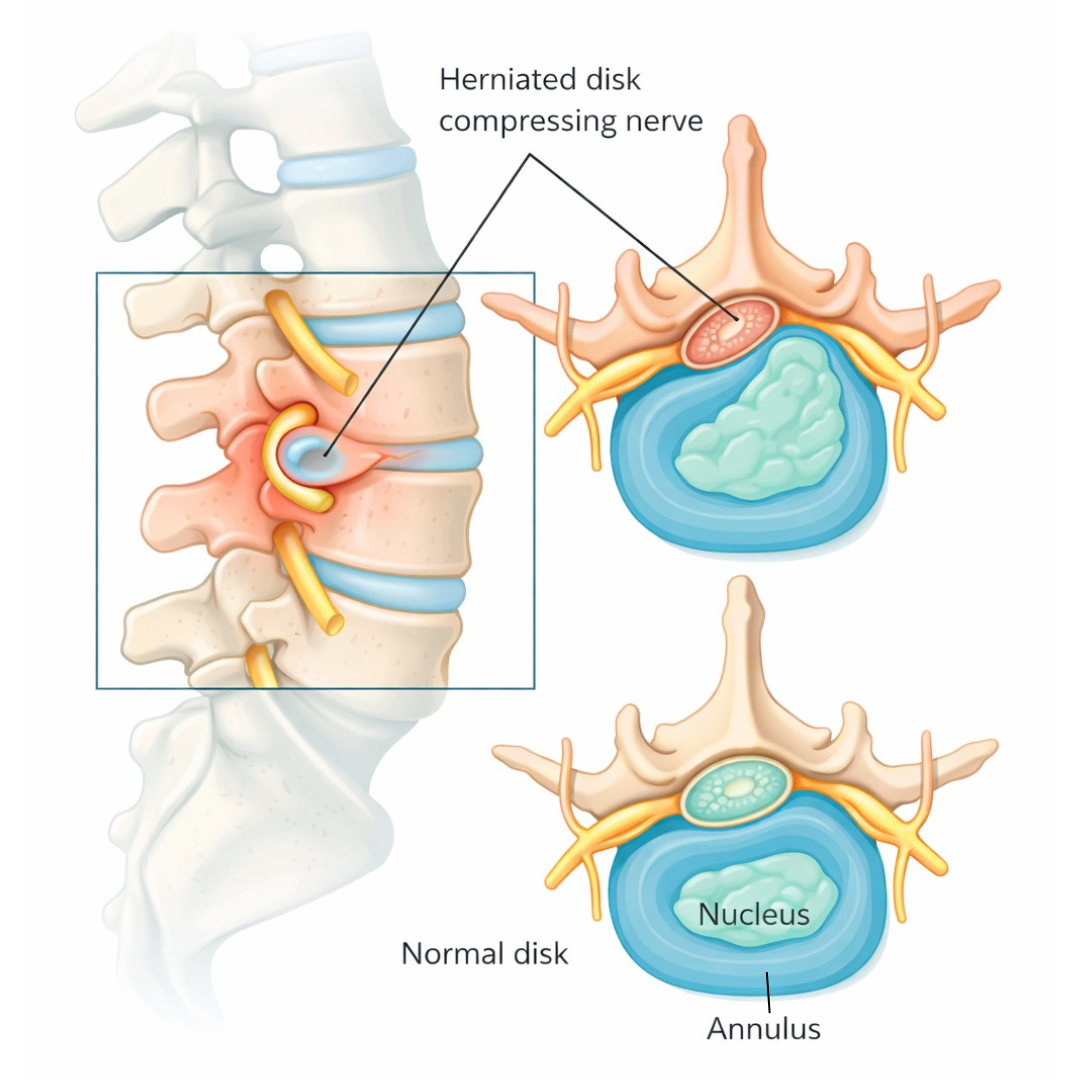
Severe structural issues, such as massive disc extrusions or advanced instability, can lead to unrelenting pain, numbness, or motor loss, making non-surgical rehab less predictable or unsafe in those scenarios.
But the bigger issue is this: even after lumbar surgery (discectomy, laminectomy, or fusion), if the deep hip and pelvic stabilizers remain weak, the pelvis will continue to tilt, rotate, or shift out of alignment. The lumbar spine and sciatic nerve will keep absorbing excessive shear, compression, and tension. Scar tissue, adjacent segment stress, or recurrent irritation often returns, and the cycle of pain, sciatica, or disc problems persists. Surgery addresses the local structural issue but does not fix the root mechanical problem. Stabilizer activation does—through our Corexcell virtual rehab program and its precise 4-exercise system that restores proper pelvic control, reduces nerve/disc pressure, and helps many clients nationwide avoid or delay surgery entirely.
Key Core Exercises to Fix Anterior Pelvic Tilt
Anterior pelvic tilt places excessive compressive load on the lower back and is one of the most common contributors to chronic lumbar pain, disc irritation, spinal stenosis, and sacroiliac joint issues. When the pelvis tips forward, the lumbar spine is forced into hyperextension, increasing pressure on the discs and facets and making the low back work far harder than it should.
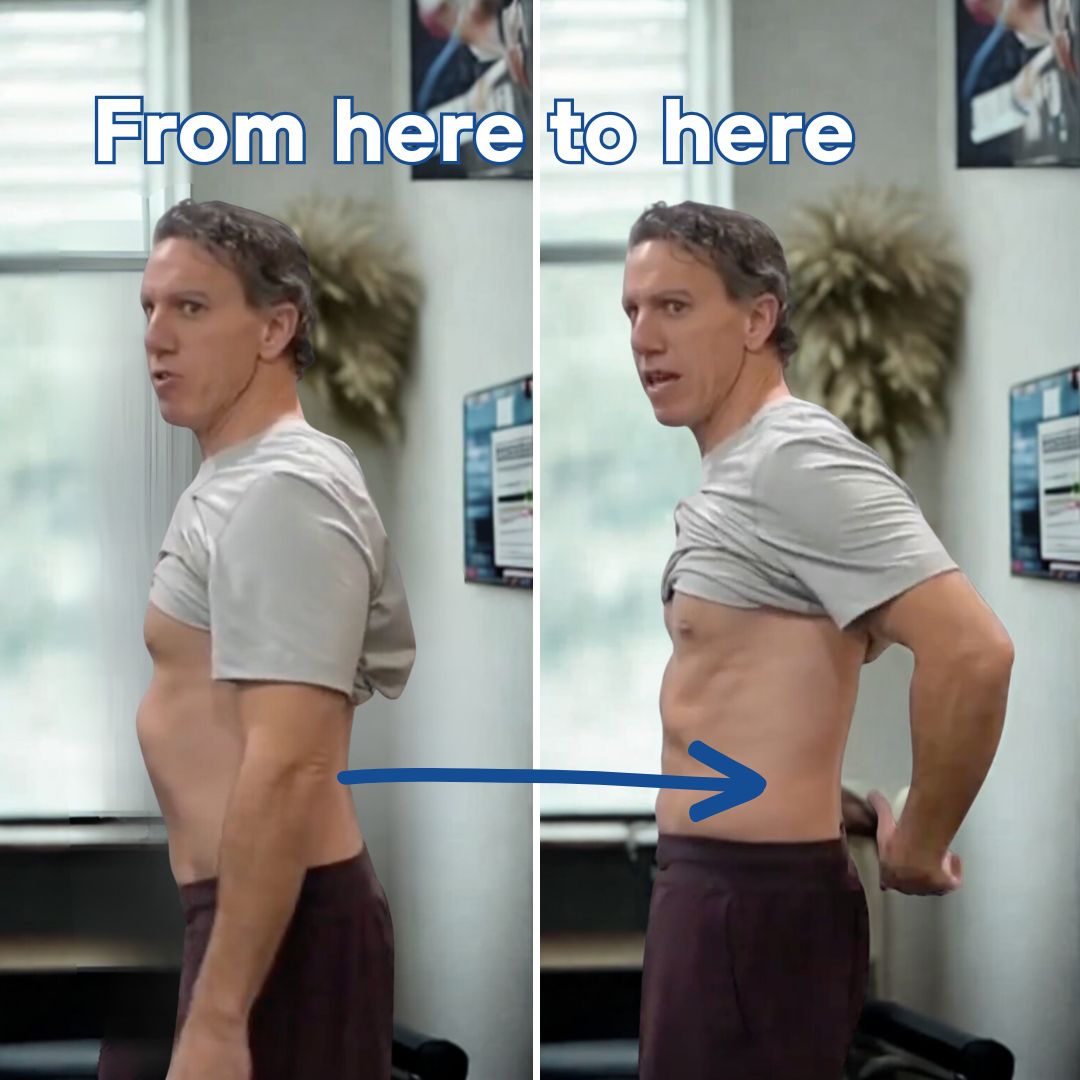
Using the Corexcell 4 hip exercises to strengthen the medial hip rotators, combined with targeted core activation, helps restore a neutral spine angle and takes tremendous pressure off the lower back. These exercises teach the pelvis to move out of excessive extension and begin correcting the imbalance behind anterior pelvic tilt. However, general core work alone will only resolve about 70 to 80 percent of the problem. Strengthening the hips and doing standard core exercises improves alignment, but on their own, they cannot fully correct anterior pelvic tilt.
In our virtual low back rehab program, we correct anterior pelvic tilt through a foundational activation drill we introduce on day one: The Core Fixer. The Core Fixer is performed in a supine position with the head on the floor, focusing on flattening the lower back into the floor while performing leg lifts. This mirrors natural standing posture while eliminating the compensations that occur when the head or trunk flex forward, as they often do during planks or leg lifts.
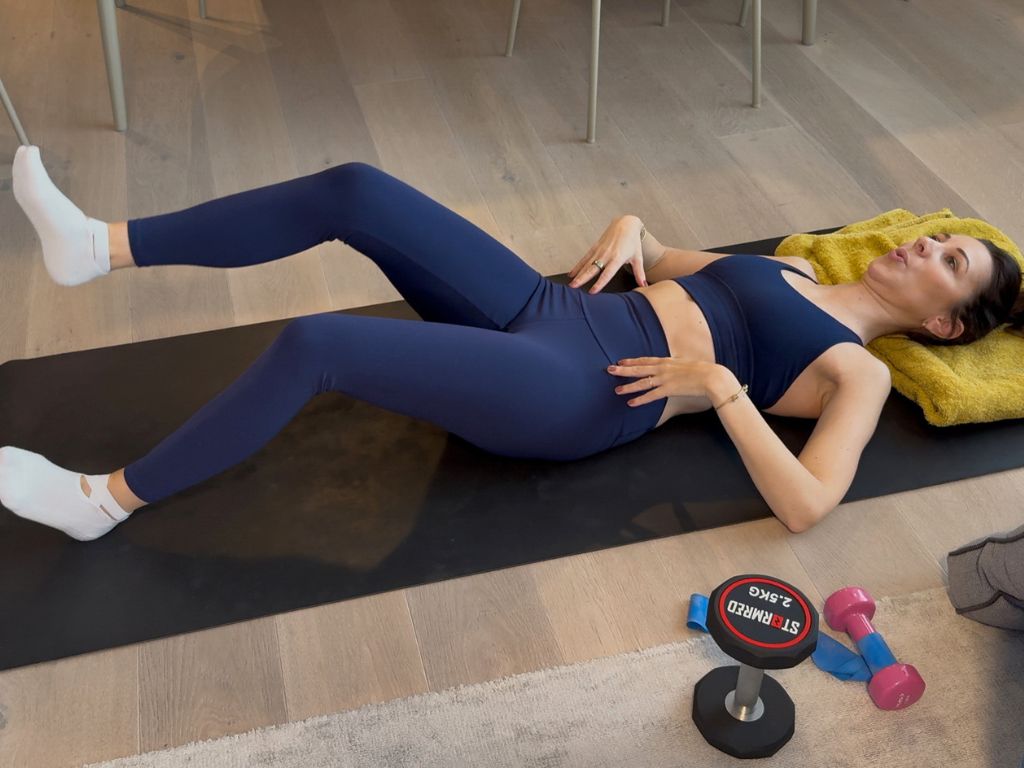
This key exercise teaches proper posterior tuck and pelvic alignment by connecting the transverse abdominis, the diaphragm, and the iliacus: the deep hip flexor responsible for pulling the pelvis into a true posterior position. Practiced daily through guided app videos and virtual coaching, this retrains the body to maintain a neutral pelvis and reduces the excessive lumbar extension driving chronic low back stress.
Traditional ab exercises performed in head and trunk flexion, like crunches, sit-ups, and many plank variations, shift activation into the psoas and rectus abdominis. While these movements help strengthen the core and offer some protection for the low back, the heavy psoas involvement reinforces anterior pelvic tilt rather than correcting it. Even planks position the head and ribcage slightly forward, preventing full engagement of the transverse abdominis and iliacus the way the supine Core Fixer does.
This is why clients in our online rehab program must first master the Core Fixer before adding traditional core-strengthening exercises. By teaching clients how to position the pelvis correctly, breathe properly, and activate the right deep core muscles, anterior pelvic tilt begins to correct naturally, reducing lumbar compression and allowing the hips and spine to move the way they were designed to.
Hip Rotation & Pelvic Alignment: Fix Unilateral Low Back Pain & SI Joint Issues
Once clients master the major hip and glute weaknesses through the Corexcell 4-exercise system in our virtual low back rehab program, the next step is addressing pelvic rotation and hip hike. These imbalances create torque through the lumbar spine and SI joint, and are one of the most common reasons people experience one-sided low back pain. However, trying to manipulate the pelvis before strengthening the glute and adductor stabilizers is a major mistake. If the stabilizers aren’t strong enough to hold the pelvis in position, rotational or lateral corrections will only increase lumbar and SI joint stress, even if the posture looks more “aligned.”
Hip Rotation: Dominant-Side Low Back Pain
Most people naturally rotate toward their non-dominant side during daily activities. For example, a right-handed person typically rotates left when reaching onto a shelf, swinging a golf club, hitting a tennis forehand, or reaching across the body. Over time, this creates a predictable imbalance: the pelvis rotates toward one side, the dominant glute becomes rotationally weak, and the groin and hip-flexor chain become overactive. This imbalance places excessive torque on the dominant-side low back and SI joint.
In our online system, we restore balance by training rotation toward the opposite side of your habitual pattern. One of our key drills is an isometric standing punch or standing swing performed by rotating the pelvis into the opposite direction and holding end-range. Guided through the COREX12 Rehab App and virtual coaching, this repositioning activates the underused medial hip chain and gradually reduces rotational stress on the dominant-side lumbar spine.
Hip Hike: Non-Dominant-Side Low Back & SI Joint Pain
Right-handed athletes (and most active individuals) also develop a second predictable compensation: the right side becomes compressed through the hip flexor, groin, and abdominal chain. Because they are constantly rotating left, the left glute max and upper glute medius become overly dominant, while the left iliacus, groin, and lower abdominal chain become weak and underactive. When these muscles are weak, the left side of the lumbar spine and SI joint absorb more load, leading to left-sided low back pain or pain just above the iliac crest.
Additionally, this imbalance eventually creates a lateral pelvic shift and a slight S-curve in the spine. The left hip begins to sit higher, forming a classic hip hike. The left hip flexor, quadriceps, hamstrings, TFL, and lateral hip tissues feel chronically tight. This pattern is also responsible for many cases of piriformis syndrome, knee pain, and a pinching sensation in the left hip flexor (sartorius, pectineus, and rectus femoris).
To fix a true hip hike in our virtual program, we use our Core Fixer, which activates the iliacus and transverse abdominis in a posterior pelvic tilt without feeding the overactive psoas or rectus abdominis. This restores symmetry, corrects anterior pelvic tilt, levels the pelvis, and removes the torque that has been driving chronic one-sided low back pain.
Why We Don’t Start with Stretching or Mobility for Low Back Pain
Most PTs recommend the McKenzie Extension (“yoga cobra stretch”) for clients with herniated discs or general low back pain. While cobra can provide temporary relief in some cases, it often makes symptoms worse for people with anterior pelvic tilt because it forces the spine into even more extension. More importantly, no stretch, including cobra, can fix the underlying issue, which is the lack of strength and activation in the medial hip rotators responsible for stabilizing the pelvis.
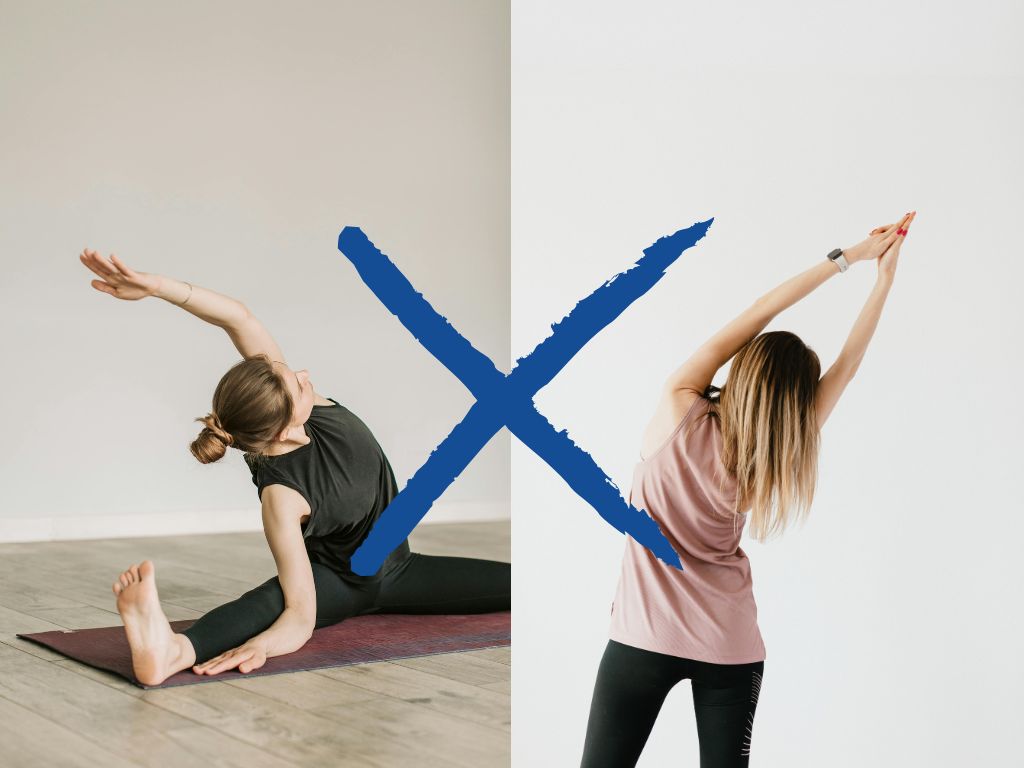
In the Corexcell virtual program, we do believe stretching plays an important role in long-term low back health. Most clients arrive with extremely tight hamstrings, quads, and psoas, and stretching these muscles consistently a few times per week can offer real long-term benefit. However, we do not begin stretching until the hip and glute weaknesses have been corrected through the 4 foundational Corexcell hip exercises.
Stretching before fixing the weak links only reinforces compensations. The body is still in a misaligned state, so the tight muscles will simply rebound back to being tight, because the underlying instability is still present. Once hip stability is restored through our online injury rehab program, stretching becomes far more effective, the muscles relax more naturally, and the improvements actually stick.
Stretching alone will never correct low back pain.
Fix the hip weakness first with precise, compensation-free activation, and only then will mobility work deliver real, lasting results.
Corex12 Full Body Rehab App
Our Rehab App is called COREX12: the cornerstone of our virtual low back rehab program. It’s a 3-phase system built around 12 foundational exercises designed to fix the core, hips, shoulders, and legs: all accessible from anywhere in the US.
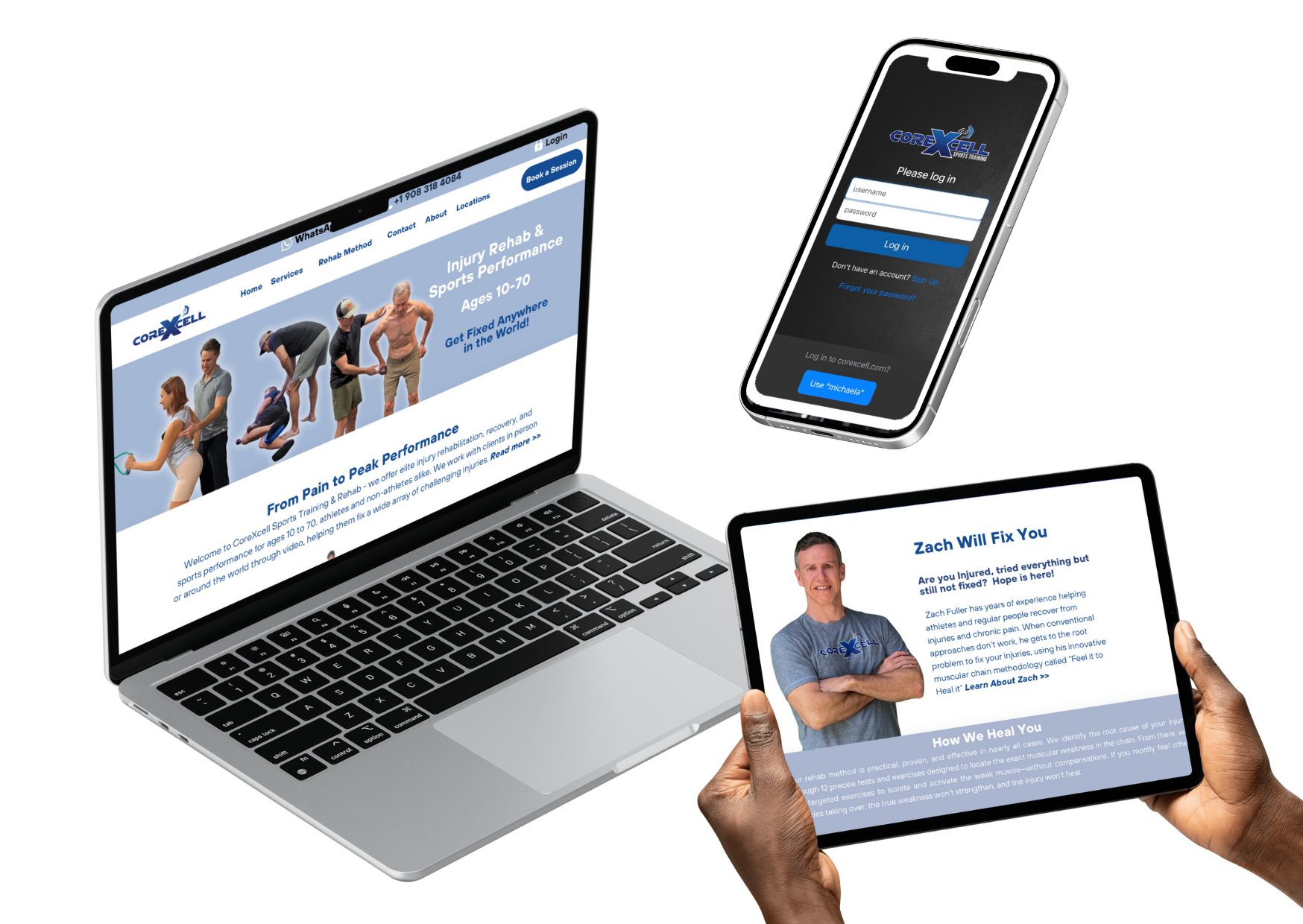
You can follow the full-body program or focus only on the lower-body track (perfect for low back pain, sciatica, disc issues, or unilateral pain) or the shoulder track as needed. There are also additional modules for the neck, wrists, and ankles.
3-Phase Approach to Low Back Rehab
Phase 1: The Foundations
Phase 1 focuses on mastering the four foundational Corexcell hip exercises through precise video instruction and built-in activation testing directly in the app. During this phase, clients learn how to feel the correct target muscle in each movement without letting compensations take over. The goal is to build a strong mind-muscle connection and perfect technique with light weight before progressing. We also include two key core exercises to fix anterior pelvic tilt and a wall-squat variation as a fifth exercise when pain-free, allowing clients to begin developing compound strength while still correcting the underlying weaknesses.
Phase 2: Advancements
Once you pass all four activation tests in the app, you advance into Phase 2. The original foundational exercises are replaced with more demanding variations that target the same stabilizers from new angles and at higher intensities, fully correcting the weakness patterns responsible for the injury. Because pressure is now removed from compensating muscles, this is also when we introduce hip-rotation and pelvic-alignment drills from the previous section, along with a structured stretching routine. Clients also begin a simple, high-rep strength program at this stage, including movements such as single-leg RDLs, dumbbell deadlifts, and bodyweight lunges and squats.
Phase 3: Corrective Lifting
In Phase 3, we combine the advanced corrective work from Phase 2 with a foundational lifting program. This phase adapts to each client’s training background and restores full hip strength, control, and durability so you can return to higher-level lifting, running, and sport without falling back into old compensation patterns.
Ready to start your recovery today?
- Book a Private Virtual Session →
- Purchase the COREX12 Rehab App →
- See Real Client Testimonials →