Proven Virtual Program for Rotator Cuff Tears, Labrum Tears, Impingement, Winged Scapula & Frozen Shoulder
The Corexcell virtual shoulder rehab method is a proven online injury rehab program designed to help athletes and active adults across the United States fix shoulder pain from anywhere, without surgery, injections, or pain medication.

Navigation: Jump to a Topic
- 4 Exercises to Fix Shoulder Injuries
- Rehab App for Shoulder Pain
- Problems with Traditional Physical Therapy
- Problems with Rotator Cuff & Labrum Tear Surgery
- Do NOT do Serratus Exercises to Fix Winged Scapula
- Shoulder Weaknesses Can Cause Neck, Wrist, and Elbow Pain
- How Stretching Can Hurt Your Shoulder Worse
- FAQ on Shoulder Injuries
How It Works
The Corexcell Rehab Method for shoulder pain is designed to help clients worldwide understand the true biomechanical causes behind shoulder dysfunction and why most shoulder injuries do not originate at the site of pain itself. Instead, shoulder pain almost always develops when the deep stabilizers that anchor the humeral head are too weak to properly control the joint.
Most physical therapists focus on scapular stabilization first, strengthening the lower trapezius, rhomboids, and serratus anterior. They believe this creates a stable base for the shoulder. Many also prescribe traditional “rotator cuff” exercises with bands or light dumbbells, assuming these movements properly anchor the humeral head.
The problem: Most clients with shoulder impingement, rotator cuff issues, or chronic pain cannot correctly activate the true deep stabilizers during these exercises. Instead, the movements reinforce the same compensation patterns that caused the injury, driven primarily by the upper trapezius, levator scapulae, pectoralis minor, and front/side deltoids.
We believe this traditional philosophy is fundamentally flawed, which explains why so many people never fully recover through standard physical therapy.
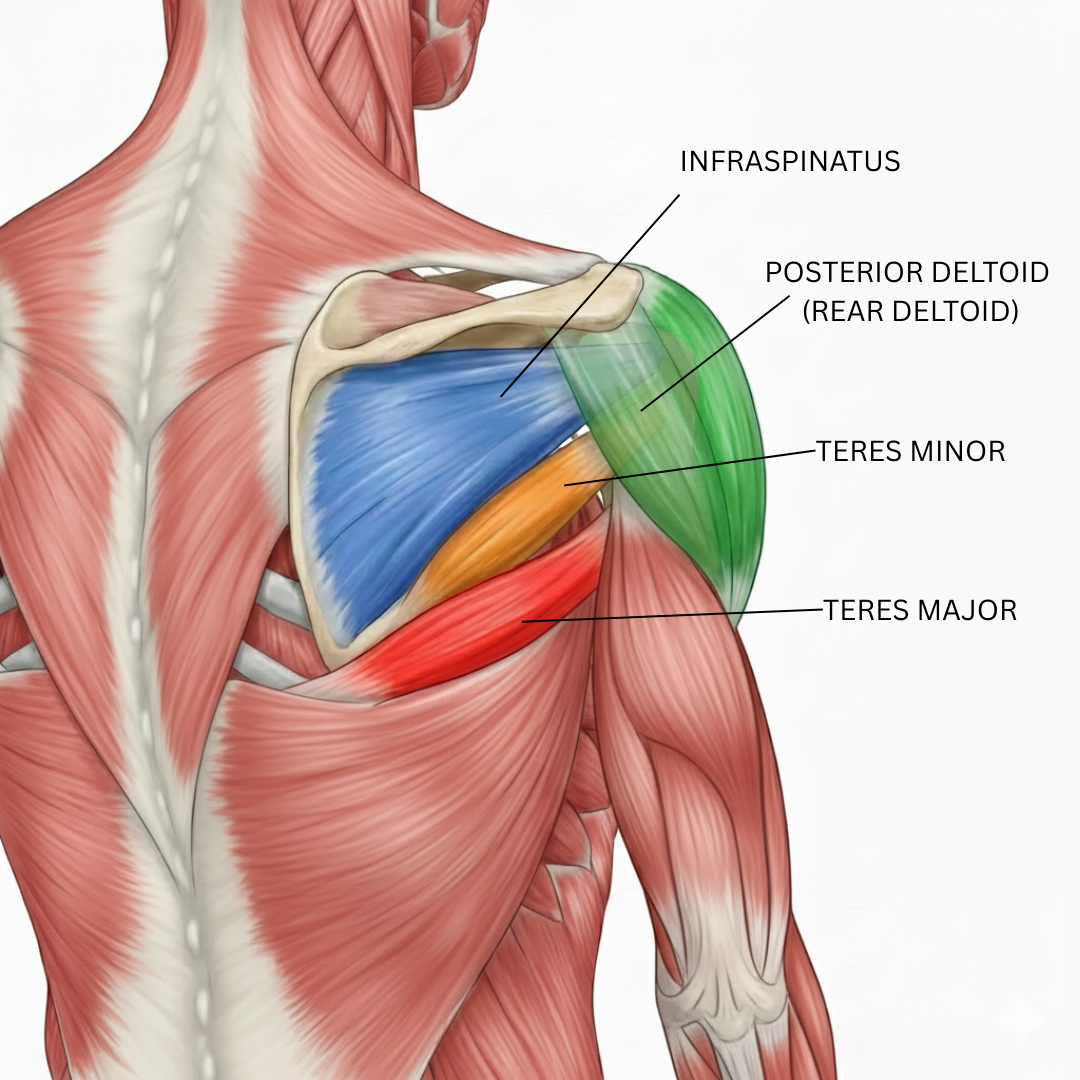
At Corexcell, we take the opposite approach: Rather than focusing on the scapula & and in effective rotator cuff exercises, we focus on true shoulder stability by isolating the muscles that directly anchor and depress the humeral head.. These muscle are:
- teres major
- teres minor
- Infraspinatus
- rear deltoid
When these muscles are weak or fail to activate properly, the humeral head drifts upward and forward. This forces the scapula to elevate and the upper trapezius, levator scapulae, neck muscles, and front deltoid to overcompensate for the lost stability.
This dysfunctional pattern is the root driver behind nearly every common shoulder condition, including rotator cuff irritation or tears, labrum tears (including SLAP tears), shoulder impingement, biceps tendonitis, winged scapula, and chronic neck and upper-back tightness.
The Corexcell online system restores proper shoulder mechanics through four targeted exercises that strengthen these true stabilizers while completely eliminating compensations. The rule is simple: you must feel only the target muscle working. If compensations take over and the target muscle is not felt, that muscle will not strengthen and progress will stop.
Note: We also teach how many wrist and forearm injuries originate from weakness in these same shoulder stabilizers, rather than from problems at the wrist or elbow itself.
Ready to start your recovery today?
- Book a Private Virtual Session →
- Download the COREX12 Rehab App →
- See Real Client Testimonials →
Prefer In Person Sessions? Clients from across the country have the option to fly into Greenville, SC (GSP airport) for hands-on sessions – though most achieve full recovery completely virtually through our remote coaching and rehab app.
What Our Clients Say on Google
4 Exercises to Fix Every Shoulder Injury: Avoid Surgery & Injections
The Corexcell virtual shoulder rehab program uses a unique 4-exercise system that fixes nearly every type of shoulder injury without surgery, pain pills, or injections, all from the comfort of your home.
This proven online system isolates and strengthens the true weak link in your shoulder while eliminating the compensations that most traditional exercises unintentionally reinforce.
Most people assume that different shoulder injuries (rotator cuff tears, labrum (SLAP) tears, shoulder impingement, biceps tendonitis, winged scapula, or frozen shoulder) require completely different treatments. In reality, almost every shoulder injury stems from the same underlying weakness: the deep stabilizing muscles that anchor the humeral head are too weak, and the compensation patterns are too strong.
Your body type, shoulder anatomy, lifting routine, sport, job, or daily habits simply determine which specific injury manifests, but the root cause is almost always identical. Because these same weaknesses appear in every shoulder injury, they also produce the same predictable compensations during exercise.
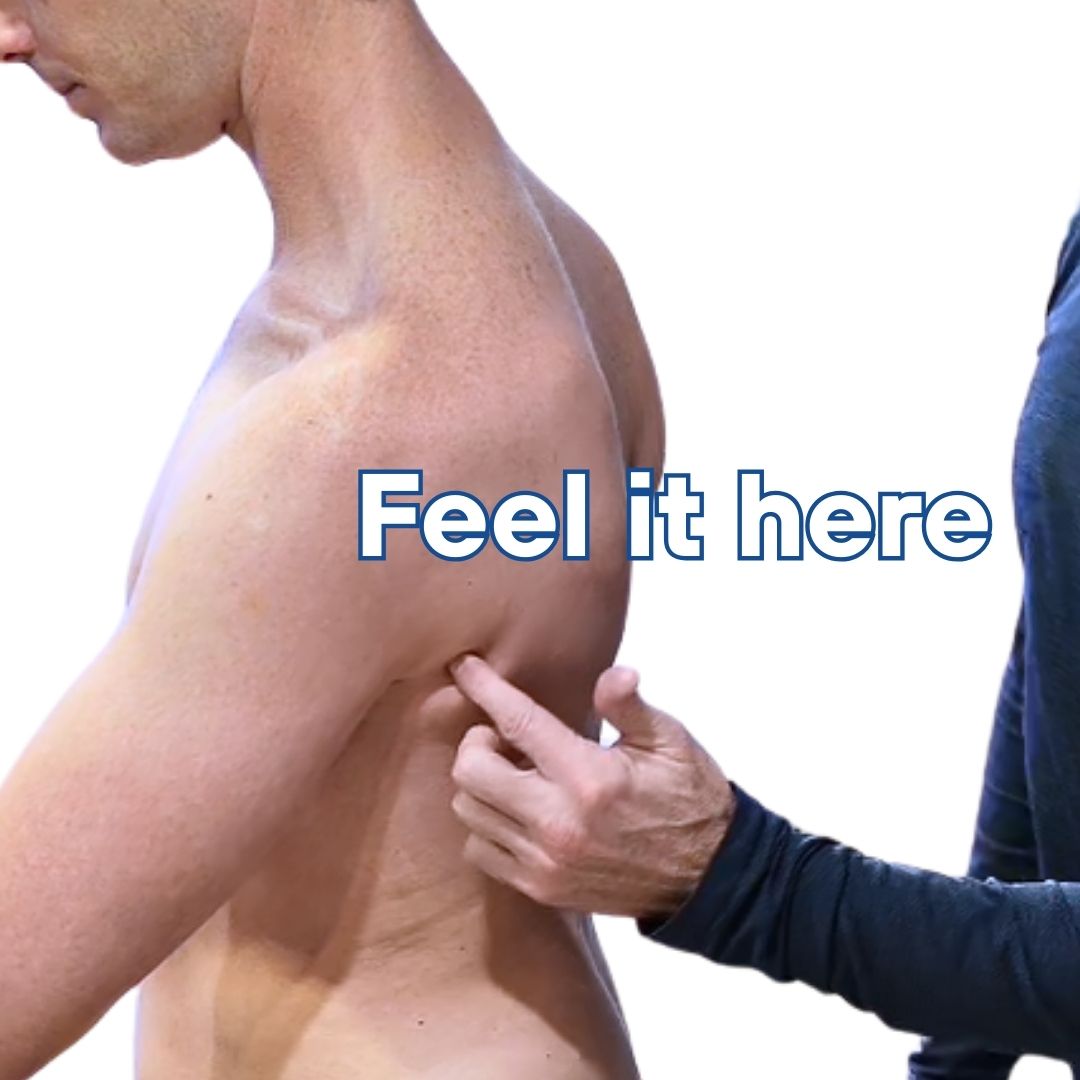
If you can’t feel the target muscle working during our 4 foundational exercises and instead feel the upper traps, levator scapulae, front/side deltoids, or pec minor taking over, your body is repeating the exact pattern that caused the injury.
When compensations dominate, the true stabilizers never strengthen, and the shoulder cannot heal.
Our online system ensures perfect isolation through built-in activation tests in the Corexcell Rehab App and virtual coaching guidance. You’ll confirm you’re activating the right muscle in the correct range before adding weight or progressing.
The 4 Exercise Target Muscles for Patients
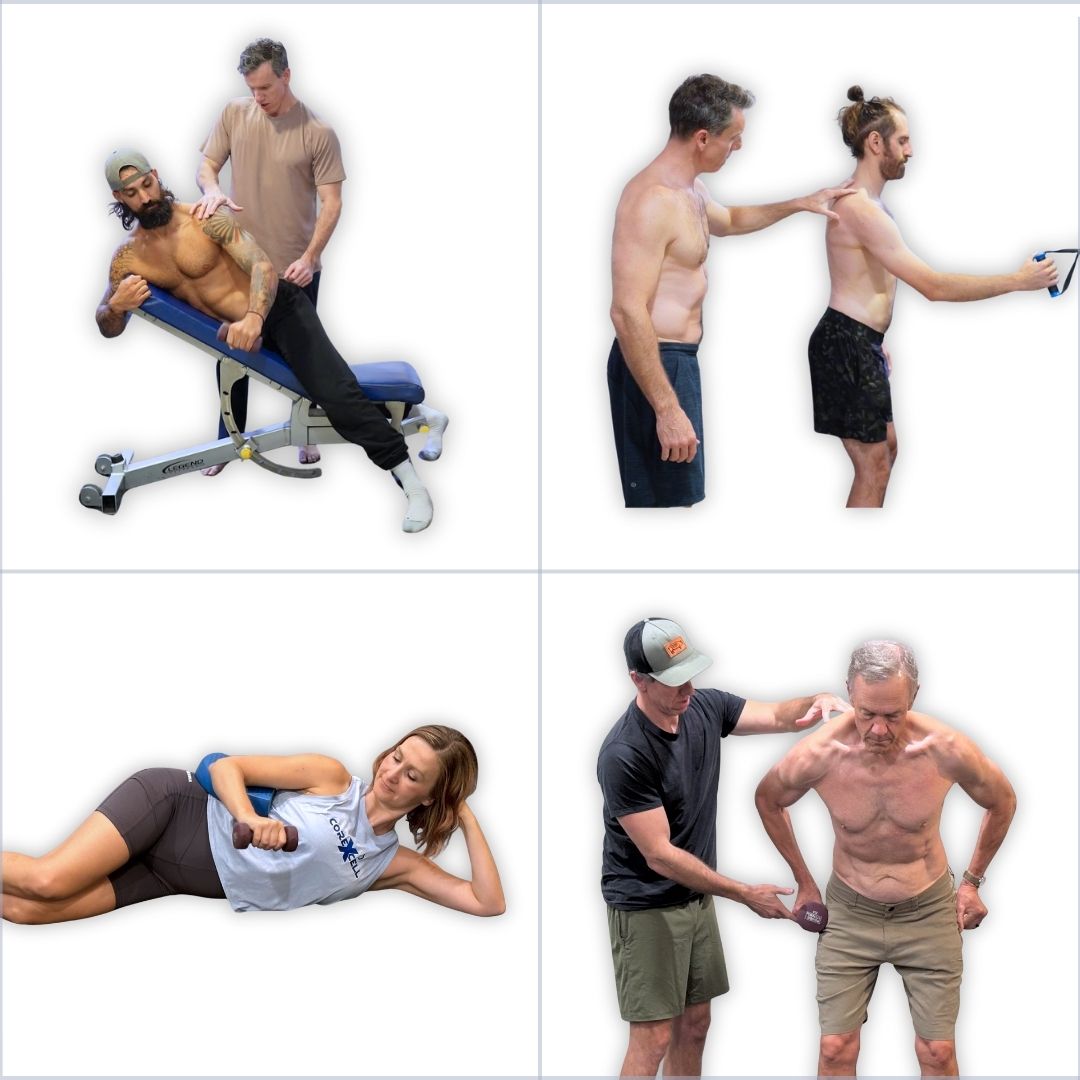
- Depression Row: humeral head depressors and teres major.
- Delt V Backs: rear delt and teres minor
- Pants Pulls: superior portion of rear deltoid
- Pad Cuff: infraspinatus, teres minor
Compensations You Must Avoid Feeling
If you feel any of the following muscles working during the 4 exercises, the weak link is NOT being activated:
- Upper Traps & Levator
- Pectoral Minor
- Front & Side Deltoid
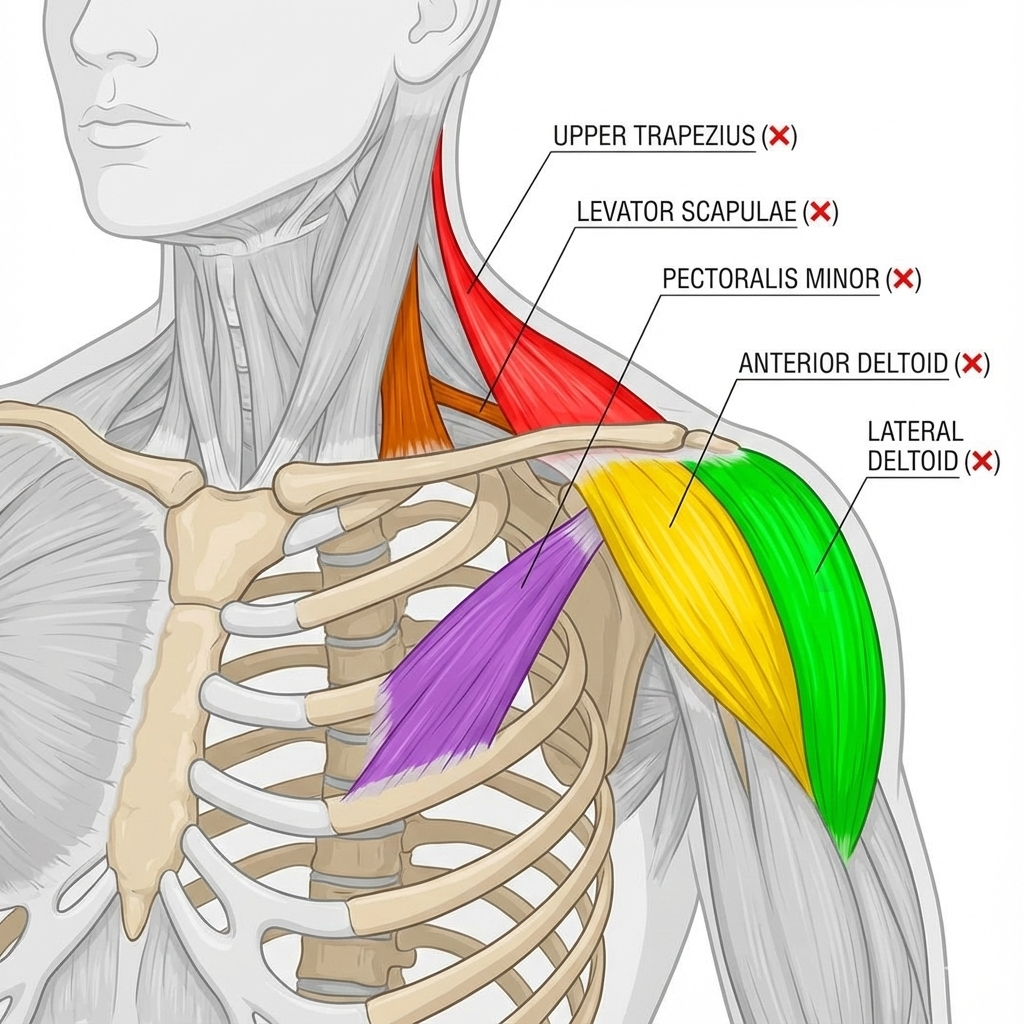
When these compensations take over, they steal the work from the deep stabilizers, reinforcing the problem instead of fixing it. By strictly eliminating compensations and isolating only the correct muscles, the Corexcell system finally anchors the humeral head, restores balance, and allows pain-free movement.
When to Add Lower Trap Exercises
As these four key muscles develop, the shoulder becomes securely anchored and properly aligned, setting the stage for smooth, pain-free motion. With this foundation in place, clients can safely progress to movements that engage the rhomboids, middle traps, and lower traps with balanced strength and control.
Without the main four exercises up to standard, most people end up overusing the upper traps during any exercise that’s supposed to build lower or mid-trap strength.
For example, common PT movements like Y’s, T’s, and Arrows often lead to upper-trap dominance instead of true lower-trap activation when the four foundational muscles aren’t properly developed.
Ready to start your recovery today?
- Book a Private Virtual Session →
- Download the COREX12 Rehab App →
- See Real Client Testimonials →
Hips & Core Affect Shoulder Stability
Shoulder function is influenced by the entire kinetic chain, including the core, hips, and glutes. Poor core strength or weak glutes can alter spinal alignment, which directly affects scapular positioning and shoulder mechanics. At Corexcell, we always recommend that clients train their hips and core alongside their shoulder program to ensure the entire chain is stable, balanced, and able to move the shoulder more smoothly without compensation.
One of our biggest priorities is correcting Anterior Pelvic Tilt. APT not only contributes to low back pain; it also creates rib flare and upper-thoracic extension, which disrupts scapular mechanics and makes it more challenging to fully stabilize the shoulder. By fixing pelvic position and core alignment, the shoulder finally sits in the correct position to move without irritation.
Problems with Traditional Physical Therapy
Many traditional rehab or physical therapy programs unintentionally reinforce compensations rather than correcting the weak link that caused the problem in the first place. Instead of teaching clients how to truly isolate the underactive muscle, they rely on generic movement patterns or ranges of motion that don’t properly engage the target area. As a result, the true source of weakness remains unaddressed and the injury never fully heals.
Our online program succeeds where others fail because of three key principles:
- Precise Muscle Activation: If you can’t feel the target muscle, you can’t fix the injury.
- Built-In Testing: Every exercise includes movement testing to confirm proper activation (available directly in the Corexcell Rehab App and through virtual coaching).
- Personalized Start/End Points: Adjustable ranges of motion ensure you start at the right intensity for your body.
This simple yet powerful method allows clients nationwide to fix nearly every shoulder injury — including rotator cuff tears, labrum injuries, shoulder impingement, winged scapula, and frozen shoulder — by addressing the root cause of weakness rather than symptoms.
Surgical Problems with Rotator Cuff & Labrum Tears
In many rotator cuff and labrum tear cases, surgery can be avoided when the stabilizers are retrained correctly with the Corexcell system. However, certain severe tears do require surgery, typically full-thickness rotator cuff ruptures, complete labrum detachments, or unstable SLAP tears that repeatedly catch, lock, or give out during overhead or rotational movements.
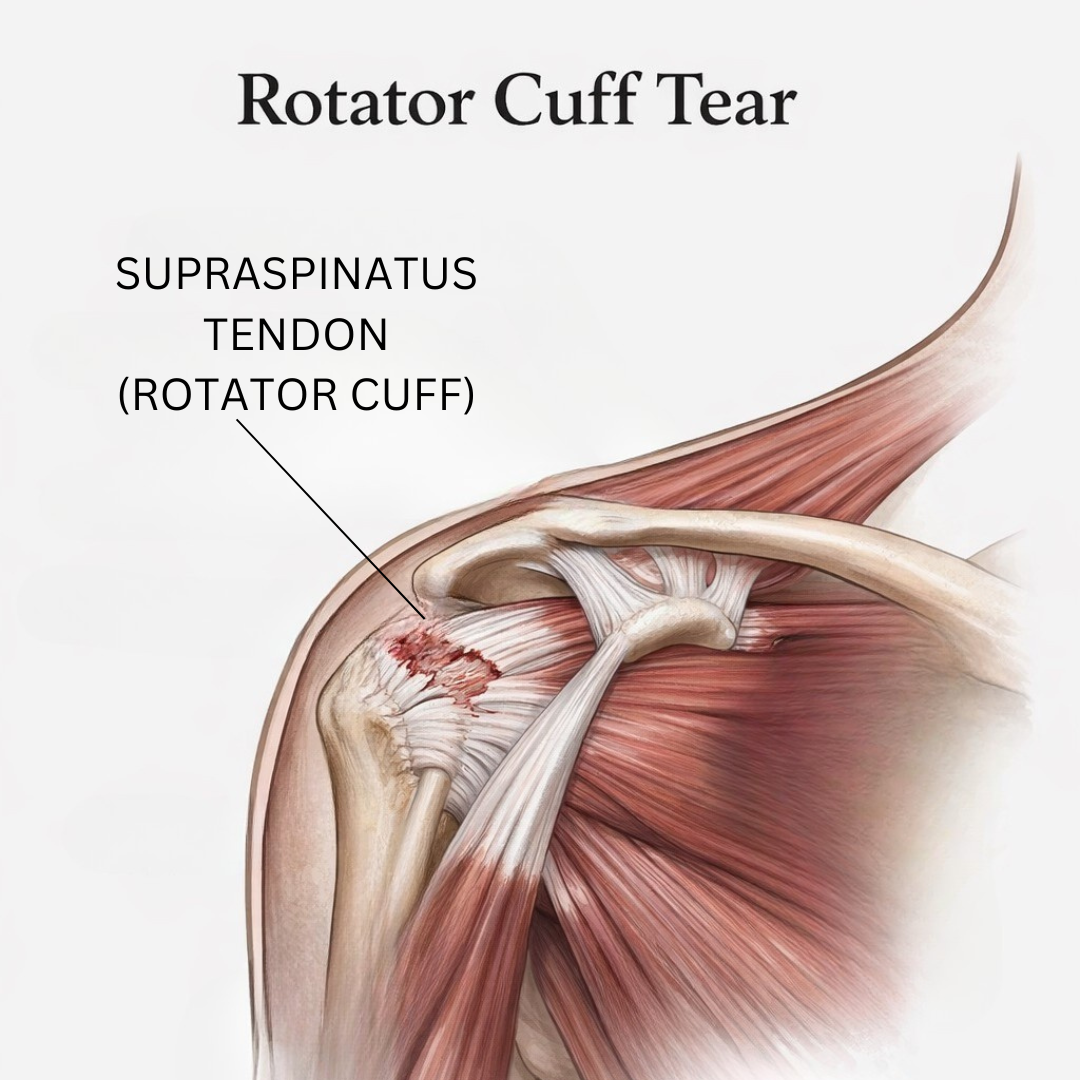
Large or unstable labrum tears often cause the shoulder to slip, shift, or “clunk,” making non-surgical rehab unreliable. Complete rotator cuff ruptures usually cannot generate enough force to stabilize the humeral head, no matter how strong the surrounding muscles become.
But the bigger issue is this: even after surgery, if the shoulder stabilizers remain weak, the humeral head will continue to glide upward or forward. When this happens, the repaired cuff or labrum tissue ends up absorbing excessive stress again and the same cycle of irritation, pinching, and pain returns. Surgery does not fix the root problem. Stabilizer activation does.
Do NOT do Serratus Exercises to Fix Winged Scapula
Most PTs and doctors believe winged scapula is primarily caused by a weak serratus anterior. The serratus is the main protractor of the scapula and holds it flat against the rib cage, so strengthening it through exercises like wall slides, push-up pluses, or serratus punches should theoretically resolve the winging. However, it almost never does — which is why so many clients with winged scapula never see meaningful improvement despite consistent effort.

In our system, we focus on downward depression of the humeral head to activate the subscapularis as the primary driver, using the Depression Row. The subscapularis — the large anterior rotator cuff muscle on the front surface of the scapula — is the main humeral depressor, assisted by the infraspinatus and teres minor posteriorly. When loaded correctly (particularly with the forward shoulder rounding and crunch variation in the Depression Row), the subscapularis acts as a powerful anchor, drawing the humeral head downward and centrally. This creates a suction-like effect that allows the scapula to settle flat against the rib cage and thoracic spine, eliminating the wing.
Once you combine the Depression Row with the other three exercises in our system and progress from Phase 1 into Phase 2, you can fully correct winged scapula in most clients.
Why We Don’t Start with Shoulder Stretches or Mobility Work
Many people with rotator cuff tears, labrum (SLAP) injuries, shoulder impingement, winged scapula, or frozen shoulder believe that stretching and mobility drills will loosen tightness and relieve pain. The truth is, if your shoulder isn’t properly anchored and you have compensations, stretching can make the problem worse.
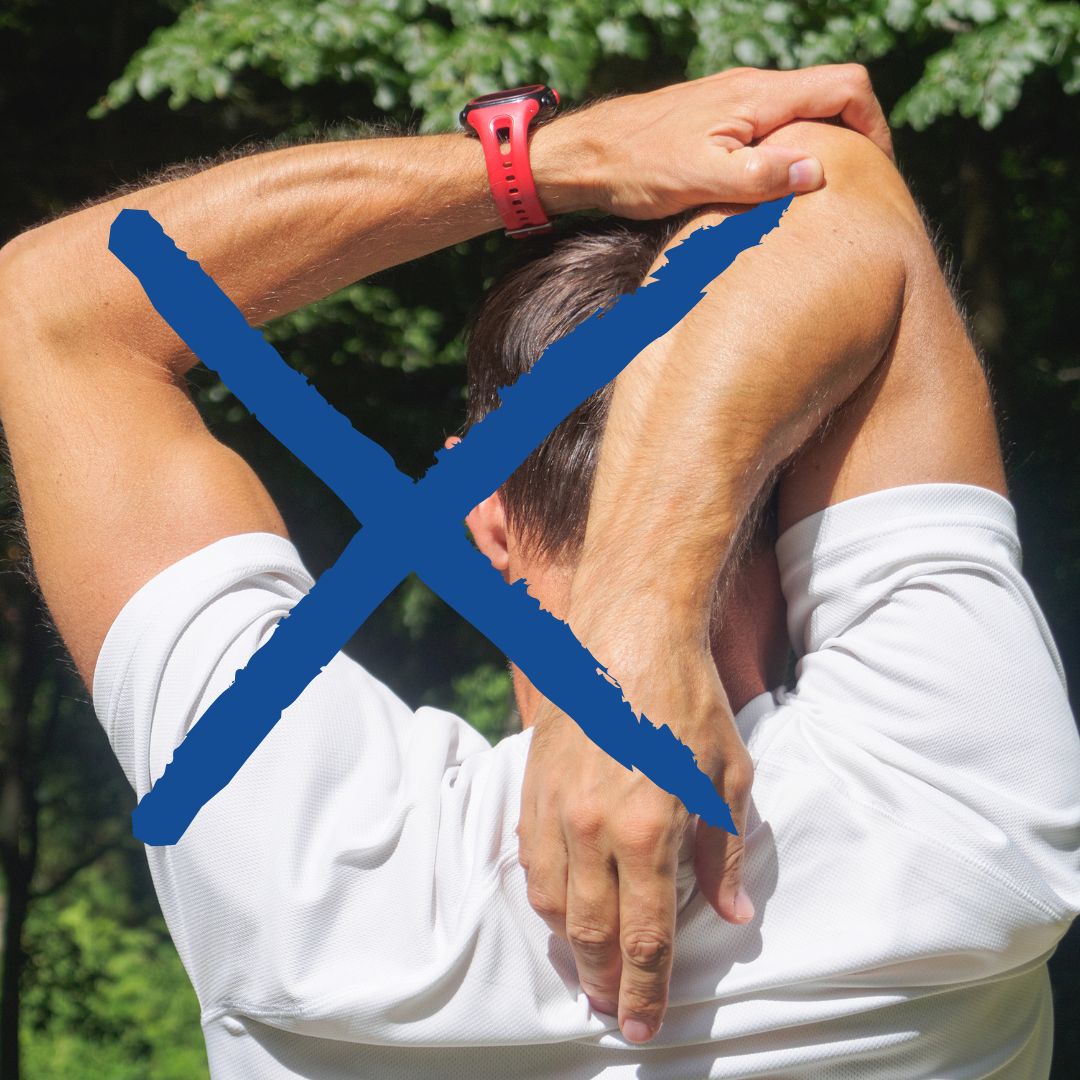
When the shoulder joint is unstable and the wrong muscles are overactive, especially the upper traps, pectoralis minor, levator, or front deltoids, stretching only increases pressure on the joint and connective tissue in a compromised position. Even advanced stretching methods like PNF won’t fix the real issue, because they don’t target the weak link causing the dysfunction.
In the Corexcell virtual program, we train in a short, controlled range of motion during Phase 1 to precisely activate the correct shoulder stabilizers. As those weak areas get stronger, compensations release naturally and range of motion improves without any stretching at all.

After clients pass our testing in Phase 2, most experience greater flexibility and motion because the shoulder is finally anchored and balanced. Stretching can be added later if desired, but it’s rarely necessary for recovery. True mobility comes from strength and control, not forcing movement through instability.
Shoulder Weaknesses Can Cause Neck, Wrist, and Elbow Pain
Many people with shoulder problems also experience neck pain, wrist pain, or elbow discomfort, and that’s no coincidence. When the shoulder isn’t properly anchored, the entire chain above and below it starts to compensate.
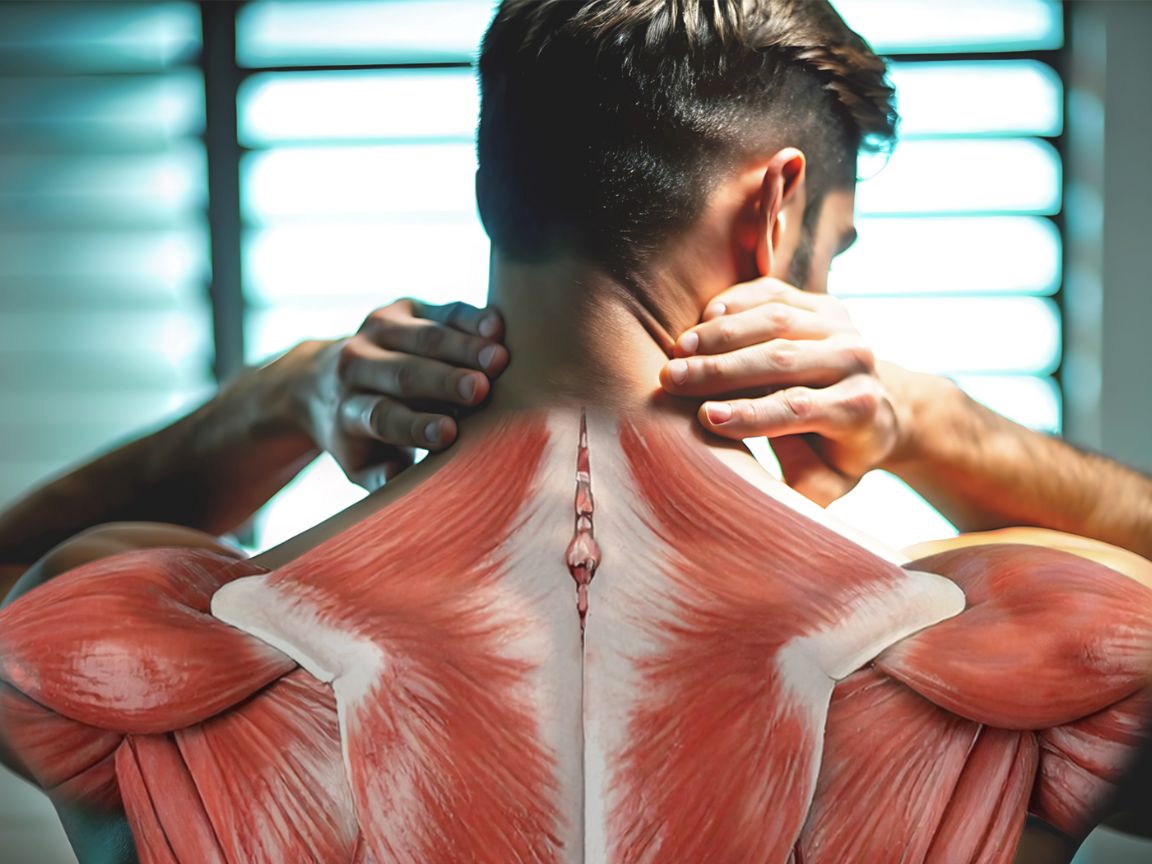
If the target muscles developed in the 4 Corexcell shoulder exercises aren’t firing correctly and the scapula isn’t stabilized, the levator scapulae and upper traps begin overworking to hold the shoulder in place. This excessive tension transfers directly to the neck, leading to stiffness, irritation, or even chronic neck pain. To truly fix the neck, you must first correct the shoulder. Once the shoulder is anchored and the scapula is stable, neck pressure naturally eases then it’s safe to begin focused neck strengthening.
The same principle applies to the wrist and elbow. When the humeral head and scapula aren’t properly aligned, more stress travels down the arm, increasing strain on the forearm, wrist, and elbow joints. This can cause issues like tennis elbow, golfer’s elbow, or wrist pain that won’t resolve with isolated exercises alone. Real, lasting relief starts by correcting shoulder positioning and activation, building a solid foundation so the rest of the arm can move without compensation or excess tension.
Through our virtual program, we’ve seen this full-chain correction transform clients nationwide who came in with combined shoulder, neck, elbow, and wrist problems. These can all be resolved by restoring true shoulder control.
Corex12 Full Body Rehab App
Our Rehab App is called COREX12: the cornerstone of our virtual shoulder rehab program. It’s a 3-phase system built around 12 foundational exercises designed to fix the core, hips, shoulders, and legs. All programs are accessible from anywhere in the US.

You can follow the full-body program or focus only on the shoulder track or the lower-body track as needed. There are also additional modules for the neck, wrists, and ankles.
3 Phases Approach to Shoulder Rehab
Phase 1 – The 4 Foundations
In Phase 1, detailed app videos and built-in exercise testing guide you to locate and activate the correct target muscle in all four foundational shoulder exercises, without compensations. Mastering technique with light weight is crucial. This builds a strong mind-muscle connection before progressing to Phase 2. We also include two key core exercises to improve posture and anterior pelvic tilt, and we recommend that most clients run the hip/leg program in the app as well to take additional pressure off the shoulders.
Phase 2 – Advancements
Once you pass all four activation tests in Phase 1, you move into Phase 2. The original foundational exercises are replaced with more advanced variations that target the same stabilizers from new angles and at higher intensities, fully correcting the weakness patterns causing the injury. During this phase, we also add a high-rep basic lifting program that includes rows, biceps work, triceps work, and light dumbbell bench pressing to rebuild strength on top of the improved stability.
Phase 3 – Corrective Lifting
In Phase 3, we combine the advanced corrective work from Phase 2 with a more complete foundational lifting program. This phase adapts to your training background and restores full strength, control, and durability, so you can return to higher-level lifting, sport, and daily activity without falling back into old compensation patterns.
Ready to start your recovery today?
- Book a Private Virtual Session →
- Download the COREX12 Rehab App →
- See Real Client Testimonials →

Frequently Asked Questions about Shoulder Pain & Corexcell Rehab
See Real Client Testimonials →