Expert Rehab for Knee Pain, Patellar Tendonitis, Meniscus Tears, ACL & MCL Injuries, and Knee Osteoarthritis
Introduction: Premier Knee Rehabilitation in the Upstate
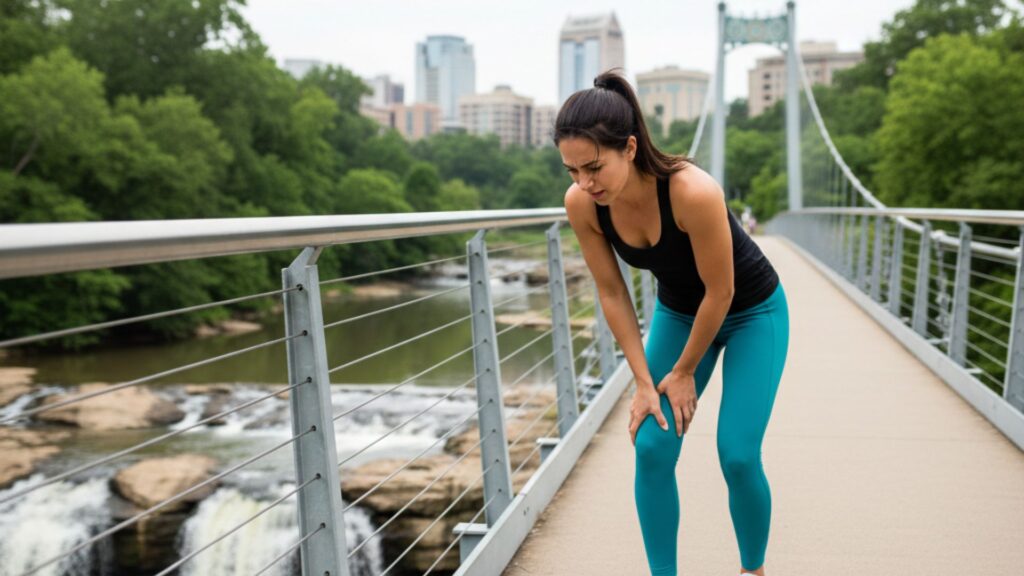
Living with knee pain can dramatically impact your daily life, whether you are jogging along the Swamp Rabbit Trail, climbing stairs at Fluor Field, working in downtown Greenville, or enjoying the shops and restaurants near Augusta Road. At Corexcell Rehab Center in Greenville, SC, we have helped countless clients throughout the Upstate regain knee stability, strength, and pain-free movement through our targeted, exercise-based rehabilitation programs and performance testing.
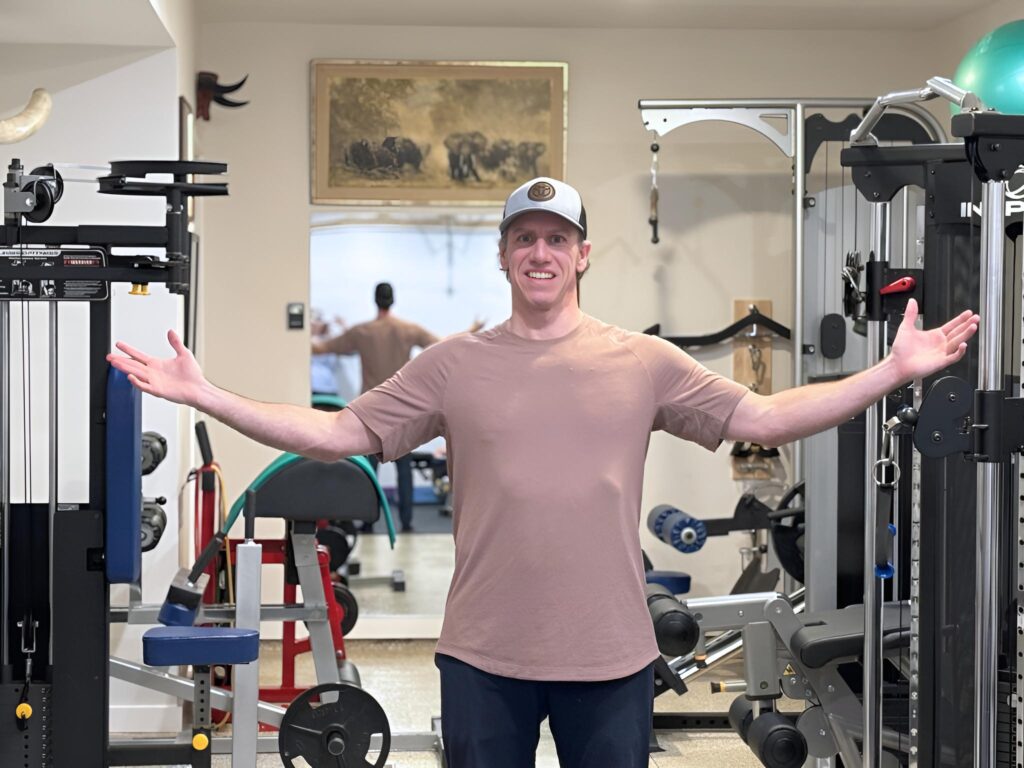
Led by Zach Fuller, creator of the Corexcell Rehab Method and one of the most-followed knee rehabilitation specialists online, our system helps clients rebuild proper knee alignment and function through precise muscle activation and corrective strengthening.
Corexcell is not just local. We work with clients nationwide and internationally through live virtual sessions and our Rehab App, allowing people everywhere to access our proven knee rehabilitation system and benefit from the same science-based method that has helped thousands avoid surgery, injections, braces, and pain medications.
The knee is the body’s most active load-bearing joint, which makes it especially vulnerable to irritation and injury. According to the Mayo Clinic, knee pain is one of the most common musculoskeletal complaints, especially in active adults and aging populations. Whether your knee pain comes from a sudden twist during pickup basketball at the Kroc Center, long-term wear from running, or repetitive strain at work, identifying the true source of weakness is the first step toward healing.
At Corexcell, we specialize in exercise-based knee rehabilitation in Greenville that restores alignment, strength, and stability and often helps clients avoid invasive procedures by correcting the root cause of knee dysfunction.
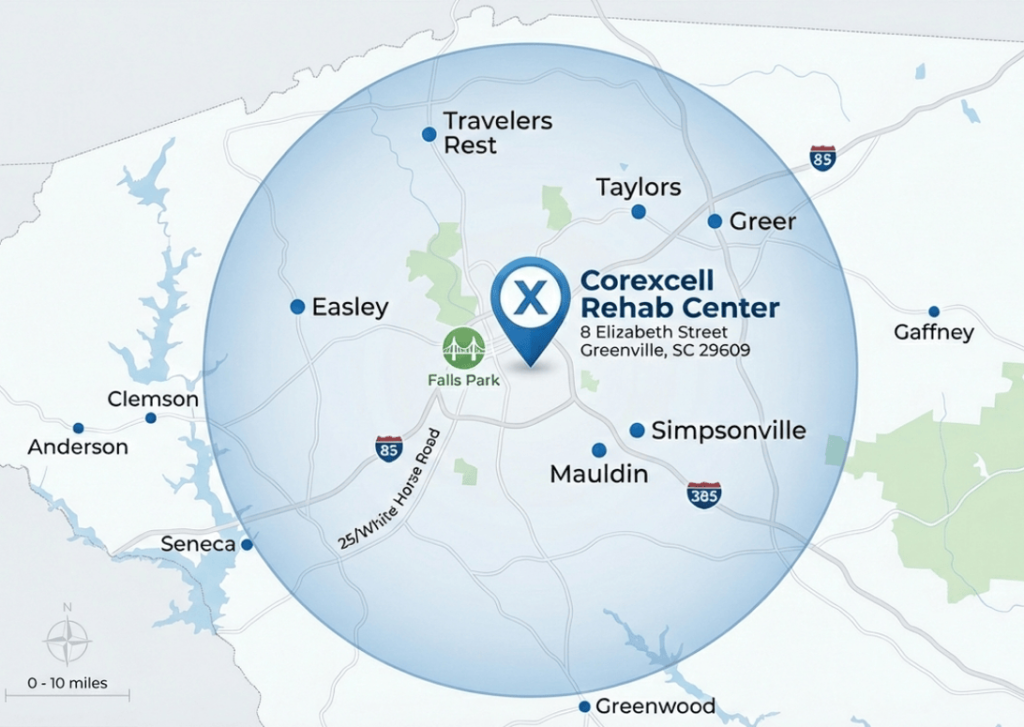
Our Greenville-based rehab team has extensive experience helping individuals across the Upstate, from Travelers Rest to Simpsonville, overcome knee conditions such as general knee pain, patellar tendonitis (jumper’s knee), meniscus tears, ACL and MCL injuries, and knee osteoarthritis. Unlike traditional physical therapy programs that rely on generic strengthening or compensatory movement patterns, Corexcell focuses exclusively on targeted muscle activation and corrective movement, the proven foundation for long-term knee health.
Our programs serve clients throughout Greenville County, including Simpsonville, Mauldin, Taylors, Greer, Easley, and Travelers Rest, along with clients nationwide through our virtual rehab systems and the online Rehab App. This combination of local expertise and global accessibility allows anyone, anywhere, to benefit from Corexcell’s proven knee recovery system.
We also work extensively with clients from broader Upstate regions, including Clemson, Anderson, Seneca, Gaffney, and Greenwood, who travel to our Greenville facility or follow our remote corrective program from home.
We also serve clients from Columbia, SC (about 1.5–2 hours via I-26/I-20, roughly 100–103 miles) and surrounding Midlands communities like Lexington, Irmo, Cayce, West Columbia, Elgin, and Chapin, who travel to our Greenville facility for hands-on sessions or thrive with our remote programs from home. Similarly, we support Hendersonville, NC residents (just under an hour north in the mountains, about 40 miles via US-25), bringing our hip-first knee rehab to mountain-area active lifestyles with minimal travel needed.
Whether you’re seeking knee injury treatment in Columbia SC, knee pain rehab in Lexington SC, knee rehabilitation in Irmo SC, or knee rehab in Hendersonville NC, our live virtual sessions with Zach Fuller and the COREX12 Rehab App deliver the same proven Corexcell knee method, restoring function and helping clients live pain-free through targeted hip and glute stabilization.
What Our Clients Say on Google
Ready to start your recovery today?
- Book a Private Session →
- Purchase the COREX12 Rehab App →
- See Real Client Testimonials →
Contact Corexcell Rehab Center in Greenville today at 908-318-4048 or visit www.corexcell.com
Our Location:
Corexcell Rehab Center
8 Elizabeth Street, Greenville, SC 29609
Hips & Glutes Fix Knee Pain, Not the Quads
Most physical therapy programs and trainers focus heavily on strengthening the quads and VMO to fix knee pain. At Corexcell Rehab Center, we’ve found this approach to be incomplete and, in many cases, counterproductive. Quad-focused rehab often provides temporary relief, but as soon as clients return to lifting or sports, the pain comes back because the true source of the problem was never addressed.
Knee pain rarely comes from a “weak knee.”
It comes from weak hips and glutes that force the knee to absorb loads it isn’t designed to handle.
The real foundation of knee stability comes from the glute medius, glute minimus, and the adductor chain, which support the pelvis and femur. When these muscles are weak or uncoordinated, the pelvis shifts and the femur begins moving irregularly, rotating, drifting, or collapsing, which increases torque and compression on the knee joint with every step, squat, jump, or change of direction. This imbalance is at the root of nearly all chronic knee conditions including general knee pain, patellar tendonitis, meniscus irritation, ligament strain, and even worsening knee osteoarthritis.
This is why, in most cases, the specific knee diagnosis matters less than the underlying mechanics. Fix the hip and glute weakness, and the knee finally stops taking the brunt of the stress.
Once the hip complex is strong and properly aligned, the knee gains the stability it has been missing. Only then is it safe and effective to incorporate VMO work, knee-over-toe training, and quad-dominant strengthening because now the knee is supported by the hips rather than being forced to handle load by itself.
This hip-first approach is the foundation of how we treat chronic knee pain for Greenville SC patients who have not improved with traditional quad-focused physical therapy.
Our knee programs serve patients across Greenville, Taylors, Mauldin, Simpsonville, Greer, and the greater Upstate SC region, both in person and through our virtual rehab system.
4 Exercises to Train the Hips & Glutes in Greenville: Fix Chronic Knee Pain
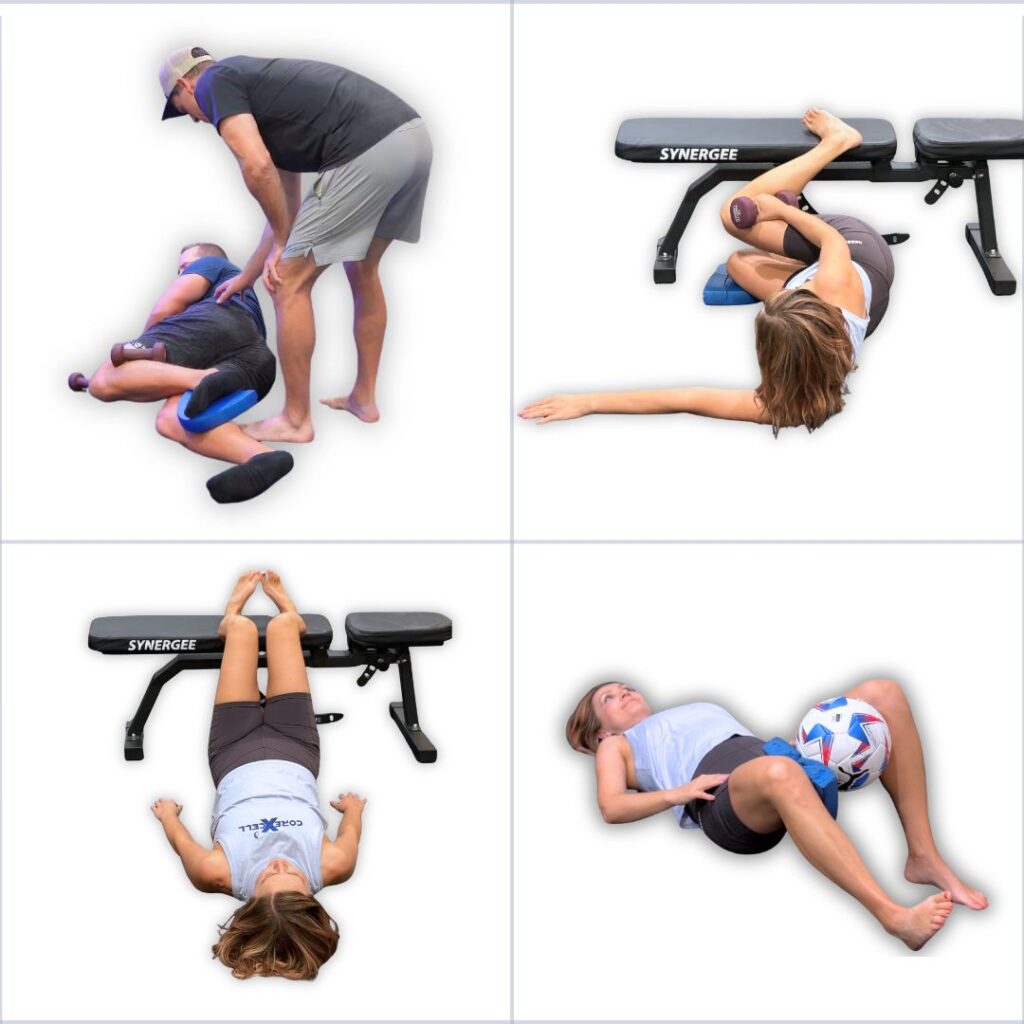
At Corexcell Rehab Center, we’ve developed a unique 4-exercise hip and glute system that gets to the true root cause of knee pain without surgery, pain pills, or injections. This program isolates and strengthens the exact muscles responsible for stabilizing the pelvis and femur, rather than reinforcing the same compensations that most traditional PT and gym exercises fail to correct. This system is one of the only true exercise-based knee rehabilitation programs in Greenville designed to correct hip and femur instability at the source.
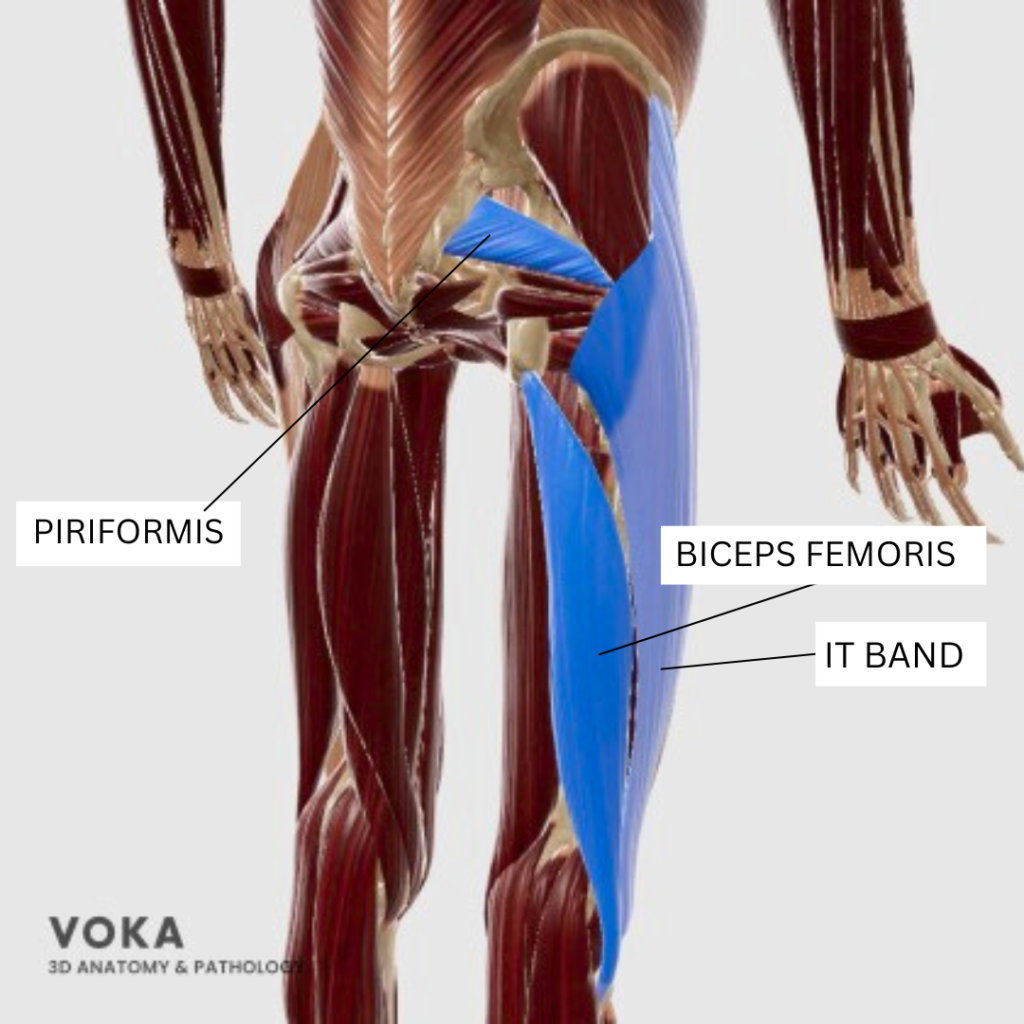
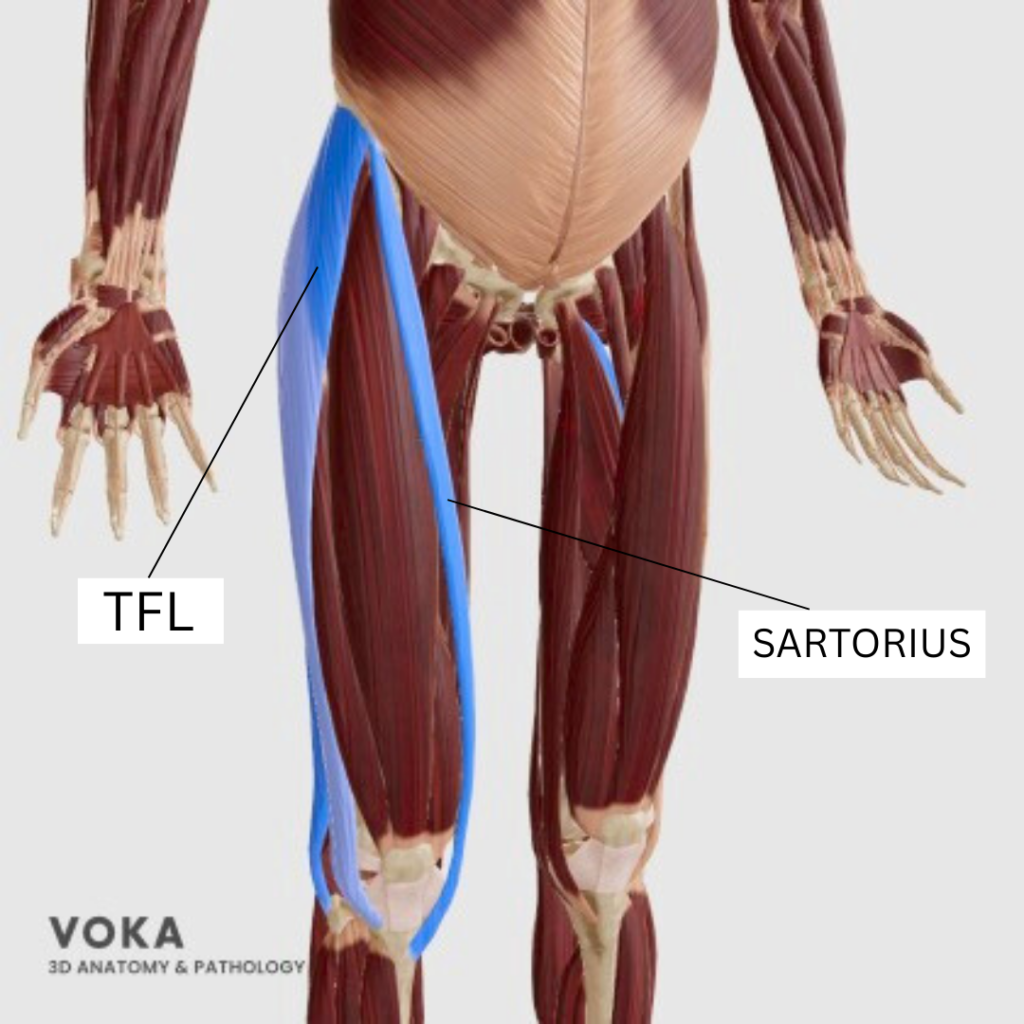
Most trainers and PTs try to strengthen the glutes and adductors with band walks, clamshells, glute bridges, or adductor/abductor machines. The issue is that these movements primarily hit the glute max and upper glute medius, while over-activating the TFL and lateral rotators (piriformis, sartorius, biceps femoris). This drives more compensation and reduces knee stability.
The Corexcell system solves this by isolating the medial hip rotators and preventing the TFL and lateral rotators from taking over. When the correct muscles activate, the pelvis stabilizes, the femur stays aligned, and knee irritation begins to resolve naturally.
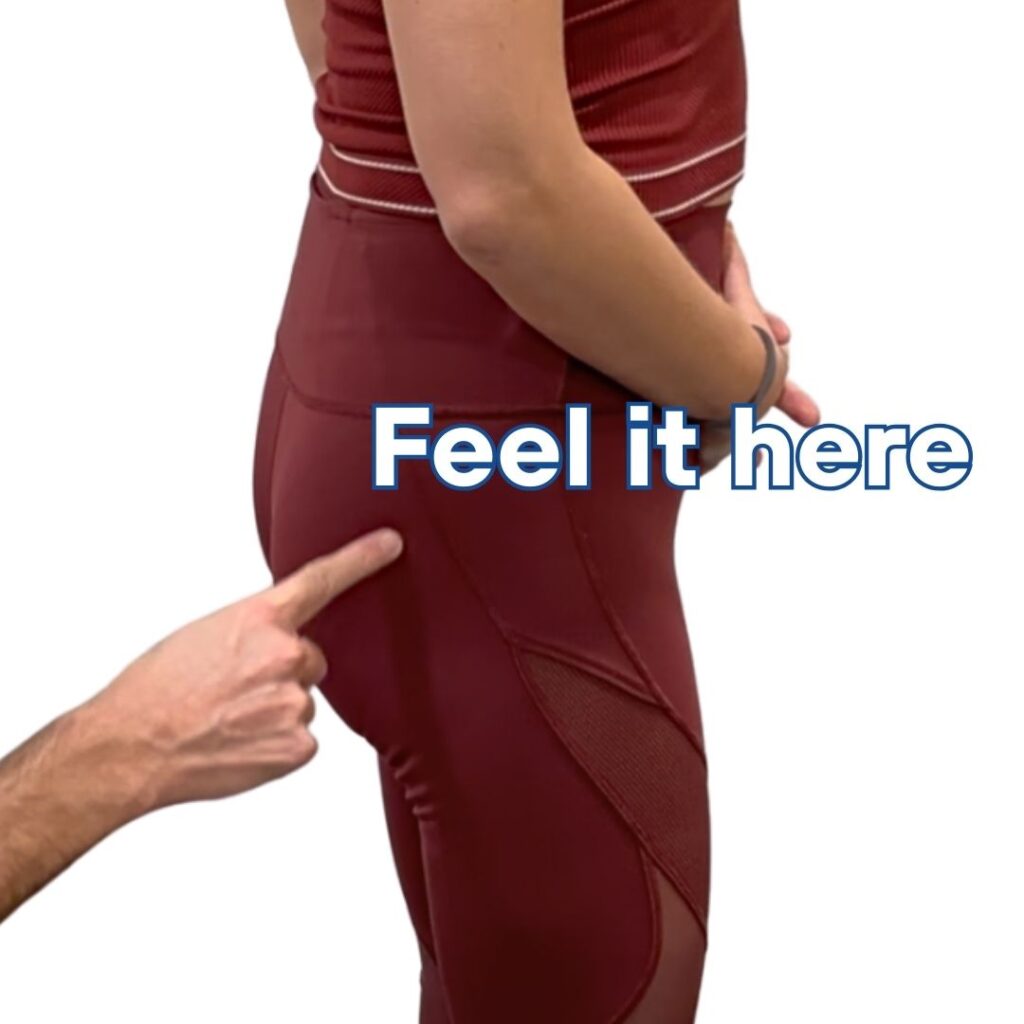
The goal is simple: you must feel only the target muscles working, nothing else.
If you feel compensations instead of the correct muscle, the weak link will never strengthen.
This is why our system includes built-in testing inside the Corexcell Rehab App, along with hands-on guidance from our trainers. These tests confirm that you’re activating the correct stabilizer in the proper range of motion before adding weight, progressing the angle, or increasing intensity. When the activation is precise, the hips become strong, balanced, and able to support the knee in every movement.
This approach is a core part of our Greenville knee recovery program and is used for both in-person clients and those following our virtual rehab system.
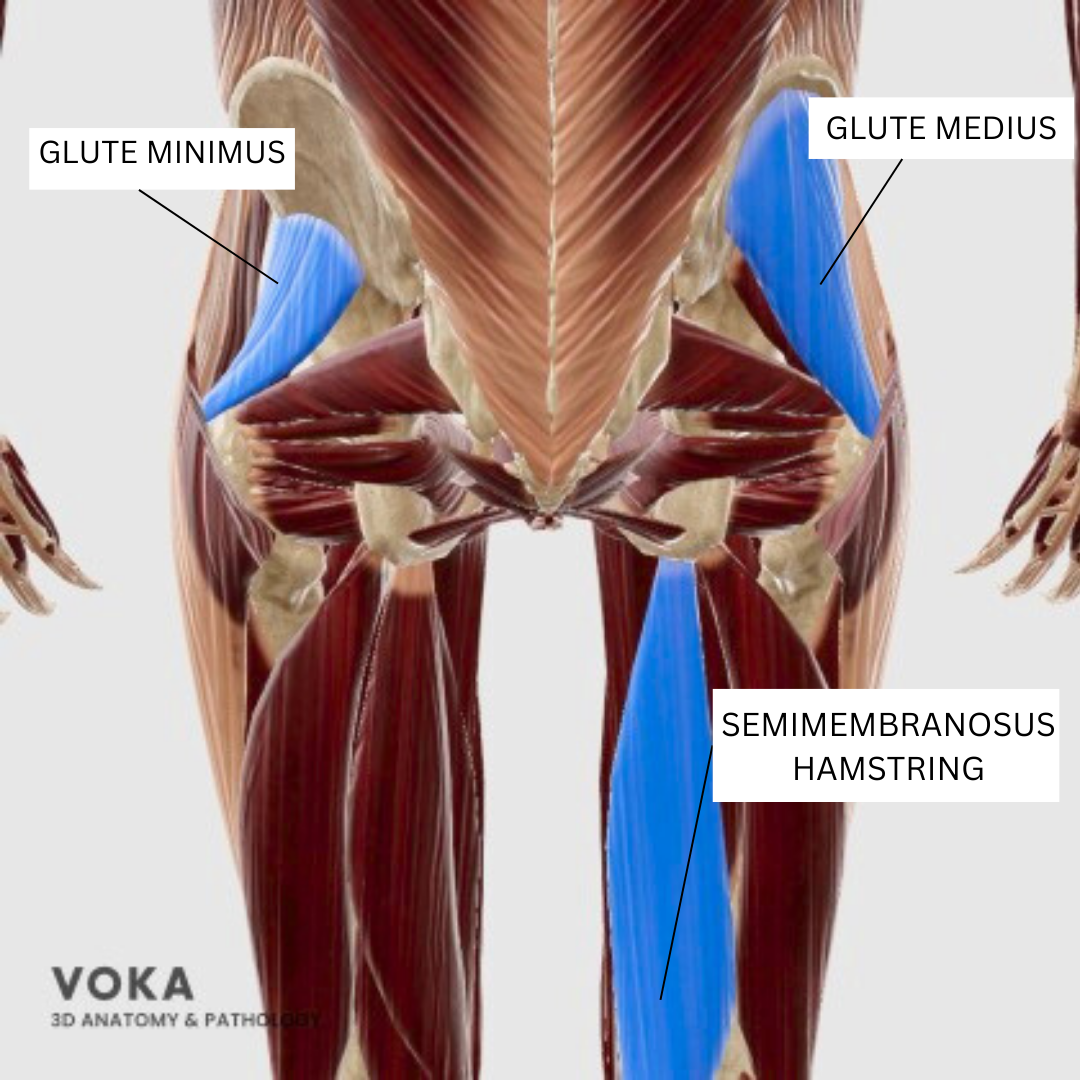
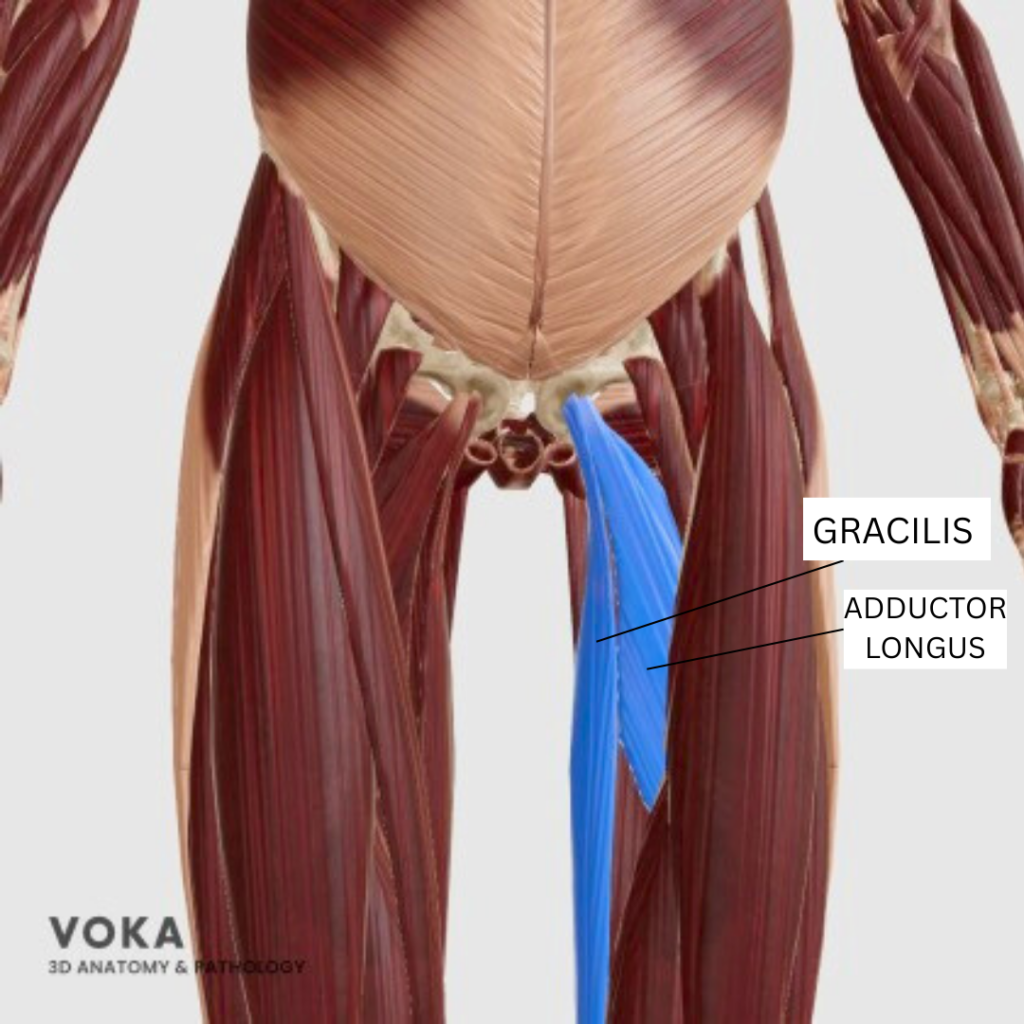
The 4 Exercise Target Muscles
- Glute Fly: Anterior portion of the glute medius
- Knee Drop: Glute minimus
- Internal Ball Squeeze: Adductor brevis, adductor longus, gracilis
Medial Hamstring Bridge: Semimembranosus hamstring
Compensations You Must Avoid Feeling
If you feel any of the following muscles working, the weak link is not being activated:
- Piriformis
- TFL
- Sartorius
- Biceps femoris
Ready to start your recovery today?
- Book a Private Session →
- Purchase the COREX12 Rehab App →
- See Real Client Testimonials →
Fixing Gait and Valgus Knees
Once the hip and glute weaknesses are corrected, we can safely begin loading the quads through different lunge and squat variations. This stage is where clients learn how to track the knee properly in relation to the foot, and it’s also where we address valgus knee collapse (knees caving inward).
Trying to fix valgus collapse before correcting hip and glute weakness is a common mistake in traditional rehab and sports training. If the stabilizers aren’t strong, the knees will continue to cave inward no matter how much cueing or form correction is given, and forcing the knee outward too early can make the issue worse.
When the glutes and adductors are finally strong enough, using our 4 key foundational exercises, the knee naturally begins to push outward and move into proper alignment during loaded movements. At this point, corrective lunge and squat patterns become highly effective because the body now has the foundational stability to hold the knee in the correct position.
By first rebuilding hip strength, then teaching proper loading mechanics, we ensure the knee tracks correctly, absorbs force safely, and develops the stability needed for higher-level lifting, running, and athletic movements.
This gait-correction phase is a key part of how we help Greenville SC knee pain patients return to running, lifting, and sport without recurring flare-ups.
Fix Hip Rotation & Pelvic Alignment in Greenville: Left vs. Right Knee Pain
Once you’re safely loading the quads and the major hip and glute weaknesses have been corrected, the next step is addressing pelvic rotation and hip hike. These imbalances can create torque through the knee and significantly influence left-versus-right knee pain patterns. However, trying to manipulate the pelvis before fixing the glute and adductor weaknesses from the 4 foundational exercises is a major mistake. If the stabilizers aren’t strong, rotational and lateral corrections will only increase knee and hip pressure, even if the position looks more mechanically “advantageous.”
Hip Rotation: Dominant-Leg Knee Pain
Most people rotate toward their non-dominant side during everyday movement. For example, if you’re right-handed, you typically rotate into your left side to grab something off a shelf, swing a golf club, rotate in tennis, or reach across the body. Over years, this creates a predictable pattern: the pelvis rotates more toward one side, the dominant leg absorbs more frontal-plane load, the dominant-side glute becomes rotationally weak while the groin and hip flexor chain become overactive, and the dominant knee takes excessive torque.
To correct this, the Corexcell system restores balance by training rotation toward the opposite side of your habitual pattern. One of our key drills is an isometric standing punch or standing swing where the client rotates the pelvis into the opposite direction and holds the position at end range. This repositions the pelvis, engages the underactive glute and medial hip chain, and gradually reduces torque on the dominant knee.
Hip Hike: Non-Dominant Leg Knee Pain
Right-handed athletes (and most active individuals) also develop a second predictable compensation: the right side becomes compressed through the hip flexor, groin, and abdominal chain. Because they are constantly rotating left, the left glute max and upper glute medius become overly dominant, while the left iliacus, groin, and lower abdominal chain become weak and underactive. When these muscles are weak, the left knee is forced to absorb more load during walking, squatting, or athletic movement, often leading to chronic non-dominant leg knee pain.
Additionally, this imbalance eventually creates a lateral pelvic shift and a slight S-curve in the spine. The left hip begins to sit higher, forming a classic hip hike. The left hip flexor, quadriceps, hamstrings, TFL, and lateral hip tissues feel chronically tight. This pattern is also responsible for many cases of piriformis syndrome, SI joint pain, and a pinching sensation in the left hip flexor (sartorius, pectineus, and rectus femoris).
To fix a true hip hike, we use our Core Fixer, which activates the iliacus and transverse abdominis in a posterior pelvic tilt without feeding the overactive psoas or rectus abdominis. This restores symmetry, corrects anterior pelvic tilt, levels the pelvis, and removes the torque that has been driving chronic one-sided hip pain.
Why We Don’t Start with Knee Stretching or Mobility Work in Greenville
Most people dealing with knee pain, whether it’s patellar tendonitis, meniscus irritation, ACL/MCL strain, or chronic stiffness, are told the same thing:
“You need to stretch your quads, hamstrings, IT band, or calves.”
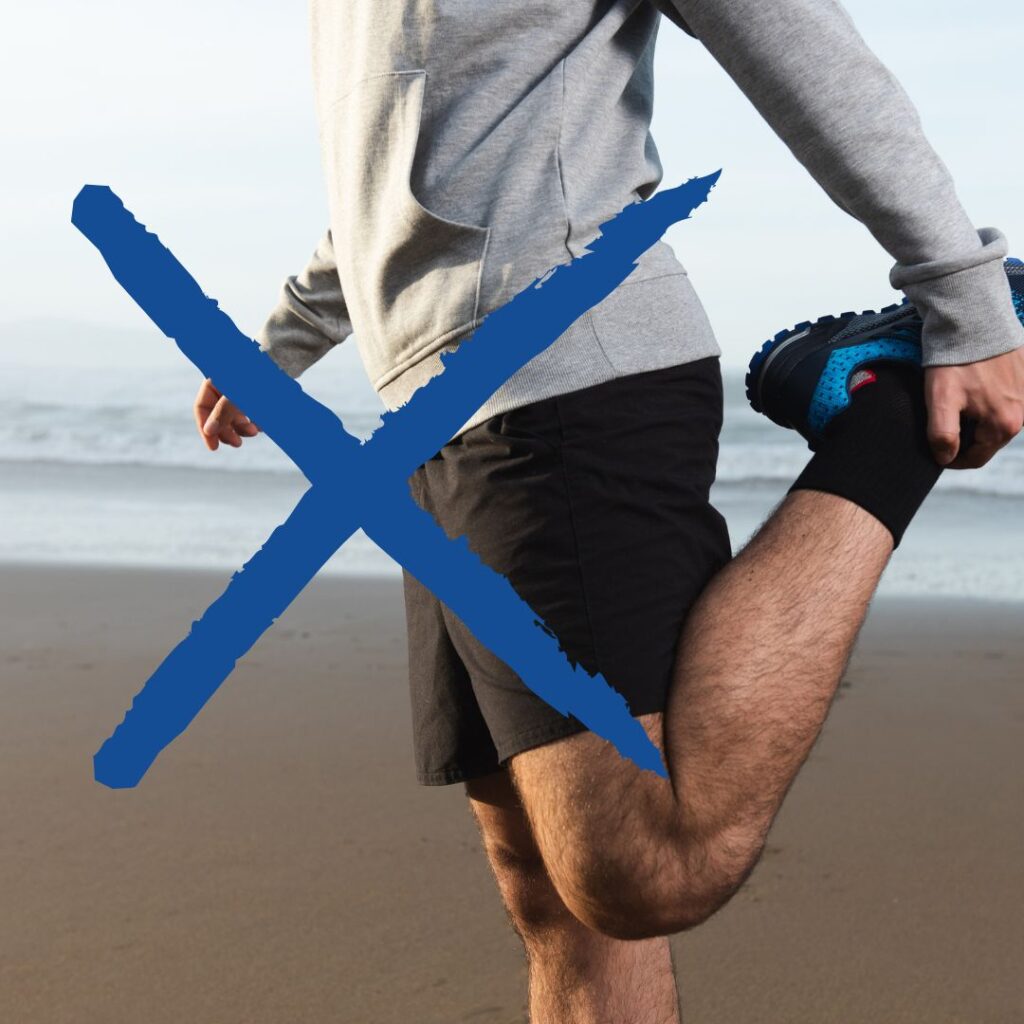
But at Corexcell Rehab Center, stretching or mobility drills often make knee pain worse when done too early.
When the hips and pelvis are unstable, the knee is already being pulled out of alignment by compensations from the TFL, groin, hip flexors, or quads. Stretching into this imbalance simply increases joint pressure and irritates connective tissue further.
Even advanced stretching methods fail for the same reason: you’re moving a joint that isn’t properly anchored. Once the hip complex is strong enough to stabilize the femur and support the knee, mobility improves naturally because the body is no longer compensating for weakness.
This is why many Greenville SC knee pain patients experience flare-ups when stretching-based physical therapy is introduced before proper hip and pelvic stability is restored.
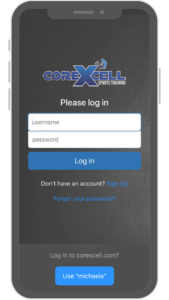
Corex12 Full Body Rehab App for Greenville & Beyond
Our Rehab App is called COREX12: a 3-phase system built around 12 total foundational exercises to fix the core, hips, shoulders, and legs. You can choose to follow the full-body program or focus only on the shoulder or only on the lower body. There are also additional modules for the neck, wrists, and ankles.
This system serves as a complete exercise-based knee rehabilitation program for Greenville SC clients who need structured, progressive correction without relying on traditional physical therapy.
3-Phase Approach to Knee Rehab in Greenville
Phase 1 – The Foundations
Phase 1 focuses on mastering the four foundational Corexcell hip exercises through precise video instruction and activation testing. During this phase, clients learn how to feel the correct target muscle in each movement without letting compensations take over. The goal is to build a strong mind-muscle connection and perfect technique with light weight before progressing. We also include two core exercises to fix anterior pelvic tilt and a wall-squat variation as a fifth exercise when pain-free, allowing clients to begin developing compound strength while still correcting the underlying weaknesses.
This phase is the foundation of our Greenville knee recovery program and is required before progressing into heavier loading or sport-specific work.
Phase 2 – Advancements
Once a client passes all four activation tests, they advance into Phase 2. The original foundational exercises are replaced with more demanding variations that target the same stabilizers from new angles and at higher intensities, fully correcting the weakness patterns responsible for the injury. Because pressure is now removed from compensating muscles, this is also when we introduce hip-rotation and pelvic-alignment drills from the previous section, along with a structured stretching routine. Clients also begin a simple, high-rep strength program at this stage, including movements such as single-leg RDLs, dumbbell deadlifts, and bodyweight lunges and squats.
Phase 3 – Corrective Lifting
In Phase 3, we combine the advanced corrective work from Phase 2 with a foundational lifting program. This phase adapts to each client’s training background and restores full hip strength, control, and durability so they can return to higher-level lifting, running, and sport without compensation.
Clients across Greenville and the surrounding Upstate SC region complete this phase either in person or through our virtual rehab system, depending on their needs.
Ready to start your recovery today?
- Book a Private Session →
- Purchase the COREX12 Rehab App →
- See Real Client Testimonials →
Patellar Tendonitis & General Knee Pain: Fixing Knee Pain by Correcting Hip Stability in Greenville
Patellar tendonitis (jumper’s knee) and general knee pain are often treated as separate issues, but they almost always come from the same root cause: the hip stabilizers are too weak to control the pelvis and femur. When this happens, the knee is forced to absorb excessive load during walking, squatting, lunging, running, or jumping. Whether the irritation shows up as sharp pain under the kneecap, stiffness behind the knee, pressure around the joint, or a Baker’s cyst, the underlying mechanism is identical.

Understanding the Real Cause of Knee Pain in Greenville
The glute medius (anterior fibers), glute minimus, and adductor chain are responsible for stabilizing the pelvis and controlling how the femur moves. When these muscles are weak, the femur begins moving irregularly, rotating, drifting, or collapsing, which increases torque and compression on the knee joint during movement. As a result, the patellar tendon, joint capsule, and surrounding tissues are forced to absorb loads they were never designed to handle.
In patellar tendonitis, this shows up as irritation under the kneecap with stairs, squatting, or jumping. In general knee pain, it shows up as global pressure, achiness, or stiffness, even when imaging is “normal.” In some clients, the joint irritation leads to a Baker’s cyst, which is simply the knee releasing excess fluid to protect itself when deeper structures are overloaded. The cyst is not the real problem; it’s a symptom of poor mechanics.
Whether the issue is tendon pain, joint pressure, or swelling, the cause is always the same: the hips are not stabilizing the knee. This is why our non-surgical knee treatment Greenville SC patients rely on focuses on restoring hip and pelvic stability rather than treating the knee in isolation.
Why Traditional Physical Therapy Doesn’t Fix Knee Pain
Most traditional physical therapy focuses directly on the knee with quad strengthening, VMO work, hamstring exercises, balance drills, or mobility routines. While these can temporarily reduce stiffness or swelling, they do nothing to correct the instability above the knee.
Many PT clinics also prescribe basic “glute strengthening” like band walks, clamshells, glute bridges, or abductor machines. The problem is that these exercises mostly activate the glute max, upper glute medius, TFL, and lateral rotators, the exact muscles already causing the femur to pull out of alignment.
Strengthening the wrong muscles reinforces the compensation pattern.
As long as the femur continues rotating inward or drifting forward, the patellar tendon will stay overloaded and symptoms will return as soon as activity increases.
How the Corexcell System Fixes Knee Pain by Correcting Hip Stability
The Corexcell 4-exercise hip system targets the stabilizers that control femur alignment: the anterior glute medius, glute minimus, adductor brevis/longus/gracilis, and semimembranosus. These exercises isolate the correct muscle without any compensations from the TFL, outer quad, hip flexor, or piriformis. If you feel anything other than the intended muscle, the weak link is not being trained, and knee pain will continue.
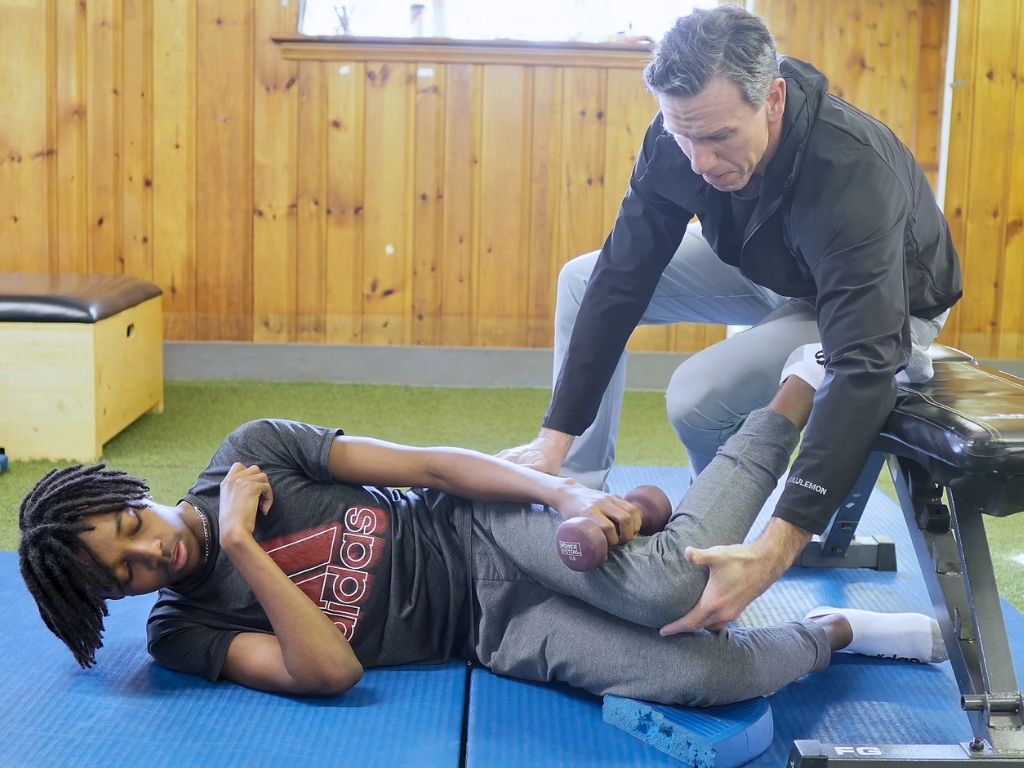
Activation testing inside the Corexcell Rehab App ensures these stabilizers are firing correctly before progressing into squats, lunges, step-ups, plyometrics, or running mechanics. When the stabilizers do their job, the pelvis levels, the femur tracks properly, and the knee finally moves in a clean line rather than being pulled inward or outward.
As alignment improves, pressure is removed from the patellar tendon, joint surfaces, and surrounding structures. Baker’s cysts naturally reduce, stiffness fades, and knee motion becomes smooth and pain-free, not because the knee was treated directly, but because the true source of overload was corrected.
Most clients feel meaningful relief around the 2-month mark, with full correction typically taking 3-5 months, depending on the severity and duration of the irritation.
Many Greenville SC patellar tendonitis and general knee pain patients come to us after quad-focused physical therapy fails to correct the hip instability driving their symptoms.
Fix Meniscus Tears, ACL/MCL Injuries: Greenville Non-Surgical Knee Treatment
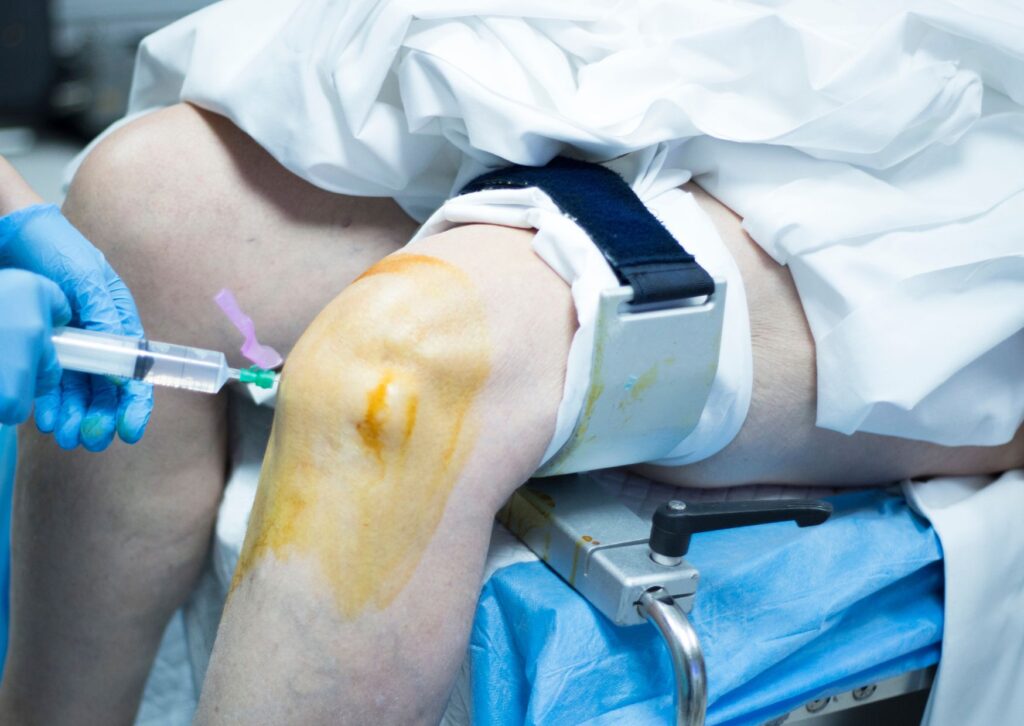
Meniscus & ACL/MCL tears may seem like different injuries, but they almost always come from the same root issue: the hip is not controlling the femur. Whether the problem shows up as joint-line pain, clicking, catching, swelling, stiffness, instability, or a “giving out” sensation, the knee structures are being overloaded because the stabilizers above the knee are not doing their job.
Understanding Meniscus, ACL & MCL injuries in Greenville
Meniscus tears can happen suddenly during twisting or pivoting, but many non-surgical tears develop gradually from years of poor mechanics and uneven joint pressure. ACL and MCL strains/tears often occur when the knee buckles, rotates, or absorbs force in an unstable position during cutting, landing, deceleration, or everyday movements. In nearly all cases, this instability happens because weak hip stabilizers, the glute medius, glute minimus, and adductor chain, fail to control the pelvis and guide proper femur alignment. This allows the femur to move irregularly, rotating, drifting, or collapsing, which increases torque and compression on the knee. Although the symptoms feel like a “knee problem,” the knee is simply absorbing forces the hips should have controlled. This creates:
- Excessive compression and shear on the meniscus
- Valgus collapse that strains the ACL and MCL
- Twisting forces that irritate the joint
- Instability that increases with activity
The meniscus and ligaments aren’t the root problem, they are the victims of poor hip control. This is why our non-surgical knee treatment Greenville SC patients rely on focuses on restoring hip control rather than isolating the knee itself.
Surgical Problems with Meniscus & ACL/MCL Tears
In many meniscus tear cases, surgery can be avoided with the Corexcell system. However, certain severe tears, such as bucket-handle meniscus tears or complete ACL/MCL ruptures, usually do require surgery. Bucket-handle tears tend to catch, lock, and cause sharp recurring pain, making non-surgical rehab unpredictable. For ACL or major MCL tears, running or playing sports becomes extremely difficult because the knee lacks structural stability, no matter how strong the glutes, hips, or VMO become.
The bigger issue is this: even after surgery, if the hips and stabilizers are still weak, the knee will continue absorbing excessive stress. The femur will stay out of alignment, pressure will return to the joint, and the cycle of irritation and pain continues.
Why Traditional Physical Therapy Doesn’t Fix the Root Cause
Traditional physical therapy often focuses on strengthening the quads, hamstrings, and VMO or restoring knee mobility. While these may help symptoms temporarily, they fail to address the unstable hip complex that caused the strain. Many clinics also prescribe band walks, clamshells, or generic “glute work,” but these primarily train the glute max and upper glute medius while over-activating the TFL and lateral rotators. Instead of fixing the weak stabilizers, these exercises create more compensations. As long as the femur continues to be unstable, the meniscus, ACL and MCL remain vulnerable, and symptoms return as soon as activity increases.
How the Corexcell System Fixes Meniscus, MCL/ACL injuries
The Corexcell 4-exercise system strengthens the deep stabilizers that control femur alignment: anterior glute medius, glute minimus, adductor chain, and semimembranosus. These must activate and only feel the target muscle working without compensations from the TFL, outer quad, hip flexors, or piriformis. Activation testing inside the Corexcell Rehab App ensures the weak links are firing correctly before progressing into lunges, squats, cutting mechanics, or sport-specific loading.
Once the hip stabilizers take over, the femur aligns properly, the knee stabilizes and the pressure is off the meniscus tear. Clients regain stability, confidence, and strength without the cycle of recurring irritation. And if you have been dealing with chronic long-term pain, even after MCL or ACL surgery, our program will get you back to playing sports pain free.
Most clients begin feeling meaningful improvement near 2 months, with full non-surgical recovery typically occurring in 3-5 months, depending on severity and consistency.
Many Greenville SC meniscus tear and ACL/MCL patients come to us after traditional physical therapy fails to correct the hip instability causing repeated flare-ups and reinjury.
Knee Osteoarthritis: Reducing Joint Stress Through Greenville Non-Surgical Knee Treatment
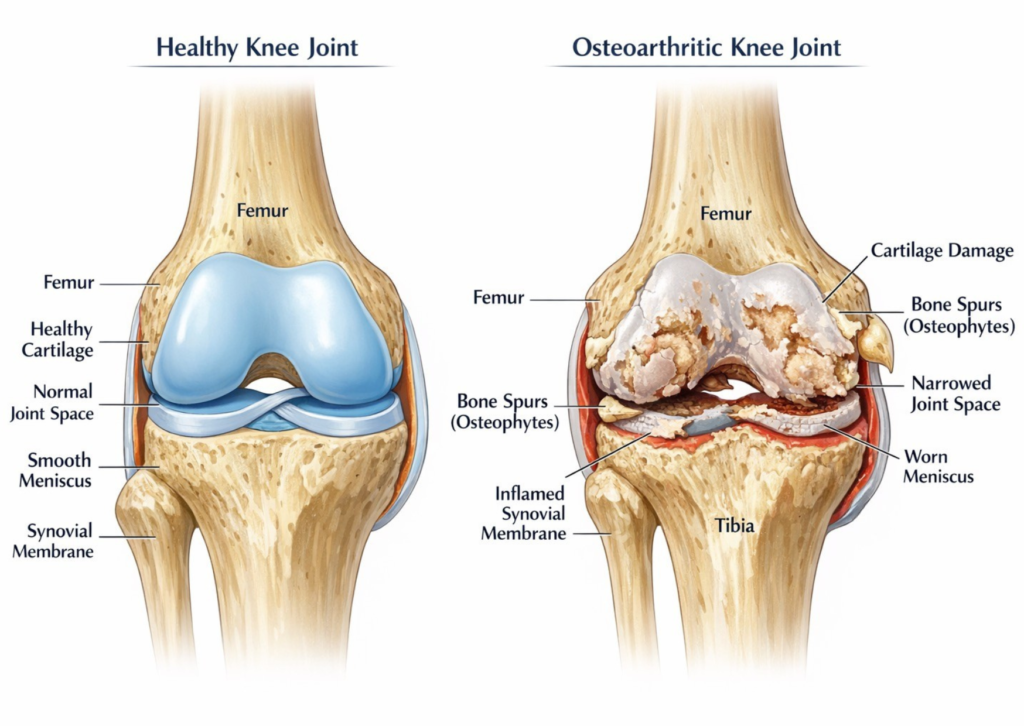
Knee osteoarthritis (OA) develops when the joint experiences long-term overload, causing irritation to the cartilage and surrounding tissues. Many people notice stiffness in the morning, soreness during stairs or long walks, or a deep ache around the knee after activity. Contrary to common belief, OA symptoms are heavily influenced not just by cartilage changes, but by glute & hip weaknesses causing poor movement mechanics, repeatedly overload the joint.
The Real Cause: Chronic Overloading From Hip & Pelvic Weakness
Most OA symptoms worsen because the hip and pelvic stabilizers are too weak to control the femur. When the glute medius, glute minimus, and adductor chain fail to stabilize the pelvis, the femur becomes unstable and the knee absorbs force unevenly. This uneven loading increases joint compression, leading to flare-ups, stiffness, inflammation, and the grinding sensations many people attribute solely to “arthritis.” OA is not just degeneration, it’s the knee reacting to decades of hip weaknesses causing unstable movement patterns.
This is why our non-surgical knee treatment Greenville SC patients rely on focuses on correcting hip mechanics rather than isolating the knee joint itself.
Avoiding Knee Replacements in Greenville Patients
Not every knee with osteoarthritis needs a replacement, but some cases become too advanced for exercise to help. In late-stage OA (typically Stage 3-4), the cartilage is severely worn down, joint space is greatly reduced, and the bones begin rubbing together. At this point, swelling, grinding, and sharp pain often persist even with proper strengthening, making a knee replacement the only realistic long-term solution.
However, in the early and mid stages (Stage 1-2), and even in many “bone-on-bone” cases where a small amount of joint space still remains, the Corexcell system can significantly reduce pressure on the knee by improving hip and pelvic stability. When the glute medius, glute minimus, and adductor chain begin controlling the femur correctly, the joint loads more evenly, inflammation decreases, and the need for surgery can often be delayed or avoided entirely.
Why Traditional Physical Therapy Doesn’t Improve Osteoarthritis Long-Term
Traditional physical therapy knee OA programs focus on quad strengthening, hamstring stretching, knee mobility drills, or cycling. While these may provide temporary relief, they do nothing to correct the unstable hip mechanics that overload the joint. Standard “glute exercises” like clamshells, band walks, or bridges mainly activate the glute max or TFL rather than the deep stabilizers. This increases compensations and leaves the knee absorbing the same unhealthy pressure that caused the flare-ups in the first place.
How the Corexcell System Reduces OA Pain and Improves Function
The Corexcell 4-exercise system targets the stabilizers that realign the pelvis and femur: the anterior glute medius, glute minimus, adductor chain, and semimembranosus, and trains them without compensations. Our activation testing in Rehab App, ensures these weak links are firing correctly before progressing into full-body strengthening or functional movement.
As hip stability returns, the knee begins tracking evenly, pressure on irritated joint surfaces decreases, inflammation reduces, and mobility naturally improves. Many clients are surprised by how quickly stiffness drops once the femur is aligned and the knee finally stops absorbing excess load.
While OA is not “reversed,” the symptoms often improve dramatically because the mechanics causing the irritation have been fixed.
Most clients feel meaningful improvement within 2 months, with full functional recovery typically occurring in 5-7 months, depending on severity and consistency.
Many Greenville SC knee osteoarthritis patients come to us after being told surgery was inevitable, only to find that correcting hip stability significantly reduces pain and restores function.
Frequently Asked Questions About Knee Pain & Corexcell Rehab
Ready to start your recovery today?
- Book a Private Session →
- Purchase the COREX12 Rehab App →
- See Real Client Testimonials →
Schedule Your Consultation Today
Don’t let knee pain limit your life in beautiful Greenville. Whether you’re dealing with a recent injury from the Swamp Rabbit Trail or chronic pain that’s been building for months, our expert team is here to help. Discover why athletes, professionals, and seniors trust Corexcell as the top-rated knee rehab Greenville SC provider.
We offer comprehensive evaluation and treatment for all knee conditions, with convenient appointment times to fit your busy schedule. If you’re looking for physical therapy alternatives for knee pain in Greenville, Corexcell offers a proven, science-backed method with faster relief and longer-lasting results.
Contact Corexcell today:
- Online Scheduling: www.corexcell.com
- Main Center: 8 Elizabeth Street, Greenville SC 29609
- Phone: 908-318-4048
Office Hours:
- Monday & Wednesday: 8:00-11:00 AM – 5:00-8:00 PM
- Tuesday & Thursday: 8:00 AM-1:00 PM, 4:00-5:00 PM
- Friday: 9:00 AM – 1:00 PM
Insurance Not Accepted: We do not accept insurance plans. However, most clients use their health savings plan to pay for the therapy.
Conclusion: Your Path to Pain-Free Knees in Greenville, SC
Knee pain does not improve by strengthening the wrong muscles, stretching tight areas, or masking symptoms with injections, braces, or medications. At Corexcell Rehab Center, we fix knee pain at its foundation by teaching your body to activate the correct stabilizers, the muscles that truly control knee alignment.
Whether you are dealing with patellar tendonitis, a meniscus tear, ACL or MCL irritation, general knee pain, or knee osteoarthritis, our proven system helps you restore alignment, eliminate pain, regain strength, prevent future injury, and return to lifting, running, and sport with confidence.
You do not need surgery.
You do not need injections.
You need the right muscles doing the right work every time.
Our 4-Exercise and 3-Phase Method has helped clients throughout Greenville and the surrounding Upstate areas recover stability, strength, and confidence, often after years of frustration with traditional physical therapy. Through our Greenville facility, virtual coaching, and DIY Corexcell Rehab App, we make world-class knee rehabilitation accessible to anyone, anywhere.
This approach also serves clients from Columbia, SC (and nearby Midlands communities like Lexington, Irmo, Cayce, West Columbia, Elgin, and Chapin) as well as Hendersonville, NC. It delivers the same proven knee method through virtual or in person sessions and our COREX12 Rehab App for pain-free living without long drives.
Recognized as a top-rated knee rehab Greenville SC, Corexcell delivers faster results than traditional physical therapy or general fitness routines. Patients across Greenville SC and the Upstate trust Corexcell for long-term knee correction, whether training in person at our Greenville clinic or working remotely through our Rehab App.
What Our Clients Say on Google
Contact Corexcell Rehab Center in Greenville today at 908-318-4048 or visit www.corexcell.com
Ready to start your recovery today?
- Book a Private Session →
- Purchase the COREX12 Rehab App →
See Real Client Testimonials >>